1 hour ago
16
1 hour ago
16
One of the most surprising things about running a marathon is the sheer amount of stuff you need to be as successful and comfortable as possible. In the beginning, it might seem like the right running shoes and outfit are enough. But as you start upping your mileage, you’ll likely find yourself looking for fueling, hydrating, recovery and even chafing solutions. I know from experience that the absolute best recommendations come from professional marathon runners who’ve seen it all on the 26.2-mile course, so that’s exactly who I talked to.
Below, I curated a list of marathon training, race day and recovery must-haves that Olympians, running coaches and personal trainers swear by. They’re mainly helpful for beginner marathoners, but anyone about to get their Six Star Medal might find a hidden gem too. Experts also shared their words of wisdom for the race overall, and what they wish they knew sooner.
Want more from NBC Selected? Sign up for our newsletter, The Selection, and shop smarter.
Marathon must-haves for training and race day
To curate a list of marathon must-haves for training, race day and recovery, I spoke to seven running experts, including Olympians, coaches and personal trainers, who recommended products they’ve used first-hand. As an avid runner myself, I also shared my suggestions, and I gathered a few from NBC Selected staff members.
NBC Selected typically doesn’t allow people who work directly with brands and retailers to recommend products they’re affiliated with, but we made an exception in this case. Everyone included in this article is a professional running expert who based their recommendations on their personal experiences and products they’ve used for marathon training, racing or recovery. I transparently disclosed affiliations when needed, and I made sure I could back up product recommendations with NBC Selected staff feedback and/or customer reviews.
Apparel
“When I became a marathoner, something that became super essential for me is pockets,” says Jenny Simpson, an Olympian and the chief running officer for Fleet Feet, a running gear retailer. “Once you start stretching your mileage further, you’re going to be out there for longer, and you need pockets to put things.” She especially recommends buying a sports bra with pockets because of how well it holds heavier items like phones and keys. “I find that my phone just doesn’t bounce in my sports bra pocket nearly as much as it does in leggings or shorts, and it doesn’t get as sweaty, so it’s more comfortable over the long haul,” says Simpson.
Rabbit makes one of Simpson’s favorite sports bras with pockets, and Heini Tallent, a certified running coach and the owner of Elements Running Education, recommends the brand, too. The pocket is on the back of the bra in the area between your shoulder blades, so you can reach behind you while wearing it and easily slide things in and out. Its fabric is perforated so there’s constant airflow, preventing it from holding onto sweat while you’re running. The bra also has padded straps and a cooling mesh liner.
While Simpson likes a sports bra with pockets, you may prefer shorts or leggings with pockets, which Rabbit also makes for men and women.
Comfortable post-race clothes
When you reach the finish line and stop running, your body temperature naturally decreases because your metabolism slows down and sweat quickly evaporates. You’ll notice yourself suddenly getting cold, says Simpon, which is often why you see marathoners wrapped in heat-trapping foil blankets post-race. Most races give these blankets out, but having a dry change of clothes waiting for you is even better. “It makes you feel human again,” says Simpson. There isn’t always a place to fully change, but even putting dry clothes over your sweaty clothes helps.
Simpson recommends packing a change of comfortable, loose-fitting clothes in the checked bag you pick up after your race is over. I’m a big fan of Old Navy’s sweatpants and sweatshirts for this, which are available in various men’s and women’s styles. They’re cozy, just the right amount of oversized, not super pricey and often on sale — if anything goes missing, it’s not a huge loss.
Accessories
Almost every marathoner I talked to recommends Body Glide’s Anti-Chafe Balm as a training and race day essential. They also wished they knew to carry a stick of it with them sooner — as someone who has plenty of running-related chafing horror stories to tell, I couldn’t agree more.
“When you stack up miles, fabric and skin do a fire dance, and you will not like it,” says James McMillian, the president of Tone House, a strength and conditioning athletic training facility in New York City. Body Glide’s balm puts a barrier between fabric and skin to prevent that “fire dance”, a.k.a. rubbing that’s worsened by heat, sweat and moisture, all things that are unavoidable while running. You can use the balm on any part of your body that commonly experiences chafing, and it washes right off in the shower. One hack you should know about: Put Body Glide on your feet (just not the bottoms of them) if there’s any area where your shoe or socks are rubbing, or where you feel yourself getting a blister, says Simpson.
Wearing sunscreen is never optional, especially while running long distances that require being outside for hours. For even more UV protection, Simpson recommends wearing a hat. “You’re out there for so long, and it protects your skin and eyes,” she says. “It has the added bonus of keeping those flyaway hairs out of your face, too.”
Sprints’ hats are Simpson’s top pick. They have ventilated fabric that keeps your head cool, a stretchy adjustable closure and a built-in sweatband. Simpson also loves that they come in so many different colors and patterns, which she says is a fun way to personalize your race-day outfit.
I’ve never been a hat person, so I rely on sunglasses to keep the light out of my eyes while running. Goodr is my go-to brand, and while I own a few pairs, I reach for the Bolt G Polarized style the most. They stay on my face phenomenally well and barely move, if at all, while I’m logging miles and getting extremely sweaty. The glasses also have vents in the reflective, polarized lenses that allow for constant airflow, reducing heat and moisture buildup that often leads to fog. Plus, there’s an adjustable nose piece, letting me custom-fit them to my face. Putting these sunglasses on and knowing that I won’t have to de-fog the lenses or adjust them on my face is such a relief whether I’m on mile one or mile 22.
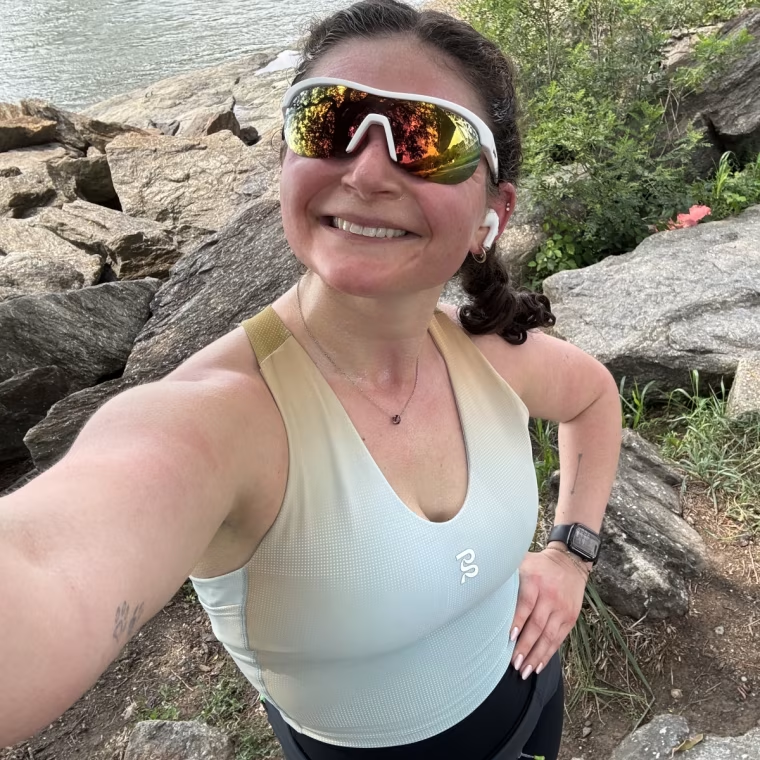 These are one of the only pairs of running sunglasses I’ve tested that don’t constantly get foggy while I’m sweating and actually stay on my face.Courtesy Zoe Malin
Many major road marathons, like the New York City and Chicago Marathons, prohibit runners from carrying rear-mounted hydration reservoirs (bladders) and backpacks due to security reasons, so make sure you research the rules of the race you’re running beforehand. You’re almost always allowed to carry handheld water bottles, soft flasks, belts with water bottles and hydration vests with front-pocket water bottles, although there may be size restrictions for each specific race that you’ll need to find out about.
Tallent says Nathan makes some of the best hydration packs for men and women. This one comes with two 14-ounce water bottles you can fill up before your run and refill along the route. They have extended straws that point upward toward your face, so to drink from them, you just bend your head over and sip. The vest also has lots of pockets to put your essentials, mesh panels for constant airflow and reflective details. It comes in three sizes and there’s slider cords to customize its fit.
If you’re not a fan of putting your essentials in clothes that have pockets or a vest, a running belt is also an option, although it typically only holds your phone, keys and an energy gel or two. Tallent’s favorite is the SPIbelt because it doesn’t bounce as you move. Its pocket expands to be 9-by-4-by-2 inches large to slip items inside, and it zips closed to keep everything secure. The belt also has a soft, elastic band that’s adjustable between 25 to 47 inches long.
Footwear and socks
“You don’t think about socks until you’re miles into a run and your feet start reminding you,” says McMillian. In fact, they’re often the cause of blisters, which many people don’t realize, so choose a pair that contours to your feet and provide a little bit of cushioning, at minimum, says Simpson. They should also be made from a breathable material that prevents heat and moisture buildup, says Tallent.
High quality running socks tend to be pricier than those you’d buy in bulk at a big-box retailer, but they’re worth the investment, and they cost less than a new pair of shoes. “If the shoes that you love start rubbing a little bit, you might not immediately need a new pair,” says Simpson. “The right socks can really save them for you.”
I exclusively run in Feetures’ socks, which got numerous shoutouts from the marathoners I talked to. They fit a little bit tighter, so they hug your feet more, says Simpson — this makes my arches feel extra supported, and prevents the fabric from moving around and chafing, bunching up or sliding down. They’re cushioned, but not so much that they make my shoes feel tight, and they have a seamless toe to prevent rubbing as well as moisture-wicking fabric.
“I don’t care how well your shoes fit and how happy you are running into the twentieth mile with them: As soon as your race is done, it’s the most liberating thing to take your shoes off,” says Simpson. “Having a pair of recovery slides to slip on after a run became an essential to me. I would get to the last mile or two of my run and I’d be looking forward to putting on my slides.”
On race day, Simpson recommends putting a pair of recovery shoes in the clear bag you check and pick up after crossing the finish line — that’s where your dry change of clothes should be, too. She says Oofos is one of the go-to recovery slides among runners, which I agree with: I learned about them when I was training for my first 10K over a decade ago, and I still wear them now. After a long run, my swollen feet breathe a sign of relief as they rest on the slides’ cushioned yet supportive base, which gently cradles my arches. They’re easy to walk in, in part due to the curved outsoles, which is important on race day when the finish line, checked bag pickup and the parking lot or public transportation might be far away from each other.
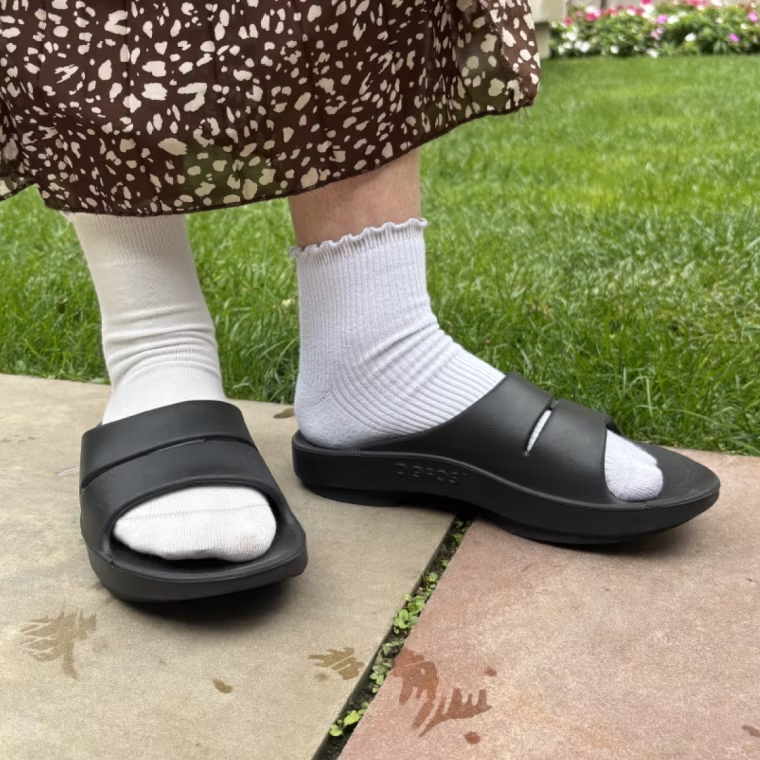 I’ve worn these recovery slides for years while training and racing to give my feet a break after being confined in my sneakers during long runs.Courtesy Zoe Malin
Fuel and hydration
Your body turns carbohydrates into glucose and stores it as glycogen in your muscles and liver, and as you do physical activity like running, your body breaks down that glycogen to use as energy, according to the Mayo Clinic. Generally, after about 90 minutes of running, your body’s glycogen stores are depleted, so you have to replenish them by consuming carbohydrates — the Mayo Clinic recommends consuming about 30 to 60 grams of carbs per hour, which you can get from sports drinks, food like fruit or energy gels and chews.
All that said, there’s no perfect science to fueling during (and before) long runs: Everyone’s body is different, so what it needs to stay healthy and strong across 26.2 miles is different. Sports medicine doctors, nutritionists and dieticians can help you figure out what’s best for you.
Melanie Flynn, the owner of Fitness Together Melrose, recommends testing out a few marathon fueling strategies before committing to one, and says your longest training runs are the best trials for understanding what your body needs and tolerates. There’s only one rule: Once you find products and a fueling schedule that you like, keep repeating it so your body gets used to it and there aren’t any surprises on race day, says Ali Fournier, a personal trainer at Trilogy Fitness Systems.
Fournier and Tallet both like Bare Performance Nutrition Go Gels for training and racing. Fournier says they taste like applesauce, and she alternates between the gels and Gatorade to keep her energy up. The gels come in single-serving packs that fit in your belt, vest or pockets, and they have 24 grams of carbs per serving.
Since you sweat a lot while running long distances, you lose fluid and electrolytes like sodium and potassium, which play a role in muscle and nerve contraction, as well as creating energy, experts told me in my guide to electrolyte powder. To ensure your body has an ample supply of both when you start running, you can dissolve electrolyte powder in water and drink the fortified beverage about two hours beforehand — doing so prevents you from feeling depleted quickly.
Sodium is the most important electrolyte to pay attention to while choosing a powder because you lose it at the highest rate while sweating, experts say. You can work with sports medicine doctors, nutritionists and dieticians to find the concentration that’s right for you — experts I talked to say 500 to 1,000 milligrams of sodium is usually a good range for long distance runners.
One of Tallent’s favorite electrolyte powders is from Skratch Labs, which comes in a bag with a scoop so you can customize how much you add to water based on your needs. There’s 400 milligrams of sodium in each scoop, and it also has other important electrolytes like potassium and magnesium, as well as carbohydrates.
You can add electrolyte powder to water bottles you carry on long training runs or during races to replenish your electrolyte and fluid supply as you sweat. But if you plan on drinking from water stations or fountains along the route, you’ll need another way to get electrolytes. Tallent and I recommend using SaltStick FastChews, which are chewable tablets made with sodium, as well as other important electrolytes like potassium, calcium and magnesium. There’s 100 milligrams of sodium in two tablets, which the brand recommends taking about every 30 minutes while running, but do what’s best for your body. I pack the Fast Chews in a plastic bag that I put in my pockets or belt, and whenever I need them, I just pop them into my mouth while running. I really like the taste of them, too, which is an added bonus.
Tech
“Listening to music or podcasts can help you both zone out and stay focused when the going gets tough, but race day is so special, so I recommend planning to spend at least a few miles with your ears totally dialed into the crowd,” says Simpson. “That way, you can soak up the experience of having all those people out on the street celebrating all of your hard work.”
“Shokz’s open-ear headphones let you listen to music, but they’re not actually blocking your ears, so it’s safer,” says Simpson. “I don’t use any other headphones. They’re really great quality and they’re designed to wear while you’re sweating and bouncing around, so they’re just a really great solution. There’s so few things in the world that you can have both ways, and Shokz is giving us both ways: They’re letting us enjoy our music, but also be aware of our surroundings at the same time.”
“Once I started paying attention to pace, heart rate, distance and how my training was progressing over time, running became much more strategic,” says McMillian. “I like data because it gives you something to correct. How you feel matters, but sometimes you feel terrible and you’re actually performing well, or you feel great and you’re doing too much. The watch lets you know.”
Garmin is one of McMillian’s favorite running watch brands, and NBC Selected editorial director Lauren Swanson has worn a few of its models while training for and doing the New York City and Chicago marathons. She recommends the Forerunner 165 most of all. “While I’m sure the other watches do more, this one gave me exactly what I needed: bells and whistles without unnecessary instruments,” says Swanson. It has built-in GPS to track your pace and distance, and it can track your sleep and heart rate, too. There’s also safety features available, and the option to get personalized workout suggestions and do training programs for events like marathons. The watch’s battery lasts up to 11 days in smartwatch mode and up to 19 hours in GPS mode, according to the brand.
Recovery
There are lots of fancy, high tech recovery tools out there — experts and I recommend a few of our favorites below. But one of the simplest, lowest price and most portable ones that makes a difference is a lacrosse ball, which Fournier and Flynn recommend. “I encourage runners to spend a few minutes each day using one to do soft tissue work, particularly around areas that tend to get tight from running like the hip flexors, quads, IT band and calves,” says Flynn. You can look up videos on Youtube that guide you on how to use the lacrosse balls to address problem areas and relieve tension, get rid of muscle knots and loosen up your body.
Looped resistance bands like these help you do physical therapy, strength, stability and mobility work at home, says Tallent, and since they’re compact, they’re easily portable, too. You can do exercises like side-steps, glute bridges and clamshells with them, for example, and learn about even more through Youtube videos. Fit Simplify’s loops come in a pack of five, each of which is a different resistance level, and you get a storage bag to keep everything in.
Many of the marathoners I talked to say that while compression boots are pricey, they’re one of the best recovery tools to invest in — I feel the same way. Therabody sent me the JetBoots Prime about two years ago and I use them multiple times a week to reduce soreness, fatigue and swelling, especially after my longest run of the week. I find wearing them very relaxing, so I typically put them on before bed.
Alexi Pappas, an Olympian, is a Therabody ambassador, but she was a fan of the brand before working with it. She started using compression boots as a college athlete and still swears by them, especially because she can commit to using them consistently for prehab and rehab.
“I’ve learned that the best recovery products are the ones that fit into good recovery habits,” says Pappas. “I love compression because it gives me a way to actively recover while I’m doing something else, like eating dinner, answering emails or watching a movie. After really hard efforts or races, I’ll do longer sessions, and I especially prioritize them the evening after a race and over the next few days.”
My other favorite Therabody product that’s Olympian- and marathoner-approved is the Theragun Mini. I use it so much that I don’t bother putting it away at home — I immediately reach for it when I have an achy or tight spot, and I give my legs a good massage after every run. Pappas also recommends using the massage gun to wake up stiff muscles before running. She travels with it, puts it in her car and throws it in her bag at all times.
“My teammates I train with all have this tool, and we all love it,” says Pappas. “A recovery tool only works if you actually use it, and the portability is why this one has become such a staple for me. Also, I love that I only need to bring my phone charger to charge it.”
How to pick the best running shoes for marathons
Running shoes are the most essential item you need for marathon training and racing, but it seemed unfair to feature just one pair in this article — choosing your favorite is a personal decision that depends on factors like your foot type, pace goals and fit and feel preferences. In addition to recommending marathoners’ favorite running shoes, here’s some useful advice to keep in mind while shopping for them.
- Run in shoes that fit: “It seems obvious, but you’d be shocked by how many people have been wearing the wrong size sneaker for years,” says Simpson. She recommends getting professionally fit and, better yet, getting a full foot analysis done to make sure your shoes are appropriate for your arch, foot length and width, foot volume and heel shape, for example. “Every part of your running experience is built off the solid foundation of whether you have a well-fitting shoe or not,” says Simpson.
- Pay attention to how many miles you’re putting on each pair: “You’re likely to run at least 300 to 500 miles in one marathon training cycle, which is about the typical life span of a pair of running shoes — that means one pair of shoes won’t get you through all the training and race day,” says Tallent. “At the very least, plan on getting a new pair of shoes — the same ones you know and love — before race day and putting 20 to 50 miles on them so they feel broken in but still fresh.”
- Try rotating your sneakers while training: To stretch out how long each pair of sneakers last, buy two pairs that you alternate between depending on what type of run you’re doing. Tallent recommends getting a pair of cushioned, comfortable shoes for easy and long runs (including the actual marathon), and a faster-feeling pair for speed and agility workouts.
Training, race day and recovery tips from professional marathoners
In addition to their product recommendations, the marathoners I talked to had lots of other tips for beginner runners. Below, I included some of the most common ones to keep in mind.
Strength training isn’t optional.
“Marathon training shouldn’t just be about running more miles,” says Flynn. “Your body needs to be strong and prepared to handle the repetitive stress that comes with running long distances over the several months of training leading up to the event.” She recommends strength training two to three times a week to expose your muscles to different types of loading, especially those in the hips, glutes, hamstrings, calves, core and upper back. Over time, doing so makes your body more resilient so it can handle how much you’re demanding from it while training and racing. Doing low-impact activities like yoga, swimming and mobility work is also helpful — it gives your body a break from the repetitive motion of running while still letting you build fitness.
Make recovery part of your training plan.
“Recovery should be part of the training plan, not something you do only when something hurts,” says Flynn, adding that sleep is a huge component, too. Just like you schedule your runs and strength training workouts, schedule your recovery sessions so you don’t put them off or forget about them, and be strict about bedtime. And never skip an easy run, even if you think you can push yourself harder — that often leads to injuries.
“Beginners often think every run is an opportunity to prove their fitness, but the marathon rewards consistency much more than heroics,” says Pappas. “The purpose of an easy run is to allow you to arrive at the important workout ready to actually do it — that’s what my Olympic coach always said.”
Practice everything.
You’ve probably heard the phrase “nothing new on race day,” which all of the marathoners I talked to take very seriously. Practice what you’re going to eat before the race, how you’re going to fuel during it, where you’re going to keep all your essentials on your person, what you’re going to wear, what you’re going to tell yourself if you’re struggling — literally everything. Zachary Moxham, a personal trainer at Physical Equilibrium and a run coach for New York Road Runners, also recommends visualizing race day to create a picture in your mind of what the starting line and crowds might look like, and researching where aid and fuel stations are and what you might want to get at them. Dress rehearsing in this way can help lessen some of those pre-race jitters.
Consistency matters.
“There are no shortcuts when it comes to building the durability and resilience that your body needs to get to the starting line feeling healthy and strong,” says Tallent. Even when you can’t or don’t want to, trust the process as you build up your foundation, learn how to run on tired legs, figure out how to fuel and find a recovery routine that works for you.
“The marathon is 26.2 miles on race day, but the real marathon is the months of training beforehand, and the biggest challenge is being able to come back and train again tomorrow,” says Pappas. “The people who inspire me most aren’t necessarily the people who can push themselves the hardest on one particular day. They’re the people who can take care of themselves well enough to make consistent progress over a long period of time, and the ones who can show up everyday along the journey.”
Run your race.
Don’t compare yourself to other runners, and don’t try to “beat” other runners along the route, says McMillian. Focusing on yourself will push you to run the best race possible, and help you get through the hard parts.
“The marathon is a very long conversation with yourself, so don’t make a decision about how your race is going based on one mile,” says Pappas. “One of the most powerful skills an athlete can develop is staying present long enough for the moment to change.”
To prioritize focusing on yourself and being present, Tallent doesn’t recommend setting a time or pace goal for your first marathon. You’re in unfamiliar territory and you’re working extremely hard, so don’t put unnecessary pressure on yourself. Recognize your huge accomplishment and embrace the journey by making goals about how you want to feel when you cross the finish line or how you’ll get through tough moments instead, she says.
Meet our running experts
At NBC Selected, we work with experts who have specialized knowledge and authority based on relevant training and/or experience. We also ensure that all expert advice and recommendations are made independently and with no undisclosed financial conflicts of interest.
- Jenny Simpson is an Olympian and the chief running officer for Fleet Feet.
- Ali Fournier is a personal trainer at Trilogy Fitness Systems.
- Zachary Moxham is personal trainer at Physical Equilibrium and a run coach for New York Road Runners.
- James McMillian is the president of Tone House, a strength and conditioning athletic training facility in New York City.
- Alexi Pappas is an Olympian and Therabody ambassador.
- Melanie Flynn is the owner of Fitness Together Melrose.
- Heini Tallent is a certified running coach and the owner of Elements Running Education.
Why trust NBC Selected?
I’m a reporter at NBC Selected who has covered fitness for over six years. I’ve written extensively about running, including articles about women’s running shoes, carbon plate running shoes and running shoes with arch support. As an avid long distance runner who logs over 30 miles a week, I also test dozens of running-related products every year, like sneakers, leggings, sports bras, running belts, socks and fuel. To write this article, I interviewed seven running experts about their training and race day must-haves, and gathered recommendations from NBC Selected staffers.
Catch up on NBC Selected’s in-depth coverage of tech and tools, wellness and more, and follow us on Facebook, Instagram, X and TikTok to stay up to date.