 4 days ago
34
4 days ago
34
Progressive Democrat Alexandria Ocasio-Cortez has distanced herself from the "Woke 1” positions she supported during the pandemic years, such as defunding the police, saying that the "rhetoric" used then was not "the one we would use today."
The comments were made in the wake of the victory of Abdul El-Sayed, whom she has endorsed, over centrist Rep. Haley Stevens in Michigan’s Senate primary during an interview with ABC "This Week."
Talking to co-anchor Jonathan Karl, Ocasio-Cortez spoke of "a time of renewal" for the Democratic Party which, despite the widening divide exposed by recent primaries across the country, she said is now "unifying" ahead of the November midterms.
"We understand that our priority is the working class of this country, and we have to make the case that we’re here to make people’s lives better," the New York Democrat said.
"The Republican Party right now is jacking up prices, making housing impossible to afford, and we are focused on everything from healthcare to your grocery bill and making it more affordable for, for working people."
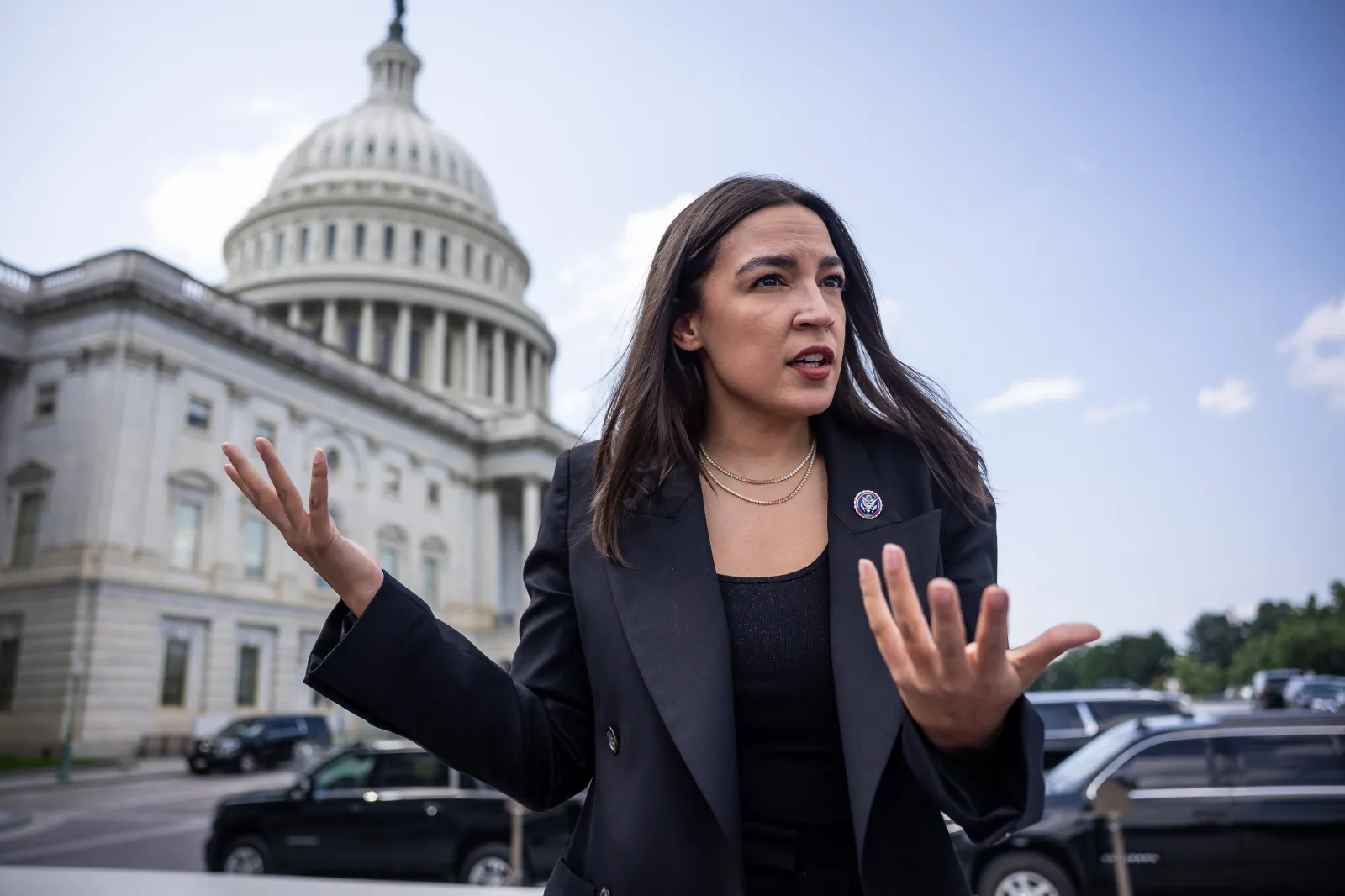
When asked about contentious past statements from progressive figures like Wisconsin gubernatorial candidate and democratic socialist Francesca Hong and whether the left wing of the party went too far after 2020, Ocasio-Cortez cited New York City Council Member Chi Ossé’s statement on "woke" policies of the time supported by progressives.
"I have a local city councilman that has this saying, ‘Woke 1 was crazy’," she said. "I think that during this time, especially during COVID, [...] the doors were really open in trying to entertain any and every policy that was going to get us to a better place," she added.
What Is ‘Woke 1’?
With the term "Woke 1," Ocasio-Cortez was referring to the intense peak of radically progressive policies and activism that were widely embraced by the left in 2020 in the wake of the murder of George Floyd by a white police officer in Minneapolis, Minnesota.
This was a time when many Americans "woke" up to the dynamics of systemic racism and social injustice in the country and progressives pressured the Democratic Party to recenter on these issues, in a way that some argued alienated moderate, working-class voters.
The term "Woke 1” has been coined by 28-year-old Ossé in a May social media post where he replied to a user asking him about a comment he made in 2021 in which he said, "A cis white man should not be the next speaker of the Council."
A user asked Ossé: "Did you get a new personality?"
"Woke 1 was crazyyyy," the council member responded, apparently distancing himself from his previous statement.
What Is Ocasio-Cortez Saying About It?
Ocasio-Cortez embraced the same gentle rejection of the policies that the progressive wing of the Democratic Party she represents supported during the pandemic, distancing herself from "Woke 1."
But she added that she believes there was value in what was discussed at the time.
"I actually think that the discussions that were had at that time were quite fruitful. I think that when we talk about crime today, it’s fundamentally different from the way we talked about crime and bringing crime down," Ocasio-Cortez said.
"During lockdown—of course, rhetoric in that time is not rhetoric that we would use today, and I’m grateful that these candidates have the opportunity to present who they are to their electorate and what they're campaigning on at this moment," she added.
Newsweek contacted Ocasio-Cortez’s office and Ossé’s office for comment by email on Monday morning.
What Has Ocasio-Cortez Changed Her Stance On?
1. "Defund the Police" And Law Enforcement Budgeting
When New York City proposed $1 billion in cuts to the New York Police Department (NYPD) budget in June 2020 (one-sixth of its total budget), Ocasio-Cortez criticized the city for not going far enough, saying the move did not respond to the activists’ request for defunding.
"Defunding police means defunding police. It does not mean budget tricks or funny math. It does not mean moving school police officers from the NYPD budget to the Department of Education’s budget so the exact same police remain in schools," she said, as reported by The Hill at the time.
Ocasio-Cortez has since largely abandoned the "defund the police" approach and now frames her public safety platform around funding community-based violence intervention programs and social services alongside standard municipal infrastructure, rather than advocating for the stripping of police department operational budgets.
In her interview with ABC News’ This Week, she said she does not align herself with abolishing police and prisons.
2. "Abolish ICE" And Border Rhetoric
Between 2018 and 2020, Ocasio-Cortez rose to national prominence calling for the complete abolition of Immigration and Customs Enforcement (ICE) and labeling migrant detention centers along the Southern border as "concentration camps."
She has not changed her mind on ICE, which in a statement given last year she called "a rogue agency that should not exist." While she remains a strong critic of the Trump administration’s border policies, Ocasio-Cortez has since shifted her focus toward advocating for increased federal aid to cities like New York to handle asylum seekers, funding immigration court infrastructure, and streamlining work authorization permits—working within federal administrative frameworks rather than demanding agency dissolution.
3. Insurgent Primary Warfare vs. Democratic Party Unity
Since her rise in national politics, Ocasio-Cortez has consistently endorsed progressive primary challengers against establishment Democratic incumbents, highlighting the differences between progressive and moderate wings of the party.
In 2020, before Joe Biden won the presidential election, Ocasio-Cortez told New York Magazine that "in any other country, Joe Biden and I would not be in the same party, but in America, we are."
Since then, even as the rift within the party has grown more visible and she has repeatedly emphasized ideological differences with centrists, Ocasio-Cortez has turned into a reliable team player for the Democratic party leadership.
She endorsed Biden and Kamala Harris in 2024, actively campaigned to protect Democratic incumbents against primary challenges, and worked closely with House Democratic leadership, such as Hakeem Jeffries, rather than fighting the party establishment.
4. Foreign Policy And Defense Spending
Early in her tenure, AOC aligned strictly with traditional left-wing anti-interventionism, opposing increases to military budgets and famously switching her vote to "present" on funding for Israel’s Iron Dome missile defense system in 2021 amid intense pressure from progressive activists.
Since then, the New York congresswoman has voted in favor of major U.S. foreign assistance packages, including military and humanitarian aid to Ukraine, while maintaining progressive positions on diplomacy and human rights.
Will Ocasio-Cortez Run In 2028?
Ocasio-Cortez’s name is one of the many that routinely come up when potential candidates for the 2028 presidential election are discussed. She is now 36, so above the minimum age of 35 required to be elected.
Asked about a July poll by the University of New Hampshire Survey Center, which found that she was the leading Democrat for 2028 among would-be Democratic voters in the state with 22 percent of the vote, followed by Pete Buttigieg with 21 percent, Ocasio-Cortez told ABC News that she has not ruled out running.
"I haven’t ruled out the possibility, and I’m very humbled to the tremendous amount of support out there," she said, adding that her focus at the moment remains on the November midterms.
Contact Newsweek editors on this story: Ben Kelly and Trevor Davies.