 3 days ago
39
3 days ago
39
Lindsay Clancy’s murder trial erupted with new tension Tuesday as the defense pushed to introduce an unusual witness and jurors heard fresh evidence about the mother’s deteriorating mental state.
The developments sharpened the divide between prosecutors and the defense over what Clancy understood in the weeks before she killed her three children. The latest testimony is poised to shape upcoming expert battles over whether she was legally responsible or in the grip of postpartum psychosis.
The day’s testimony featured clashes over witness credibility, medical records, and emotional details from inside the Clancy home—each adding pressure as the trial moves deeper into its third week.
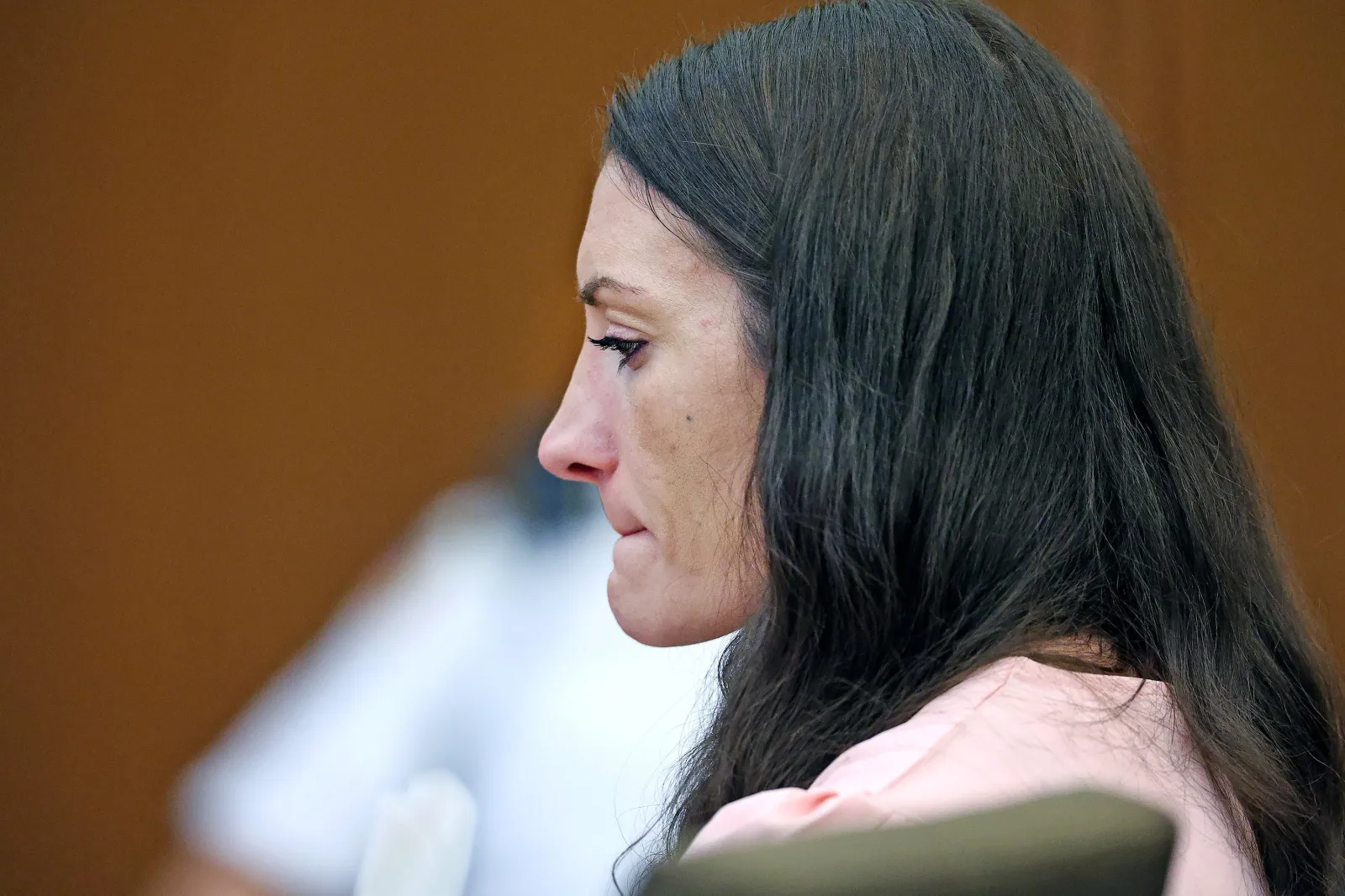
1. Nurse Practitioner Jollotta Saw Signs of Bipolar Disorder and 'Mixed Manic State'
Psychiatric nurse practitioner Rebecca Jollotta delivered some of the most clinically significant testimony of the day, describing symptoms she believed pointed to bipolar disorder and a “mixed manic state.”
She said Clancy displayed pressured speech, racing thoughts, insomnia without fatigue, contradictory manic and depressive symptoms, increased goal-directed activity, and emotional numbness. “I was concerned that she was in a mixed-mania state or a hypo-manic state,” Jollotta testified.
Jollotta described Clancy as “clinically acute, unstable,” and testified she urged Clancy to increase her Seroquel dosage and enter a partial hospitalization program—specifically the Women & Infants Hospital perinatal program in Rhode Island. She said she “strongly, strongly” recommended this multiple times.
Her testimony supports the defense’s argument that Clancy’s providers saw red flags but failed to escalate care quickly enough. Jollotta also testified that she had raised the possibility of an underlying bipolar disorder with Clancy and her husband, Patrick. She said Patrick rejected the idea, telling her, according to Jollotta: “My wife is not bipolar.”
The defense has argued that Clancy's symptoms were signs of a serious and rapidly deteriorating psychiatric condition that was not adequately treated before the killings.
Prosecutors maintain that even if her treatment was imperfect, the legal question is whether Clancy understood her actions on January 24, 2023.
2. But Jollotta Never Believed Clancy Had Postpartum Psychosis
But Jollotta's testimony also gave prosecutors one of their clearest moments of the day.
On redirect examination, prosecutors asked Jollotta about her experience treating patients with postpartum psychosis and whether she had ever believed Clancy herself was suffering from the condition.
Her answer was direct: “I did not.”
Jollotta testified that Clancy's thinking during their appointments remained “linear and goal-directed.” She said Clancy did not report hallucinations or hearing voices during a key December appointment and never told her that she intended to harm her children.
Jollotta acknowledged that not every patient with postpartum psychosis necessarily hears voices, but she maintained that she did not see evidence of psychosis in Clancy during the period she treated her.
The testimony creates an important divide in the case. Jollotta described severe depression, intrusive thoughts, insomnia and possible bipolar symptoms, but did not think Clancy was experiencing postpartum psychosis.
That distinction is central to the trial. The defense is expected to rely on later expert testimony to argue that Clancy was in the grip of postpartum psychosis when she killed her three children.
3. Eerie Book 'Good Moms Have Scary Thoughts' Was Recommended by Her Provider
A chilling detail resurfaced Tuesday when jurors learned that the book Good Moms Have Scary Thoughts by Karen Kleiman, found in a kitchen cabinet after the murders, had been recommended to Clancy by nurse practitioner Rebecca Jollotta on December 1.
Police discovered the book during their search of the Duxbury home. The book, which focuses on intrusive thoughts and postpartum mental health, has become a symbolic piece of evidence in the trial.
The book centers on the sudden “what if” fears or disturbing mental images that can strike even the most devoted parent. Kleiman explains that these thoughts are extremely common, affecting the vast majority of new mothers, and do not indicate intent to harm or a lack of love.
The defense argues it reflects the severity of Clancy’s symptoms and the mental health context surrounding the killings.
Prosecutors say the book shows she was capable of articulating her emotions and seeking help—evidence, they argue, of awareness rather than psychosis.
4. Lindsay’s MyChart Messages Show Extreme Psychological Deterioration
Jurors were shown a series of MyChart messages that captured Clancy’s unraveling mental state in her own words. The messages included some of the most emotionally powerful evidence presented so far.
Jurors were shown a series of MyChart messages between Clancy and psychiatric nurse practitioner Rebecca Jollotta that documented Clancy's increasingly desperate struggle with insomnia, medication side effects, anxiety and intrusive thoughts.
In one lengthy message, Clancy said she was willing to try anything but feared she had become dependent on Ativan, which she had been taking daily for about two and a half weeks after a bad reaction to Zoloft.
“I’m willing to try anything,” Clancy wrote, according to testimony. “I just keep coming back to the feeling that I’m dependant on Ativan.”
She said she felt her concerns were not being heard.
“I feel addicted to it, and I feel I’m not being heard that that is a possibility,” Clancy wrote. She then questioned the growing number of medications being used to treat her insomnia. “I feel like we are throwing all these different meds at my insomnia when the root cause is Ativan dependance,” she wrote.
Clancy also described a profound emotional change. “I don’t feel any of the anxious thoughts I had before, I feel completely numb,” she wrote.
In another message, Clancy reported experiencing what she described as “horrible intrusive thoughts” throughout the day. Jollotta testified that Clancy told her the thoughts subsided after she took Ativan.
The messages came as Clancy and Jollotta were discussing changes to her medications, including Remeron and Seroquel. On December 1, Clancy told Jollotta, “I don’t like how I’m feeling Remeron,” and reported that she was having intrusive thoughts and wanted to return to a medication regimen previously recommended by another provider.
Jollotta testified that she specifically asked Clancy whether she was suicidal during one of their exchanges. Clancy told her she was “not at the point of suicide,” Jollotta said.
But the following day, Clancy sent another troubling message. She described feeling numb and said she felt like she was “going to die and didn’t care.”
Jollotta testified that she did not interpret that statement as suicidal ideation. Instead, she believed Clancy was describing severe depression and responded with resources and reassurance.
The messages became a key part of the defense's effort to show jurors that Clancy was repeatedly telling her providers that something was seriously wrong in the weeks before the killings. At the same time, prosecutors have highlighted the fact that Clancy continued to communicate with her providers, sought medication changes and repeatedly denied having a plan to kill herself or anyone else — evidence they can use to challenge the defense's claim that she was already in a psychotic state.
5. Defense Tries to Call a TikTok Therapist to Testify About McLean Hospital
The most dramatic moment of the day came when defense attorney Kevin Reddington attempted to add former McLean Hospital therapist Emily Thorndike to the witness list.
Thorndike posted a TikTok video claiming she “couldn’t stand for lies” about McLean, where Clancy stayed for five days in early January 2023, after she said prosecutors “made it out on direct examination that McLean is some kind of five-star institution” because it is “affiliated with Harvard.”
Reddington argued she could testify that the hospital was a “woeful environment,” especially on holidays, and that “nobody was there” to provide adequate care.
Thorndike left McLean in December 2021—more than a year before Clancy’s admission—but the defense says she can speak to chronic staffing issues and conditions relevant to Clancy’s treatment.
Prosecutor Shanan Buckingham pushed back hard, noting Thorndike has been following the trial and publicly called the case “an abomination,” making her biased and inappropriate as a witness.
Judge William Sullivan appeared skeptical, telling the courtroom, “This is not TripAdvisor. I wouldn’t allow that.”
Still, he said he was inclined to allow limited questioning outside the jury’s presence.
The move signals an aggressive defense strategy: undermine McLean’s credibility and argue Clancy’s care was inadequate during a critical window before the killings.
Other Key Moments
Beyond the headline-making testimony, Jollotta's appearance Tuesday also revealed new details about Clancy's treatment, her preoccupation with medication and the decisions being made by the doctors treating her. The exchanges offered the defense additional ammunition for its argument that Clancy's care was fragmented and that medication may have worsened her condition, while prosecutors highlighted evidence suggesting Clancy remained engaged in her own treatment and retained control over her medical decisions.
Jollotta testified that Clancy was “very, very forthright” about her symptoms and concerns, and the defense pressed her on how consumed Clancy had become with her medications. Reddington asked whether Jollotta knew Clancy had been searching Google “60, 70, 100 times a night” for information about the drugs she was taking. Jollotta said she did not. She also agreed with the defense's characterization that Clancy was “trying to basically get off drugs,” rather than seeking additional medication from multiple providers.
The defense also highlighted records from the Women & Infants Hospital perinatal program that described Clancy as suffering from depression “due to adverse drug effects” and recommended tapering Seroquel. Jollotta said she could not speak to the program's assessment and maintained that she did not receive a call from the program, despite records indicating staff had attempted to reach her. The exchange added another piece of evidence to the defense's argument that medication changes may have contributed to Clancy's rapid deterioration.
Prosecutors used redirect to emphasize that Clancy ultimately had autonomy over her medication decisions. When asked who ultimately decides what medication regimen a patient follows, Jollotta answered, “The patient.” She explained that providers can make recommendations based on their training and assessment, but patients have autonomy over whether to follow them. Jollotta also testified that Clancy experienced “rebound anxiety” when Ativan wore off and had become reliant on it to get back to sleep after waking during the night.
Testimony also revealed that on December 30, Patrick Clancy called the perinatal clinic where Lindsay had been treated to ask whether she could be admitted directly to McLean Hospital without going through an emergency department. The clinic told him that was not possible. This call was the clinic’s final contact with Lindsay before she checked into McLean on January 1. The defense is using this timeline to argue that Clancy’s decline was rapid, severe, and visible to those closest to her.
What Happens Next
The trial continues Wednesday with more testimony from psychiatric professionals and witnesses connected to Clancy’s treatment.
The defense is expected to continue pressing its argument that Clancy was overmedicated, misdiagnosed, and in the throes of postpartum psychosis.
Prosecutors will keep focusing on her actions and statements before and after the killings to argue she acted intentionally.
The jury will ultimately decide whether Clancy was legally responsible for the deaths of her three children—or whether her mental illness rendered her incapable of understanding the wrongfulness of her actions.
Contact Newsweek editors on this story: Samantha Beech and Gray R. Thomas