 4 days ago
29
4 days ago
29
President Donald Trump has shared data casting his record on inflation in a favorable light, as his administration continues battling voters' concerns over his handling of the economy and places blame for financial difficulties with his predecessor.
On Sunday night, Trump posted a video showing cumulative price increases for the last ten presidential terms, with each ranked by how much costs rose over their 48 months in the White House. At month 18 of his second term, Trump’s rate stood at 4.71 percent—placing him fourth in the list—though "Trump II" moved to last place as his predecessors saw inflation increase during the subsequent 30 months of their respective presidencies.
This comes as the administration and the president continue touting his record on the economy and prices, while blaming former Democratic President Joe Biden for lingering difficulties.
Headline inflation, however, remains elevated as a result of the Iran war, and polls show that voters remain frustrated with rising prices and skeptical of Trump’s ability to tame these.
What the Chart Shows
The video originally came from the custom-chart creator YungGeeski, and was shared on social media by the president’s daughter-in-law, Lara Trump.
The chart tracks cumulative changes in the Consumer Price Index for All Urban Consumers (CPI-U)—the primary headline inflation measure—showing how much prices rose in total over the course of the last 10 presidencies. This is opposed to the annual rate of inflation—the headline figure typically cited by agencies and media.
The former is often mentioned in conversations about voter frustrations and rising prices, as consumers care about price levels they face at the grocery store or gas station, and because even if inflation itself slows sharply, higher prices will remain barring outright deflation.
At month 18, the CPI-U data puts Trump’s cumulative rate of inflation at 4.71 percent, placing him fourth behind George W. Bush’s second term, George H.W. Bush’s first and only term, and Joe Biden—who came first overall at around 12.5 percent. The inflationary surge experienced under Trump’s predecessor is often attributed to a combination of pandemic-related supply chain disruptions, energy and commodity shocks and strengthened consumer demand fueled by economic stimulus, among other factors.
However, some independent economists online considered the chart misleading as Trump’s rate of cumulative inflation halts at 18 months, but was nevertheless compared with other presidents as the timeline continued and their respective rates kept rising.
How Trump Stands With Voters on Inflation
Inflation slowed markedly in the last report from the Bureau of Labor Statistics (BLS), falling to 3.5 percent in June from 4.2 percent in May on an annual basis, thanks largely to declining fuel costs. This compares to 3 percent when Trump returned to office last January and remains elevated compared to the Federal Reserve’s long-term target of 2 percent.
And polls continue to show widespread disaffection with Trump’s performance on the economy and his record on rising prices in particular—an issue that remains front and center for American voters.
A recent poll from Marquette Law School, fielded July 22 to July 29, found that inflation and the cost of living was the most critical issue for voters, followed by the economy and the Iran war.
Meanwhile, A YouGov/Economist poll from July 31 to August 3 gave Trump a net rating of negative 35 on the economy. Only 25 percent of voters responded that Trump was handling inflation well, with 69 percent disagreeing, including 52 percent who disapproved of his efforts "strongly."
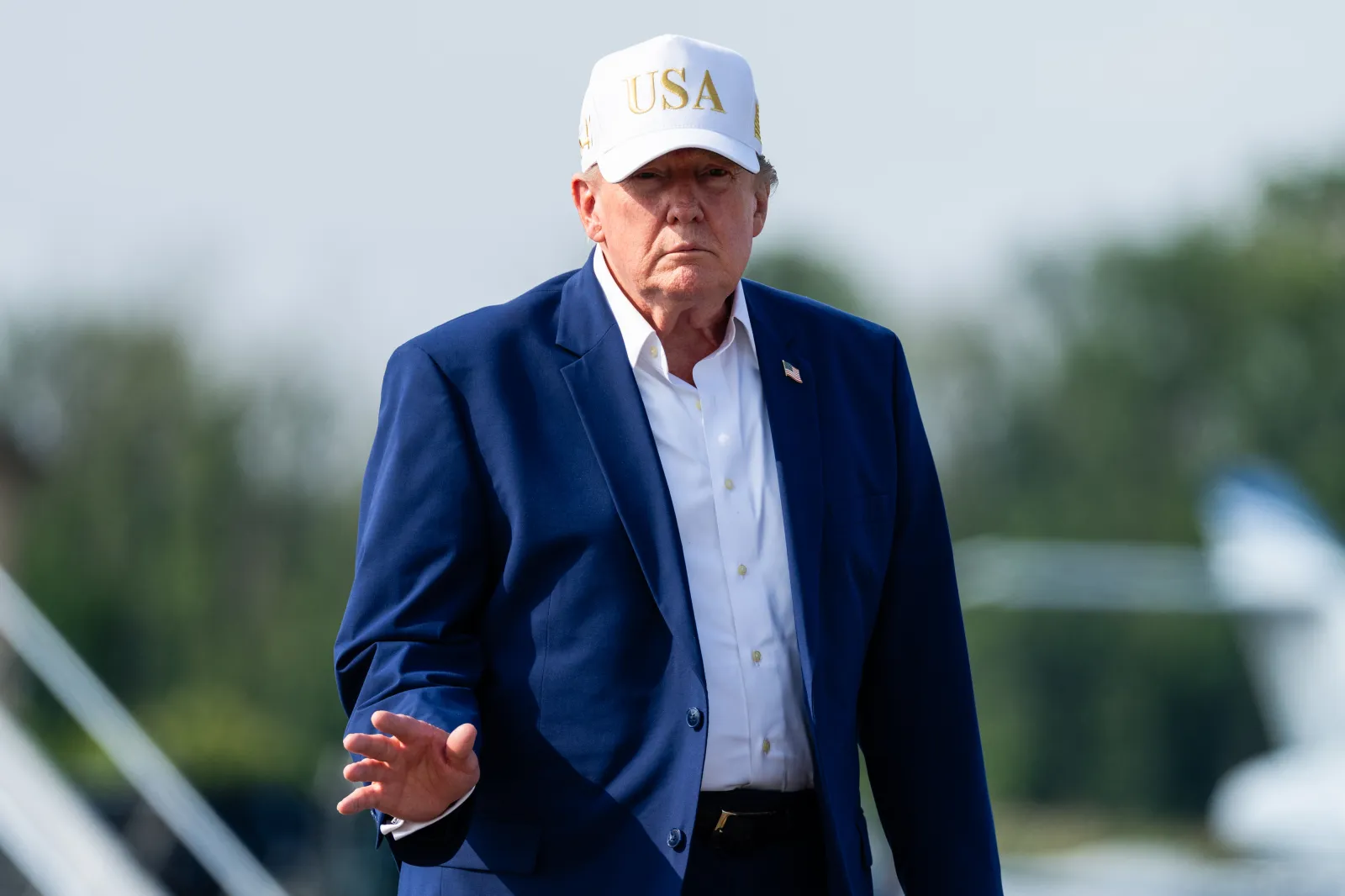
These perceptions have extended to Trump’s party. According to a Fox News survey of registered voters, Democrats are more trusted than the Republican Party when it comes to handling both the economy—a 9 percent advantage—and inflation—54 percent to 44 percent.
Paul Whiteley, an emeritus professor of government at the University of Essex in the U.K., told Newsweek that rather than inflation itself, the effects of rising prices on presidential approval is more observable in surveys of consumer confidence, which has remained rocky for the duration of Trump’s term.
"The fairly healthy economic growth experienced by the U.S. over the last couple of years is not trickling down to ordinary Americans," he added, "since over a long period of time the benefits of growth have gone to the top 1 percent in the income distribution—good growth does not raise all boats."
In response to waning confidence, the president and White House officials have attempted to convince voters that he is succeeding on this critical issue and that he inherited many lingering problems.
"The cost of rent, groceries, and other staples is coming down very fast. Our costs are coming way down. You know, they talk about affordability. I took over the country. The prices were through the roof," the president told a crowd in Las Vegas, Nevada last week, during a two-state trip the White House told Newsweek was aimed at highlighting the president's economic accomplishments.
And speaking to Fox News on Sunday, Kevin Hassett, director of Trump’s National Economic Council, blamed "runaway inflation" on Biden.
"The prices went up so much under Joe Biden [that] we totally understand why people are still frustrated when they go to the grocery store," Hassett said, adding that he too was "stunned" by the price of certain products.
Contact Newsweek editors on this story: Daniel Orton and James Debens