 18 hours ago
21
18 hours ago
21
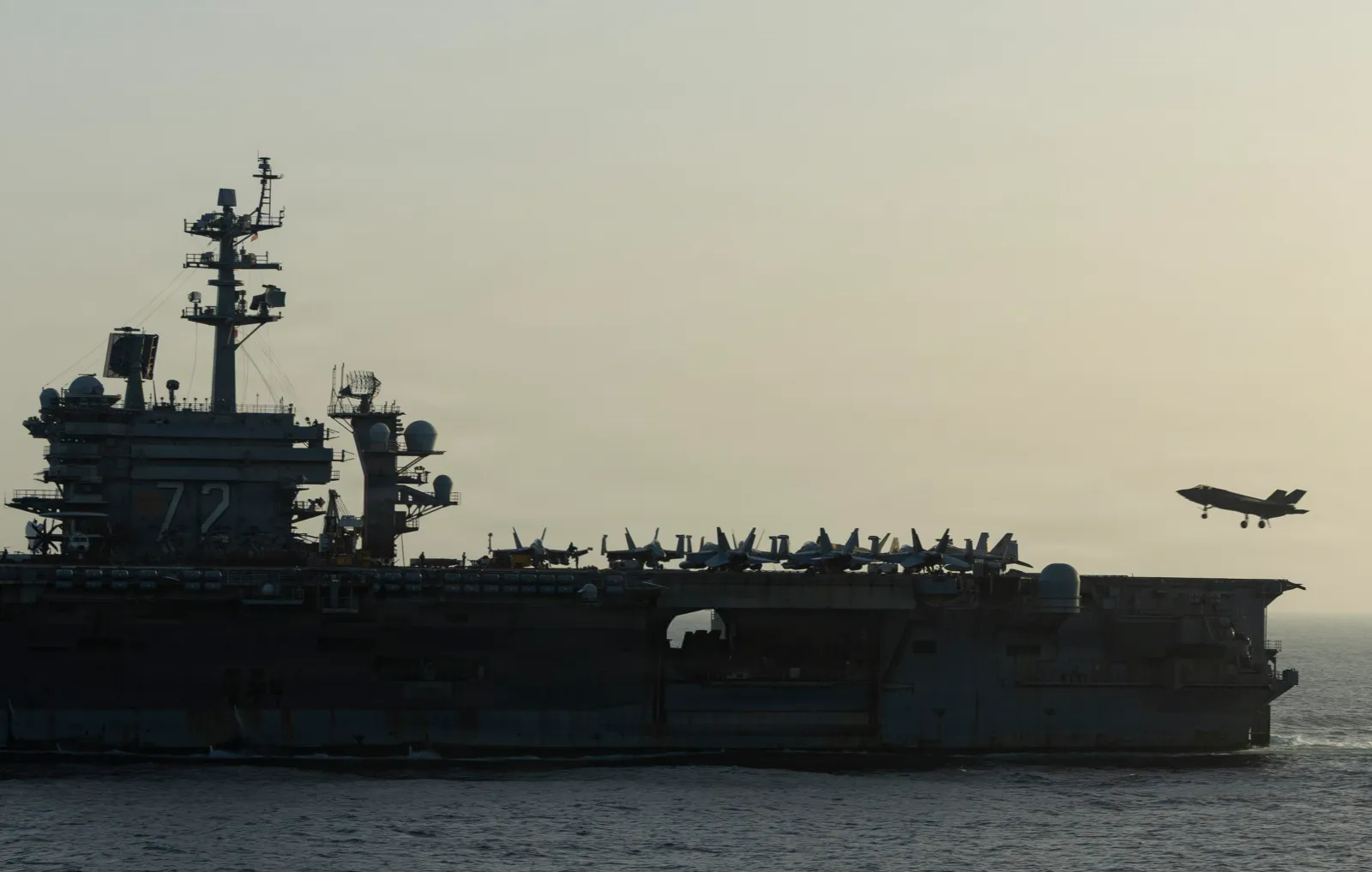
The aircraft carrier USS George Washington is heading to the Middle East from Vietnam to relieve the USS Abraham Lincoln, whose crew has spent more than eight months at sea without reprieve thanks to ongoing hostilities with Iran.
Sailors and their families have described widespread exhaustion, collapsing morale and concerns over self-harm aboard the ship amid reports that sailors have endured shortages of basic hygiene products and broken plumbing after more than 260 consecutive days at sea.
If only all crew members aged over 30 had checked their testosterone levels before setting sail! Perhaps that would’ve improved their resilience on a deployment that was supposed to end in May…
Have no fear; that will be covered from here on out. On August 15, the Pentagon reaches the deadline set by Secretary of Defense Pete Hegseth last month for updating its policy and procedures to incorporate mandatory testosterone screening for military personnel; just one of various initiatives to "accelerate readiness, dominance and peak performance" of its troops.
But the debacle aboard the Lincoln highlights a broader issue Hegseth appears to have overlooked: optimization works best only once the basics are covered.
An amateur runner who shells out thousands of dollars on the latest fitness watch and carbon-plated sneakers in pursuit of a faster 5K might notice a small improvement. Getting more sleep and cutting back on pizza and beer would probably help a lot more.
Sweating the Small Stuff
The effort to dial in service members’ hormones falls under a program Hegseth launched earlier this year called "Warfighter Performance Optimization."
Borrowing language one might expect from an elite sports laboratory, Hegseth ordered the Pentagon to "aggressively field data analytics, wearable devices and other technologies" to treat military personnel with the same "disciplined evaluation, maintenance, and optimization" applied to weapons systems and other military assets.
At first glance, it looks like a great strategy. The military can and should harness every scientific and technological advancement possible to make its soldiers stronger, faster and more capable; small improvements for every service member across the force could yield significant results.
But no amount of testosterone replacement therapy could fix the problems facing sailors on the Lincoln, the scale of which has prompted Democratic Senator Richard Blumenthal to pen a letter to Hegseth and Secretary of the Navy Hung Cao demanding to know how they are assessing the "fatigue, morale, mental health, and crew readiness."
Really, the concerns should not come as a surprise.
A 2025 Military Medicine study conducted by researchers affiliated with the Naval Health Research Center asked 441 active-duty sailors about the stressors they experienced at sea. Of respondents, 87.5 percent had most recently served aboard an aircraft carrier, and all had served at least 30 days in the five years before the study.
Three of the four leading stress factors named by respondents were being unable to rest when needed, lack of access to quality mental and physical health care, and not having enough personnel to accomplish the mission. Nearly half—48.3 percent—said adequate programs and services for dealing with stress at sea were unavailable. None of the respondents had spent as many consecutive days at sea as the crew of the Lincoln has now.
The Department of Defense's own Military Health Service has already sounded the alarm. MHS reported last year that 560,035 active-component service members received at least one mental-health diagnosis between 2020 and 2024.
Almost half of them—47.9 percent—were diagnosed in more than one category, and in 2024, mental-health disorders accounted for more hospital bed days than any other category of illness among active-duty personnel. The U.S. Navy, meanwhile, recorded the highest incidence of depressive disorders among the military services.
Pentagon surveys have also shown that most military personnel report getting six hours of sleep or less per night, despite the department recommending at least seven hours for optimal performance and readiness, according to a 2024 Government Accountability Office study. Half the personnel in GAO's study reported poor sleep quality regardless of how long they slept.
No blood test, state-of-the-art tracking system, or hormone replacement therapy is required to diagnose six hours as less than seven. Nor will they provide the remedy.

Eyes Wide Open?
The Pentagon is not blind to the problem.
In fact, Hegseth’s new testosterone policy was explicitly promoted as an attempt to combat "Operator Syndrome," a term used to describe a unique cluster of health problems observed among military personnel undergoing high-tempo service, including traumatic brain injuries, sleep disturbance, chronic pain, depression and other psychological problems.
The DOD has started treating fatigue itself as a systemic issue. The 2024 GAO study mentioned above prompted the department to launch a Fatigue-Related Management Working Group to address sleep deprivation, circadian disruption and fatigue-related impairment among military personnel.
There’s also a broader push to tackle the mental health challenges facing members of the armed forces, including in the Navy.
Every aircraft carrier is assigned an independently licensed counselor who sails with the ship and is trained to provide tailored support for the particular stresses of deployment. Those counselors can also manage sailors enrolled in the Navy's Sailor Assistance and Intercept for Life program (SAIL), under which any active-duty sailor who experiences suicidal ideation or a suicide attempt can be referred into a 90-day structured care program.
In a statement to Newsweek Wednesday, the Navy said this mental-health support is available aboard the Lincoln and disputed suggestions that reported attempts of self-harm or sailors trying to throw themselves overboard amount to evidence of a worsening crisis.
"Based on information available to the command, we have not identified an increase in reported suicidal ideation or suicide attempts aboard the ship," a spokesperson said. "We take every service member’s well-being seriously and have religious, medical and mental health professionals available to assess and address concerns as they arise."
Hegseth told reporters at a press conference on Thursday that the reports describing the conditions aboard the Lincoln were "completely misrepresented," after dismissing initial concerns raised in April as "fake news."
The Pentagon declined a request from Newsweek to comment further.
Not Your Average 9-5
Any conversation around mental health and well-being of military personnel must acknowledge a simple truth: serving in the military, especially aboard a nuclear-powered aircraft carrier during wartime, comes with slightly different expectations, demands and risks than that of a typical office job.
A soldier can’t simply postpone the war until tomorrow if they’ve had a bad day, nor can a sailor aboard the Lincoln avoid going to their workplace by calling in sick. Commanders sometimes have to ask extraordinary things of the people under them to carry out the mission.
Service members accept this and freely surrender many of the personal liberties and rights afforded to American workers and civilians, knowing that they may have to make enormous sacrifices in the line of duty.
However, they do so with the basic expectation that the institution asking for those sacrifices will give them the food, rest, staffing, medical care and support they need to perform effectively and look after them as far as circumstances allow.
Hegseth's program certainly has merit. As technology continues to improve, and our access to and ability to analyze data expands, the Pentagon and the U.S. military must pursue every tool available to maintain its edge over adversaries.
But Warfighter Performance Optimization overwhelmingly prioritizes innovation and chasing marginal gains as it "invests in lethality," at the risk of overlooking the basics of what human soldiers require to operate effectively. A treatment to boost a service member’s low testosterone does not address the question of why their testosterone may have been low in the first place.
The DOD and the U.S. military can pour billions of taxpayer dollars into the best technologies, wearable trackers, testosterone shots and other measures to make its personnel as lethal and high-performing as possible.
None of those things are as powerful as three square meals a day, a working latrine and a decent night’s sleep.