3 hours ago
24
Prime Minister Benjamin Netanyahu’s right-wing bloc won 53 seats in Israel’s 120-member Knesset, or parliament, well below the 68 seats it had controlled at its peak in the previous parliament.
The bloc supporting Netanyahu’s main rival, Gadi Eisenkot, won 48 seats in an extremely tight election race, meaning neither secured the 61 seats needed to form a government.
The count is complete, but the results still need to be certified and submitted to the country’s president next Wednesday.
President Isaac Herzog will then consult with party chairs and choose a candidate who he thinks has the best chance to form a government.
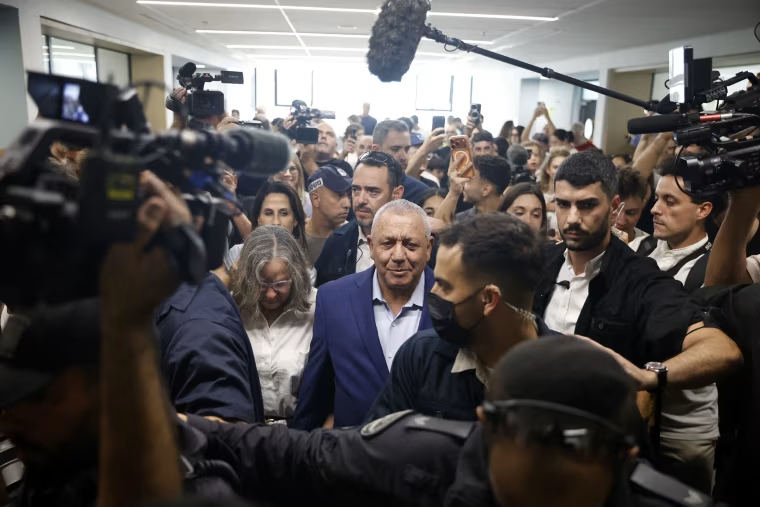 Yashar Party leader Gadi Eisenkot at a polling station in Herzliya on Tuesday.Amir Levy / Getty
Parties led by Israel’s Arab minority made historic gains, winning a combined 19 seats in a race that saw Palestinians with Israeli citizenship head to the polls in record numbers Tuesday, many hoping to oust Netanyahu and far-right members of his coalition including Bezalel Smotrich, his finance minister, and National Security Minister Itamar Ben-Gvir.
Both leading blocs have ruled out the possibility of forming a government with the two main Arab parties, Ra’am and the Joint List. But their rise as potential kingmakers has brought the complex realities faced by Palestinian Israeli nationals into fresh focus.
Ahead of the election, Netanyahu and other members of his coalition amplified allegations of foreign election interference, referring Arab parties to the country’s domestic security service, the Shin Bet, for investigation over allegations of Qatari intervention.
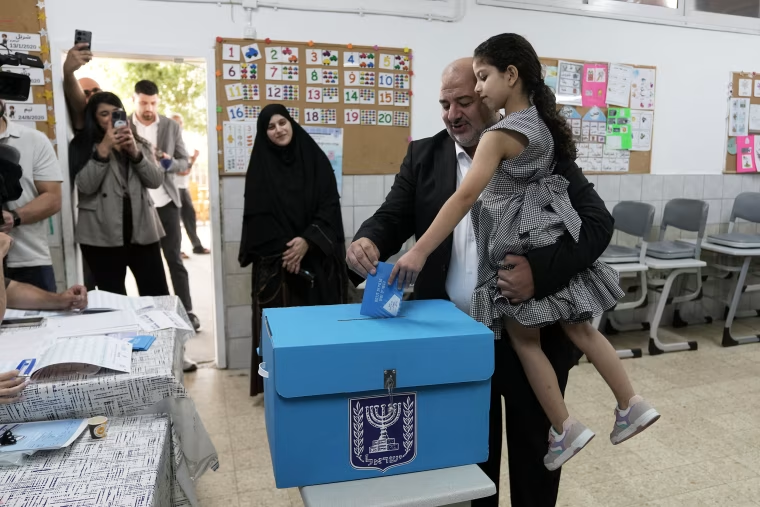 Ra'am party leader Mansour Abbas casts his ballot Tuesday with his family in Maghar.Mahmoud Illean / AP
Qatar denied the allegations. Mansour Abbas, the head of Ra’am, said his party had “no connection” to such conduct and urged a full investigation. He also accused Netanyahu of a “campaign of incitement and delegitimization” against Arab citizens.
Dean Livne, the acting director general of Israel’s Central Elections Committee, said in published letter sent to a parliamentarian there was “no basis for allegations of systematic violations of electoral integrity.”
Ahead of the election, both Netanyahu and Eisenkot ruled out forming a government with the Arab parties.
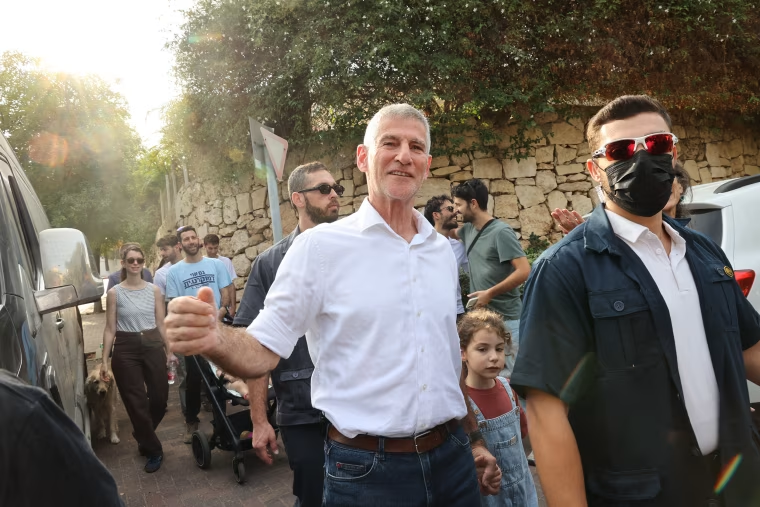 Yair Golan, the leader of Israel’s Democrats.Gil Cohen-Magen / picture alliance via Getty
But Yair Golan, the head of the smaller left-wing Democrats party, called for a government formed “in partnership” with Arab parties. “We must no longer accept Netanyahu’s racist division between Jewish votes and Arab votes,” he said Wednesday on X.
The majority of Palestinians with Israeli citizenship are the descendants of those who remained within what became Israel during the war that led to the country’s founding in 1948. At the time, hundreds of thousands more were expelled from their homes or fled.