
 7 hours ago
16
7 hours ago
16
A federal judge has struck down a Trump administration rule that lowered wage requirements for many foreign agricultural workers, ruling that the Labor Department failed to show the changes would protect U.S. farmworkers from depressed wages and unlawfully bypassed much of the normal federal rulemaking process.
In a 28-page order issued Tuesday, U.S. District Judge Kirk Sherriff, a Biden appointee, held that the Department of Labor's 2025 overhaul of the H-2A wage system was unlawful. The administration had argued it was necessary to address labor shortages in agriculture and reduce costs for growers facing tougher immigration enforcement.
While the judge stopped short of immediately vacating the rule, citing concerns about disrupting the agricultural labor market, the court ordered the Labor Department to quickly develop a new wage-setting methodology and warned that some employers could eventually face backpay liability if the replacement wage rates are higher.
"This decision recognizes the important and essential work of the men and women who put food on our tables and that farmworkers should get paid fairly," Teresa Romero, president of the United Farm Workers, said in a press release. "The government must move quickly to issue new, legal, wage rates that protect the jobs and wages of local farmworkers, and employers must be held accountable for paying back any difference between the new legal wage and the illegal wage rates still in effect."
Newsweek reached out to the Department of Labor for comment via email Wednesday afternoon,
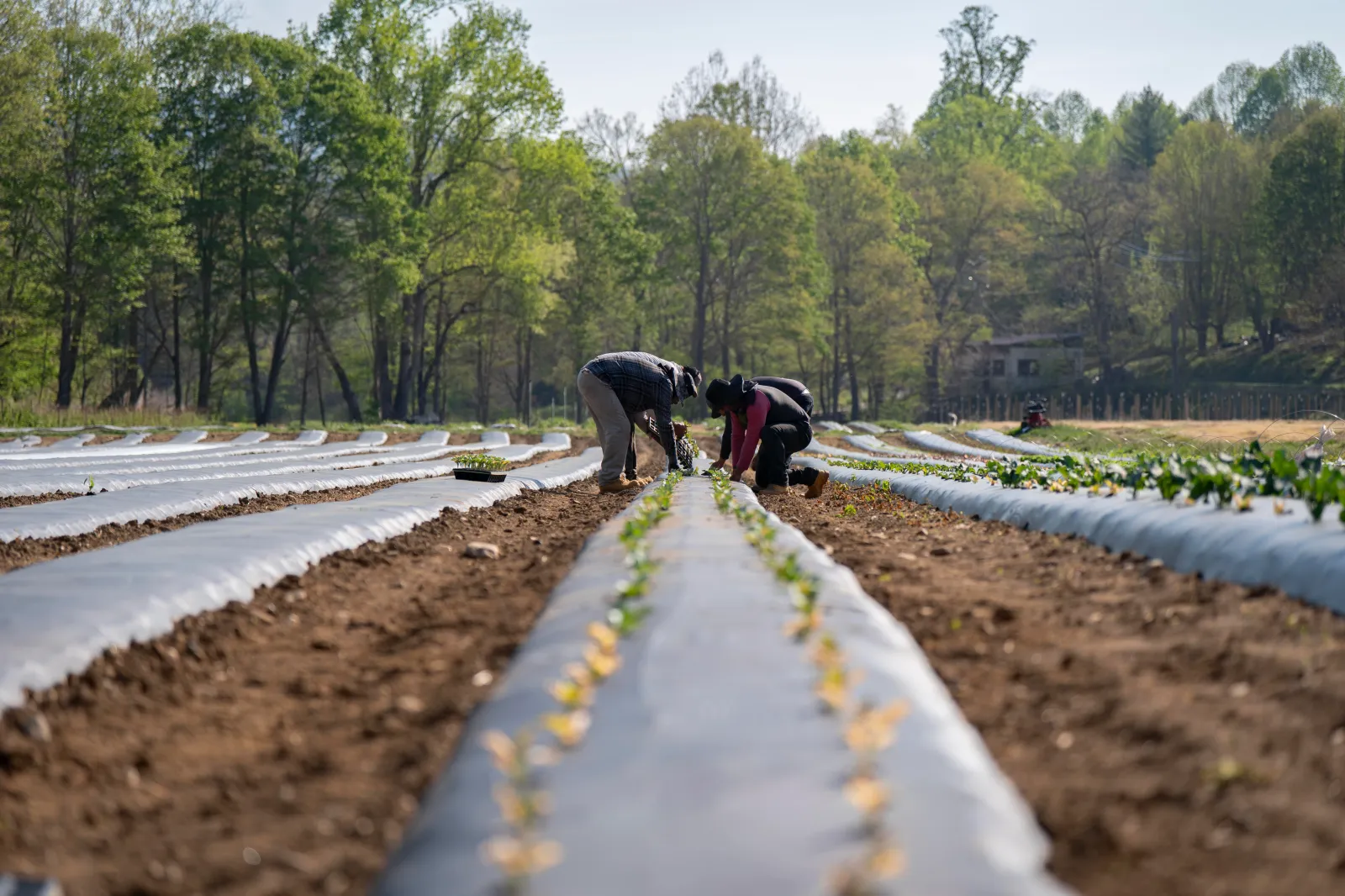
What is the H-2A Wage Rule?
The case centered on the Adverse Effect Wage Rate, or AEWR, the minimum wage that most employers must pay foreign workers hired through the H-2A agricultural visa program. Federal law requires the Labor Department to ensure that hiring temporary foreign workers does not "adversely affect" the wages and working conditions of similarly employed U.S. workers.
For decades, the government generally set those wage rates using USDA farm labor data and relied on statewide or regional averages. But after USDA discontinued its Farm Labor Survey in 2025, the Labor Department issued an interim final rule that immediately changed how wages were calculated.
According to United Farm Workers (UFW), the rule cut many farmworkers’ wages by up to $7 per hour, depending on the state. The DOL estimated the rule would annually transfer $2.46 billion in wages from workers to employers.
The rule also introduced a new two-tier wage structure, shifted to a different government wage survey, created a new "housing adjustment" that effectively lowered required wages to account for employer-provided housing, and adopted new job-classification standards that critics said could reduce pay for workers performing higher-skilled duties.
The department acknowledged at the time that the changes would generally reduce wage rates for H-2A workers and likely result in "wage transfers" to employers.
Why the Judge Rejected It
The ruling repeatedly returned to a central question: whether lower H-2A wages would undermine wages for American farmworkers.
The judge found that the administration failed to adequately justify setting wage rates for the overwhelming majority of H-2A workers at levels well below historical market averages. Under the rule, roughly 92 percent of H-2A positions would fall into the lowest skill tier, with wages based on the 17th percentile of workers in that occupation rather than average earnings.
"By setting the AEWRs for the vast majority of H-2A workers well below the relevant market wages through its use of the tier system, the IFR failed to reasonably consider whether its methodology could fulfill DOL's statutory duty," the judge wrote.
The court was especially critical of the housing adjustment, finding it could make H-2A workers cheaper to hire than some domestic workers.
Because employers are already required by law to provide housing for H-2A workers and certain U.S. farmworkers, the judge concluded that reducing wages to account for housing costs could create incentives for employers to favor foreign workers over some American workers.
The court also found flaws in the administration's use of a new wage survey and in a job-classification system that critics argued could allow employers to assign workers to lower-paying wage categories even when they perform some higher-paid duties.
"Farmworkers' jobs are very difficult," Crisanto Serrano, a farmworker in Sunnyside, Washington, and a plaintiff in the lawsuit, said in a press release. "Even so, there are many here in Sunnyside who look for work but can't find any. More and more, the growers just want to hire H2-A workers, who they can keep trapped on their property, instead of us local workers, who live here and who pay taxes here and have decades of experience.
"We don't matter to the growers and to this President. They are happy to hire a new worker for less pay. But I am very happy that the court did take us into account. I hope this court decision will protect our wages and our jobs here in the Yakima Valley for a long time. Us workers have to stay united."

How This Fits With Trump's Immigration Agenda
The wage rule emerged as the Trump administration sought to pair aggressive immigration enforcement with an expansion of legal labor pathways for industries that rely heavily on immigrant workers. The administration argued that many farms had become dependent on unauthorized labor and that lower H-2A wage requirements would make it easier for growers to transition to a legal workforce.
In the rule itself, the Labor Department pointed to the administration's immigration enforcement efforts and argued that the expected departure of many unauthorized workers could create labor shortages, increase labor costs and threaten agricultural production. Officials said reforms to the H-2A wage system were needed to make the program a more practical alternative to employing undocumented workers.
That rationale closely mirrors a broader Trump administration approach that has combined large-scale deportation and enforcement efforts with pressure on employers to use temporary legal worker programs instead.
Similar arguments have surfaced in debates over H-2A visas, H-1B visas and other employment-based immigration programs, with administration officials frequently portraying legal guest-worker systems as substitutes for unauthorized labor.
The judge, however, questioned whether the government had demonstrated that lower wages were necessary to accomplish that transition. The ruling noted that the H-2A program has no numerical cap and observed that participation in the program had grown dramatically over the past decade.
The court also pointed to federal data showing strong farm-sector income in 2025, undermining claims that employers had been priced out of hiring legal workers at previous wage levels.
"The IFR fails to show why hiring more H-2A workers at then-current AEWRs was not feasible," the judge wrote.
What Happens Next?
The court ordered the Labor Department to quickly develop a new wage-setting system and publish replacement wage rates. The judge retained jurisdiction over the case and ordered the government to provide an update within two weeks on its progress.
The current rule will remain in place temporarily while the agency drafts a replacement, but the court also directed officials to warn employers that they may eventually face wage-adjustment payments if the new methodology results in higher wage rates than those currently being paid.
Whether workers ultimately receive back pay will be decided after the Labor Department releases its new wage schedule.
Contact Newsweek editors on this story: Gabe Whisnant and Gray R. Thomas