 3 days ago
28
3 days ago
28
Parts of California's Sacramento Valley are sinking at an alarming rate as years of intensive groundwater pumping take a toll on the region's aquifers, according to new research that highlights growing concerns over long-term water security in the American West.
Researchers found that some areas of the valley floor subsided by as much as a foot and a half in a single year during California's recent drought, putting increasing pressure on one of the nation's most important farming regions.
The Sacramento Valley, which helps power California's nation-leading agricultural economy, relies heavily on groundwater during periods when surface water supplies become scarce.
During the severe 2020-2022 drought, farmers increasingly turned to underground water reserves as reservoir levels and river flows declined, leading to intensified pumping across the region.
Study Finds Abrupt Shift During Historic Drought
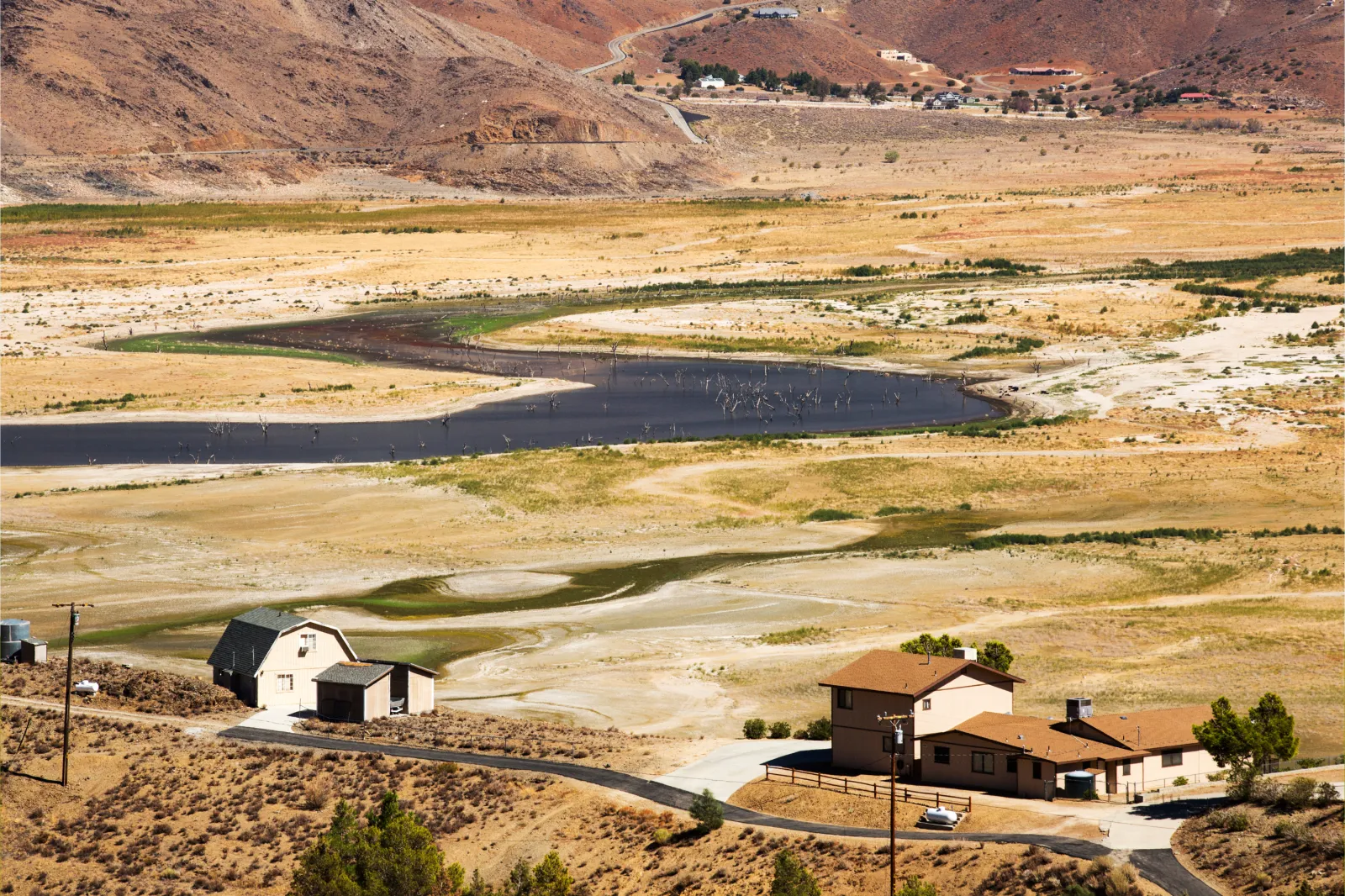
While land subsidence has long affected California's Central Valley, a study published in July in the Proceedings of the National Academy of Sciences found evidence of an abrupt and potentially dangerous acceleration during the recent drought.
Researchers described the shift as a transition from largely reversible ground deformation to irreversible compaction, meaning parts of the aquifer were compressed beyond the point of recovery. The loss of pore space permanently reduces the amount of water the aquifer can store, even if future rains replenish groundwater supplies.
The study used satellite-based observations to monitor subtle movements of the Earth's surface across the valley. By tracking those changes, scientists were able to identify areas where the ground continued to sink even after groundwater levels improved, suggesting that underground sediments had been permanently compressed.
According to the researchers, traditional groundwater monitoring wells didn’t fully capture the scale of the problem. Satellite measurements offered a broader regional view, revealing that the aquifer's response to drought was more widespread than previously thought.
Why Permanent Compaction Matters
The distinction between reversible and irreversible subsidence is significant because it affects an aquifer's future storage capacity.
When groundwater is pumped from underground sediments, the resulting loss of pressure can cause those sediments to compact. In some cases, pore spaces can rebound when water levels recover. However, if compaction becomes severe enough, the sediment structure collapses permanently, reducing the amount of water the aquifer can store in future years.
Researchers concluded that large portions of the Sacramento Valley may have crossed this threshold during the 2020-2022 drought. The study suggests that some groundwater storage capacity lost during that period may never be regained, even if future wet years replenish water supplies.
Risks for Agriculture and Infrastructure
The findings carry significant implications for California agriculture.
The Central Valley is among the world's most productive farming regions and produces a substantial share of the nation's fruits, nuts, and vegetables. Groundwater serves as a critical backup supply during drought years, making the long-term health of aquifers vital to the region's economy.
Scientists also warn that land subsidence can create broader problems beyond water availability. Sinking ground can damage roads, bridges, canals, and other infrastructure while increasing flood risks in some areas. Monitoring subsidence patterns has therefore become an important part of groundwater management efforts.
What the Map Shows
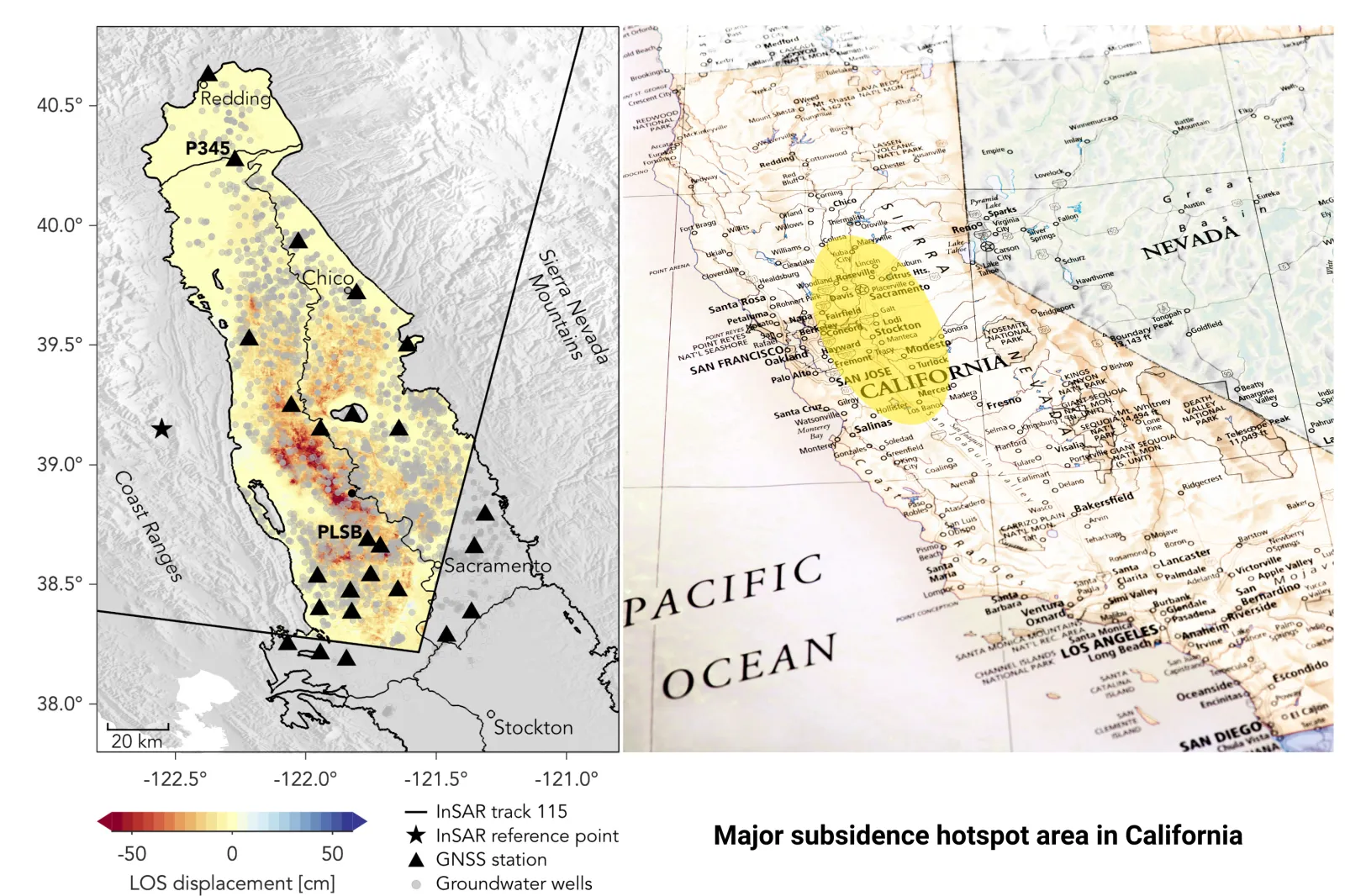
The map highlights areas of the Sacramento Valley where subsidence accelerated during the 2020-2022 drought.
The data suggests that the problem is not limited to isolated pockets but reflects a broader regional response to drought and groundwater depletion.
As droughts become more frequent and water demand continues to grow, researchers say protecting groundwater reserves could prove critical to the future of California's agricultural heartland and the broader U.S. food supply.