 8 hours ago
13
8 hours ago
13
A series of maps shows where confirmed tornadoes have struck the U.S. in 2026, as Illinois heads toward a record-breaking year of tornado activity.
Illinois has recorded 203 confirmed tornadoes in 2026, more than triple its 20-year annual average.
The maps below, based on monthly data from the National Centers for Environmental Information (NCEI), show how tornado activity has spread across the country throughout the year.
January
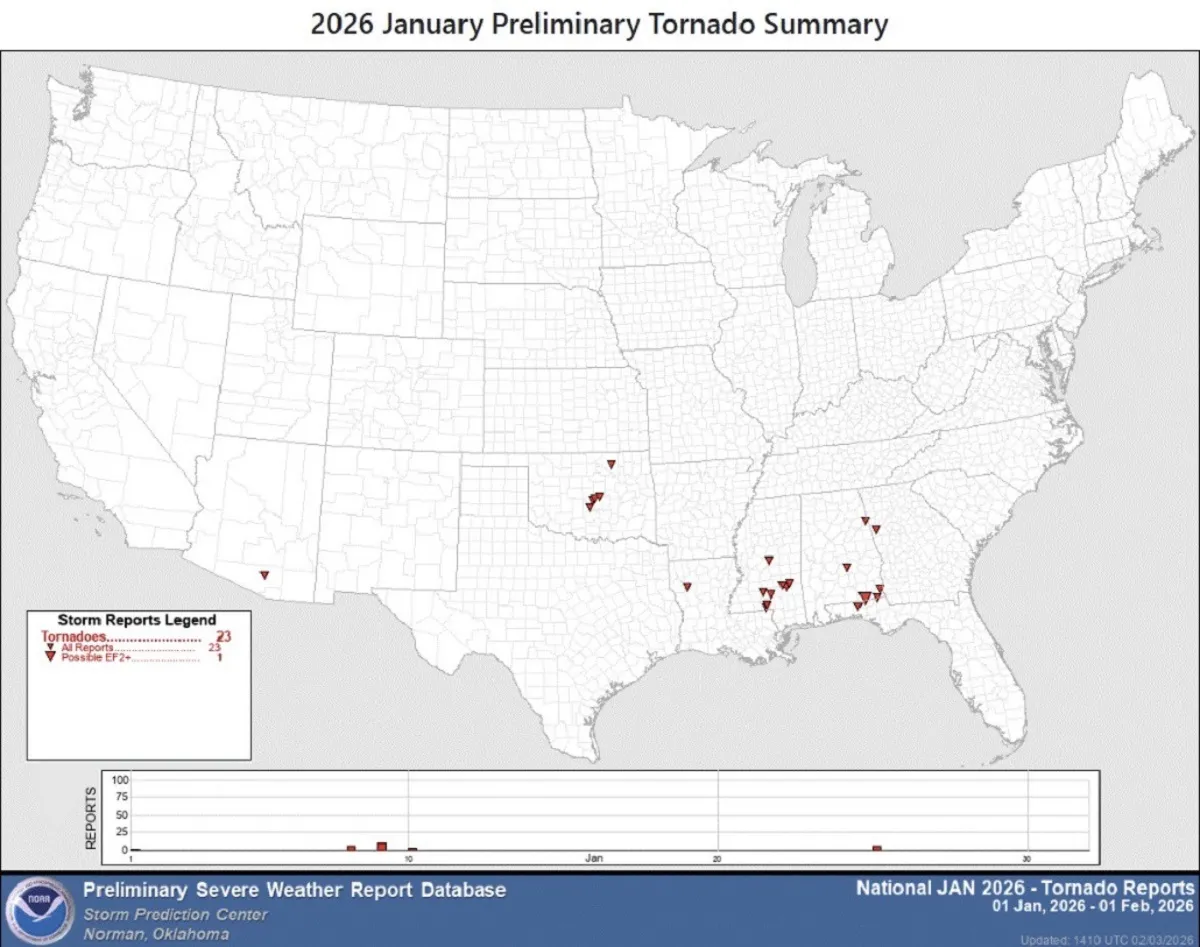
January averages 39 tornadoes across the U.S., with tornado activity typically concentrated along the Gulf Coast caused by the interaction of warm, moist air from the Gulf and cold air masses moving into the Deep South. The National Oceanic and Atmospheric Administration (NOAA)'s Storm Prediction Center recorded 23 preliminary tornado reports in January 2026, 59 percent of the 1991–2020 average. Tornadoes were reported on five days during the month.
February
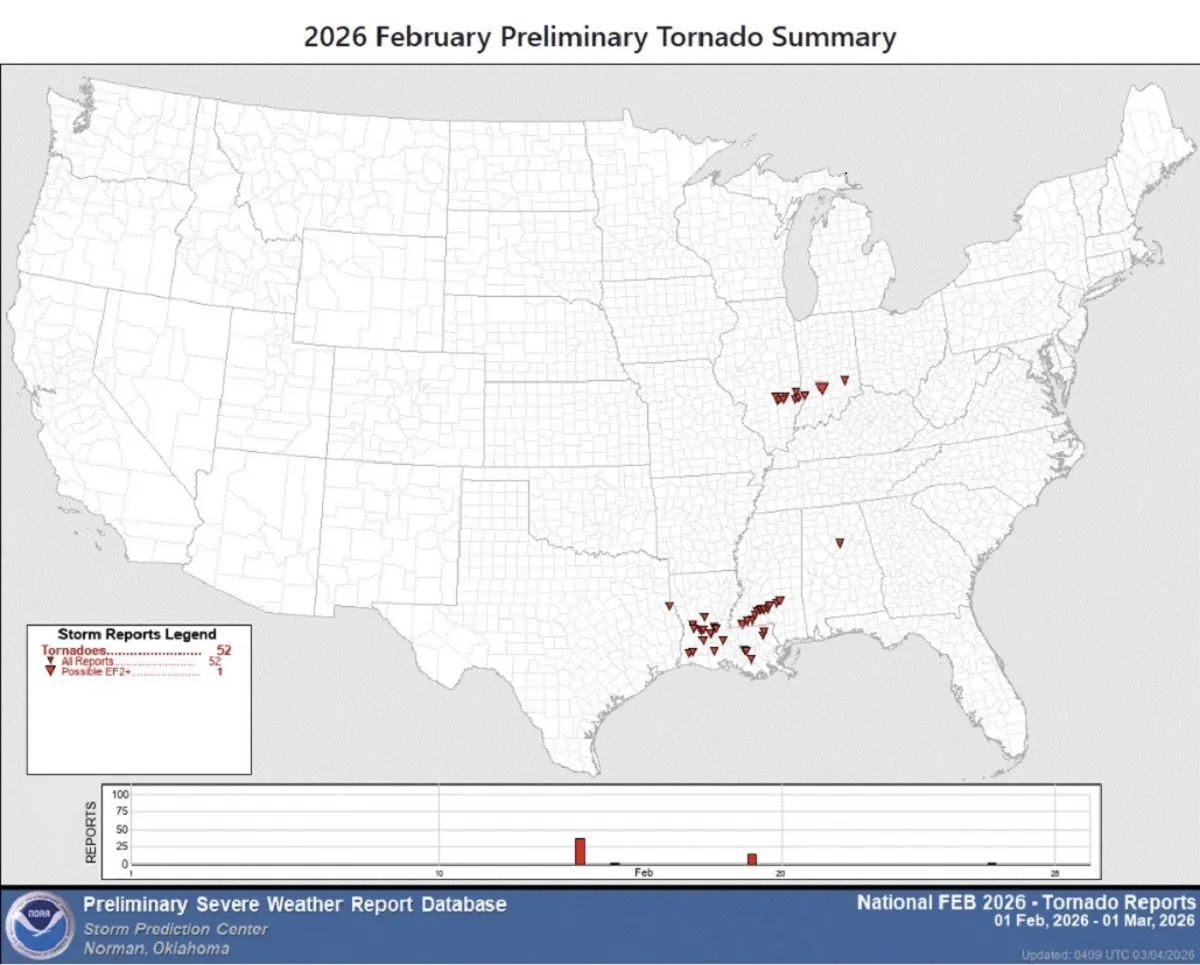
February averages about 36 tornadoes in the U.S., with activity typically concentrated along the Gulf Coast. NOAA's Storm Prediction Center recorded 52 preliminary tornado reports in February 2026, 44 percent above the 1991–2020 average and the fourth consecutive February with above-average activity. Much of the first half of the month was quiet, while activity increased along the Gulf Coast and parts of the Midwest during the second half, producing four tornado days.
March
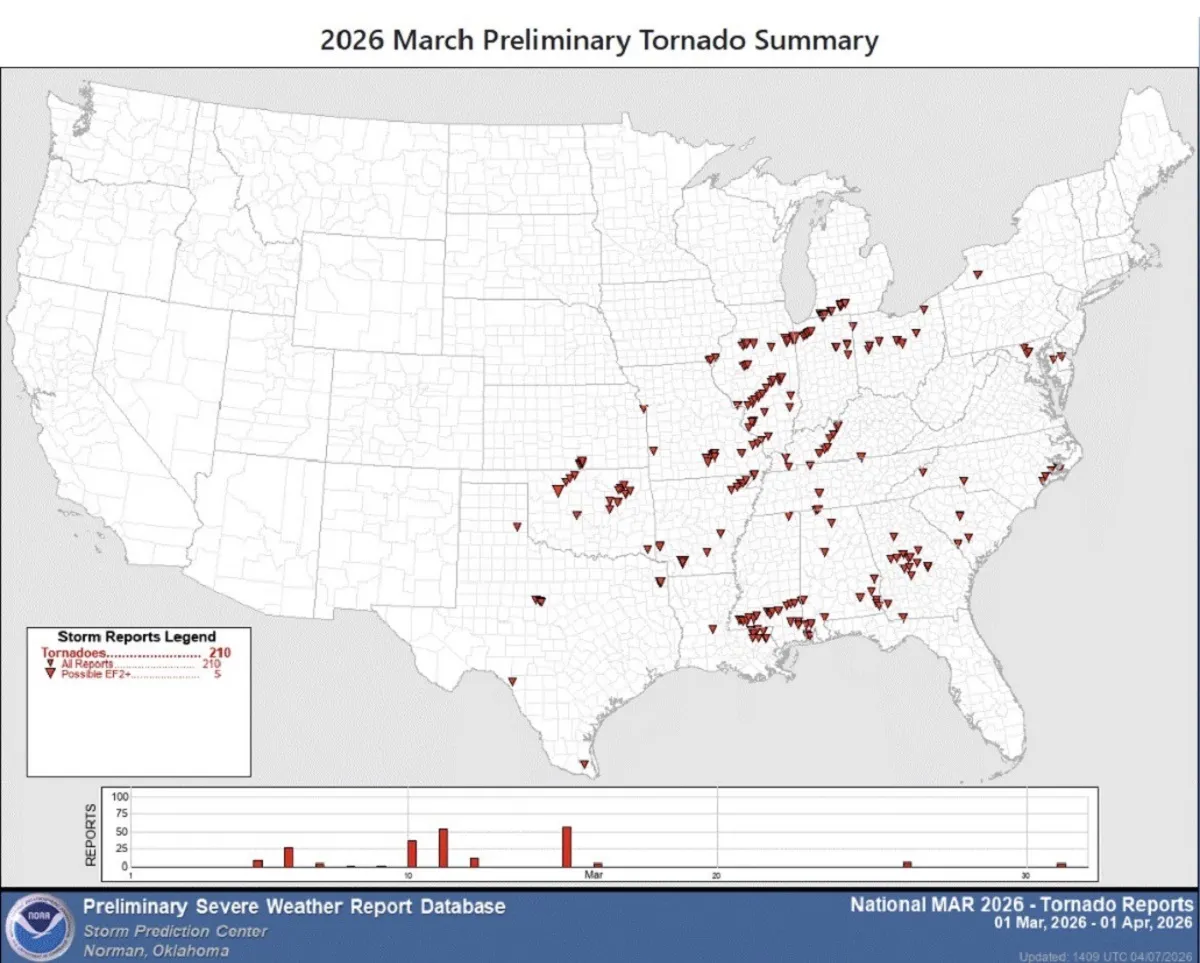
March brought a significant increase in tornado activity across the central United States. There were 12 confirmed tornadoes across the Chicago and Northern Indiana areas on March 10, as reported by the National Weather Service. March averages about 80 tornadoes in the U.S., with activity typically concentrated across the southern Plains and Gulf Coast states. NOAA's Storm Prediction Center recorded 202 preliminary tornado reports in March 2026—about 2.5 times the 1991–2020 average and the fourth-highest March total on record. More than 85 percent of the month's reports occurred on four days: March 6, 10, 11 and 15.
April
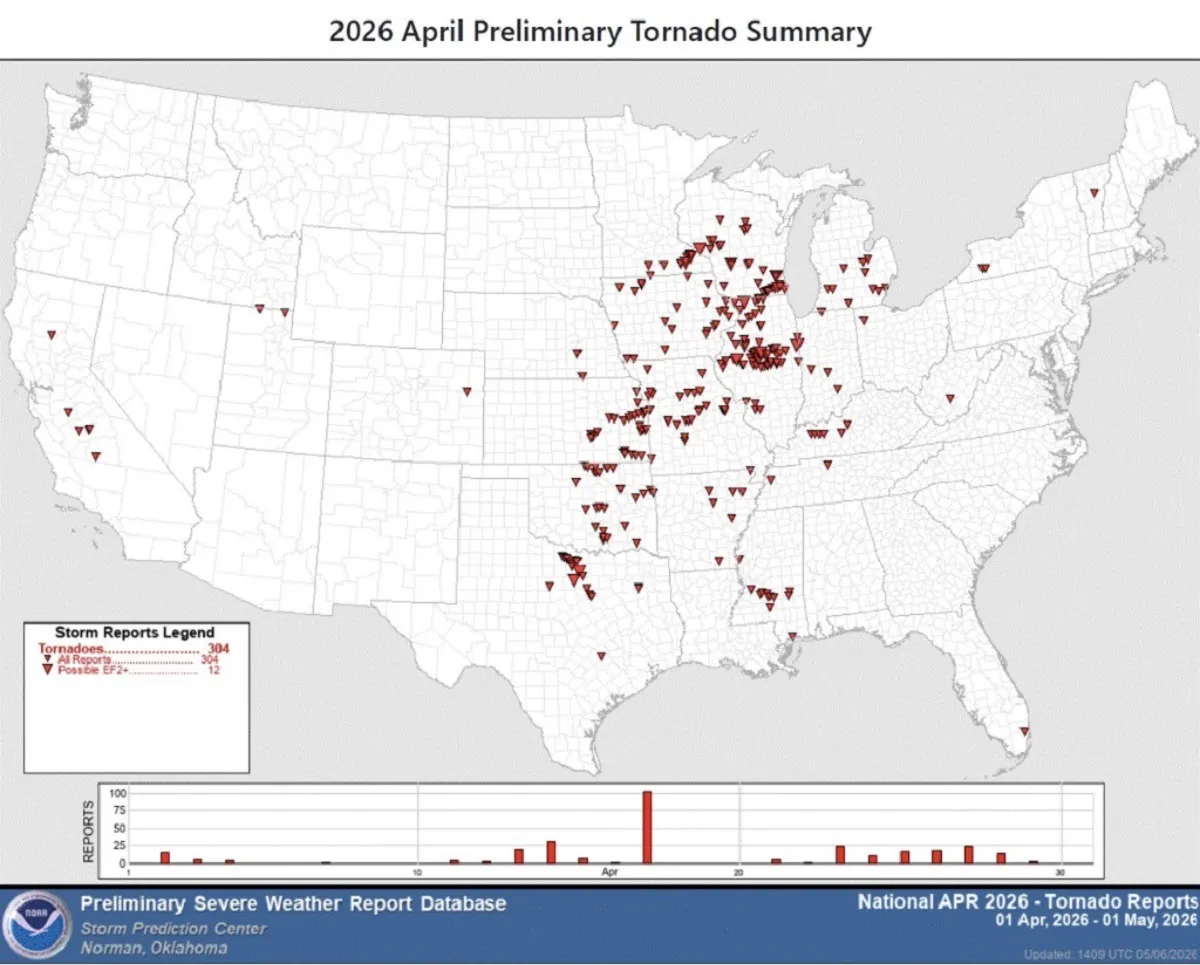
April typically ranks as the third-most active month for tornadoes in the U.S., with a 1991–2020 average of 182. NOAA's Storm Prediction Center recorded 304 preliminary tornado reports in April 2026, about 67 percent above average and the fourth-highest April total on record. Activity was concentrated along a corridor from the southern Plains to the Great Lakes and Upper Midwest, with more than 90 percent of reports occurring across 10 days.
May
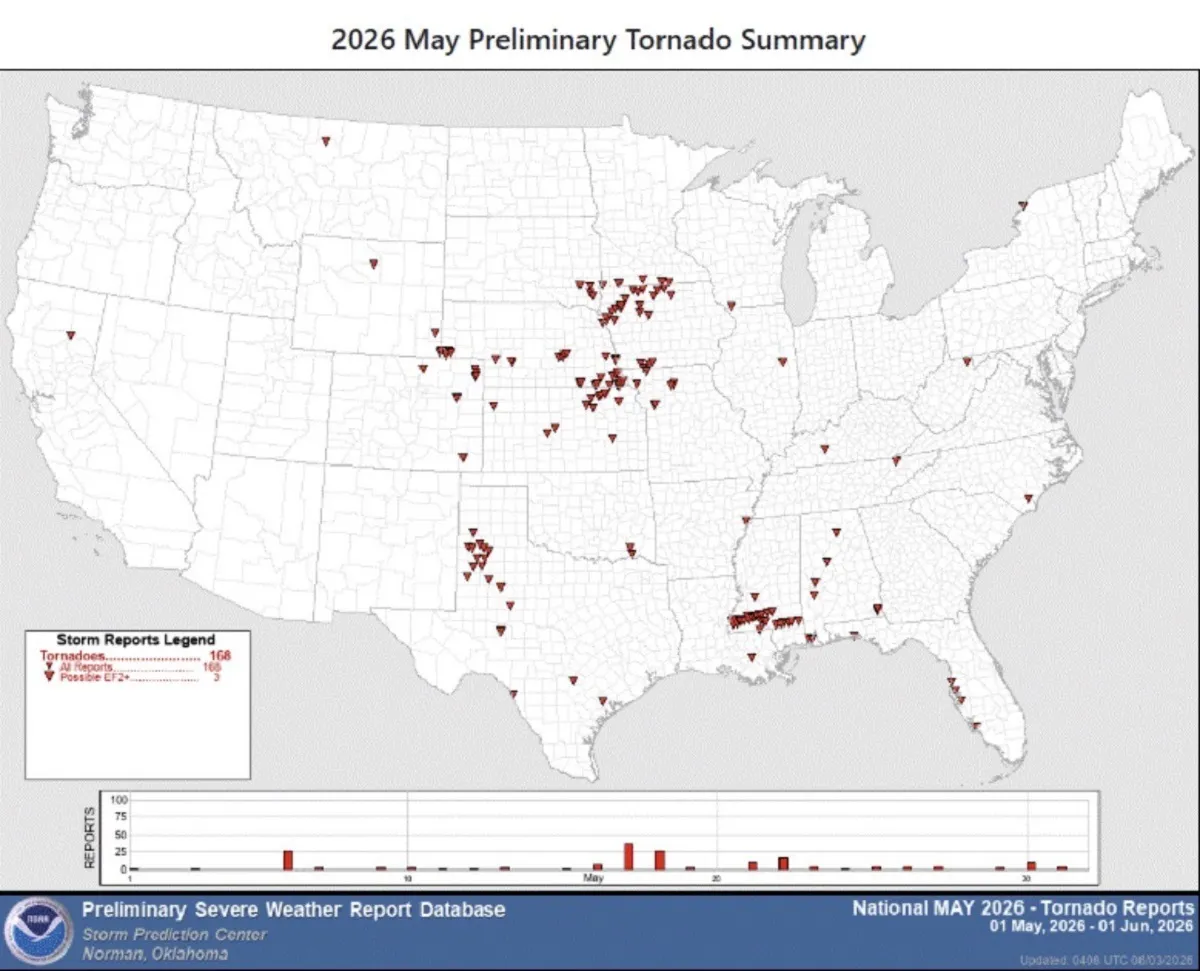
May is typically the peak month for tornado activity in the U.S., with a 1991–2020 average of 268 tornadoes. NOAA's Storm Prediction Center recorded 168 preliminary tornado reports in May 2026, about 63 percent of the average and the least-active May since 2020. Activity was concentrated across parts of the southern and central Plains and central Gulf Coast, with nearly 74 percent of the month's reports occurring on four days: May 6, 17–18 and 22.
June
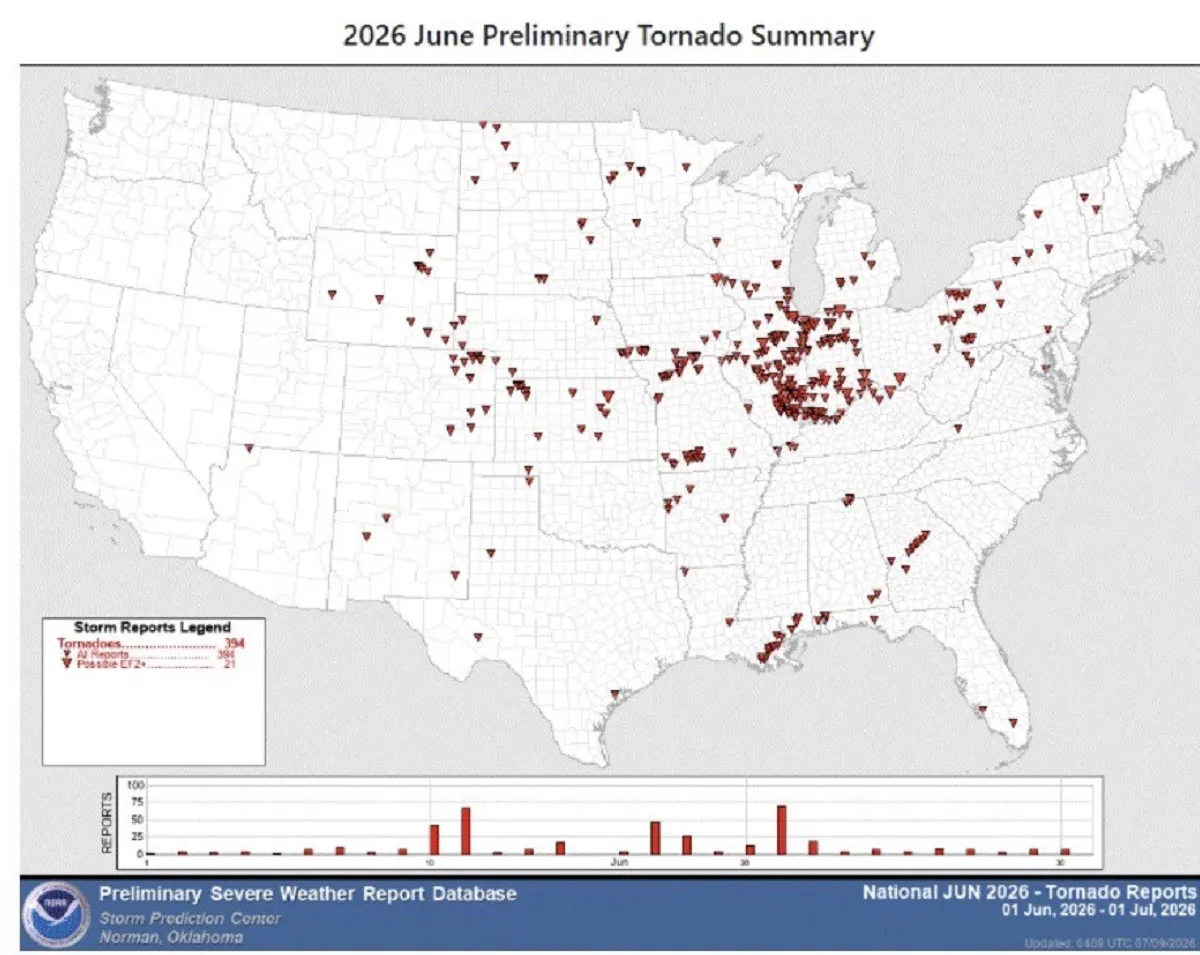
June typically has the second-highest number of tornadoes in the U.S., with most concentrated across the Plains and Midwest. According to NOAA's Storm Prediction Center, there were 374 preliminary tornado reports during June, 176 percent of the 1991–2020 average of 212.6 and the third-highest June total on record. Illinois and Indiana saw the highest concentration, with tornadoes reported on all but one day. Four days—June 10–11, 17 and 21—accounted for 60 percent of the month's reports.
July
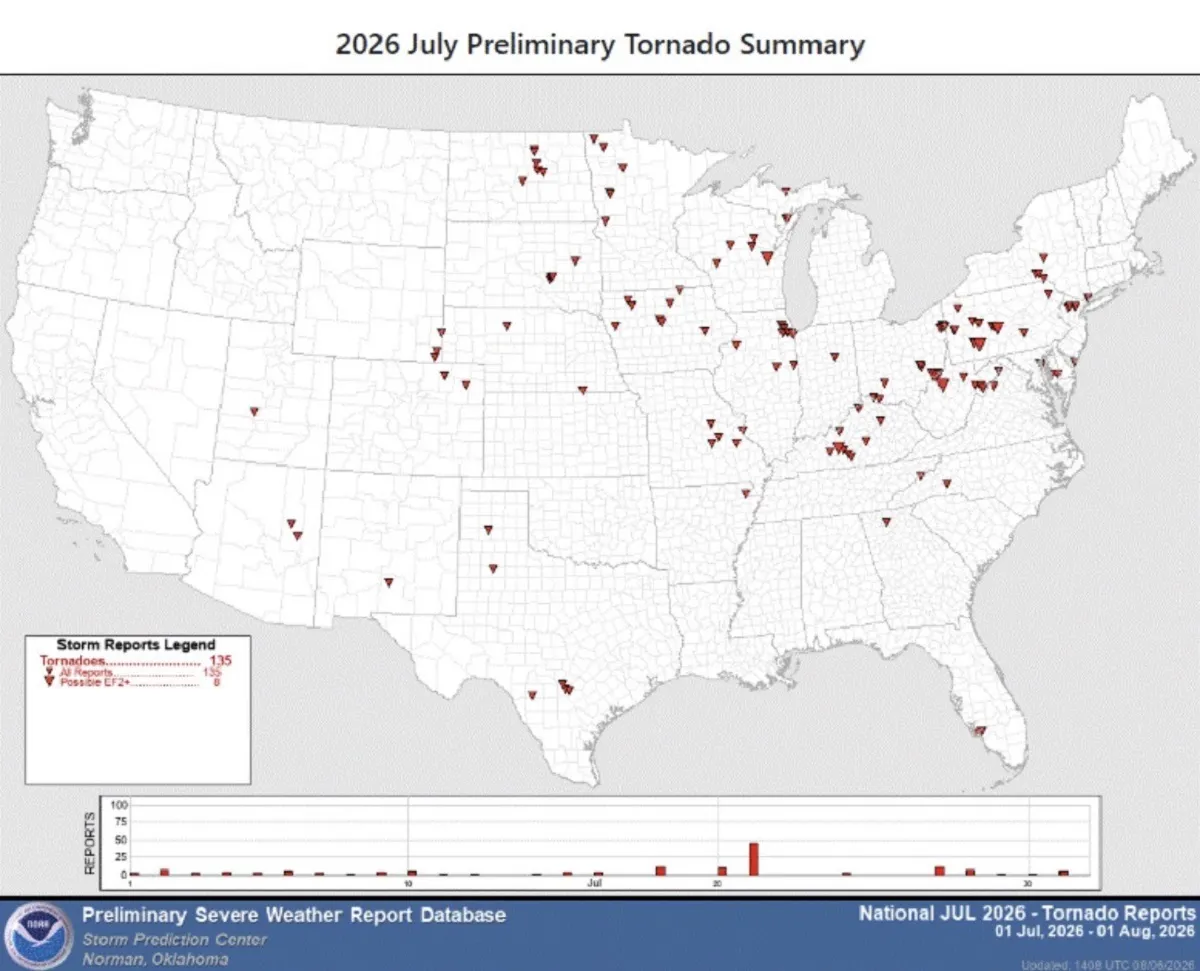
July typically has the fourth-highest number of tornadoes in the U.S., with most occurring across the central and northern Plains and Upper Midwest. Florida also regularly sees mid-summer tornadoes linked to tropical cyclone activity. NOAA's Storm Prediction Center recorded 129 preliminary tornado reports in July, 108 percent of the 1991–2020 average of 118.8. Reports were scattered from the northern Plains to the Ohio Valley and Northeast, with tornadoes recorded on all but seven days. July 21 had the most, with 45 preliminary reports.
August
Tornado activity is continuing across the country with meteorologists posting footage online.
Illinois' Record-Breaking Year
As reported by The Weather Channel, Illinois has recorded 203 confirmed tornadoes in 2026, more than three times its 20-year annual average and well above its previous record of 142, set in 2024. The figure, recorded as of August 12 by the National Weather Service in Romeoville, puts Illinois within reach of Texas' U.S. state record of 244 tornadoes in 2015. Only Texas has previously recorded more than 200 tornadoes in a single year.
Preliminary reports later pushed the state's 2026 tally even higher. By the end of July, Illinois had 221 preliminary tornado reports, according to NOAA's Storm Prediction Center data, although preliminary reports can change as surveys are completed.
The year has also produced several significant tornadoes. On June 11, an EF3 tornado tracked from near Long Point to Streator, Illinois, while an EF3 in Indiana during the same outbreak had estimated peak winds of 165 mph.
The Enhanced Fujita (EF) scale rates tornadoes based on the damage they cause, from EF0 to EF5. EF0 represents the weakest tornadoes, while EF5 are the strongest. EF-U means the tornado could not be rated because there was insufficient damage or other information to determine its intensity.
Contact Newsweek editors on this story: Dan Orton and Tony Phillips.