 2 days ago
26
2 days ago
26
Senator Mitch McConnell's health remains the hot topic of discussion among most Kentuckians two months after his fall and extended hospitalization, according to the Democrat vying to replace him.
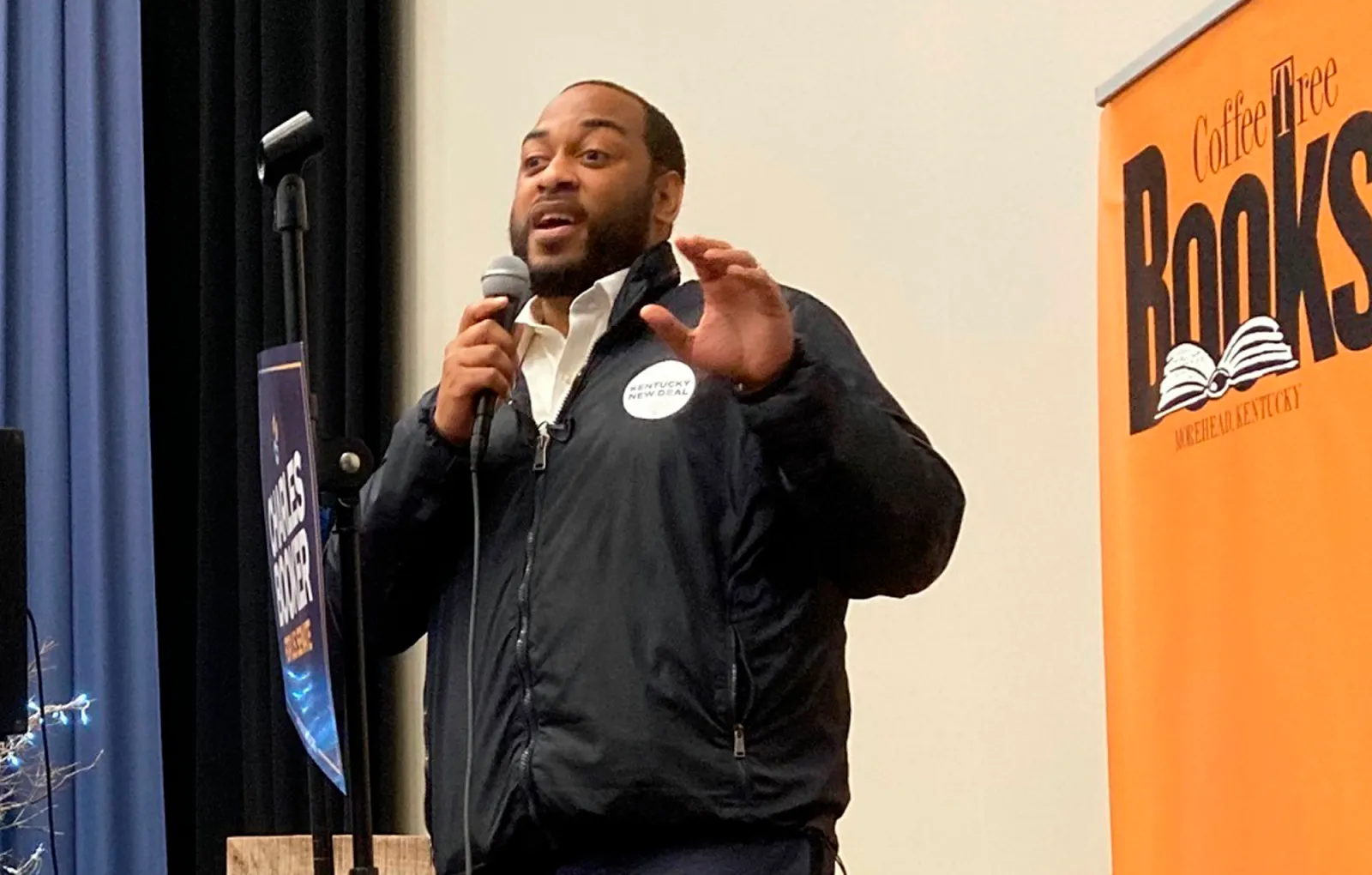
Charles Booker, who is running against Republican Representative Andy Barr for McConnell's seat, said the lack of transparency by the 84-year-old lawmaker has stymied and confused state residents long enough.
"Every conversation I have in Kentucky is led with, 'So, what in the world is going on with Mitch McConnell?' I think people are just tired and very frustrated because this feels so unnecessary," Booker told Newsweek in a statement. "Why not be honest?"
Booker, 41, said McConnell, a Republican whose seventh and final term ends in January after he chose not to seek reelection, should be held to the same standard as the constituents he serves.
"As any voter knows, if you are a no-call, no-show for 50-plus days, you're no longer going to have a job," Booker said. "We know McConnell has had declining health for some time, and so my charge is very clear that, while we respect his time to recover, if he is incapacitated and unable to serve, he needs to step down. Kentuckians deserve to know so that we can move forward."
Booker also called on McConnell to release video footage as he continues to recover at home after being discharged from a rehabilitation center last week.
"I believe that, for as long as Kentuckians continue to pay his salary, the senator owes it to his constituents to show that he is capable of functioning in his elected role, and I think a video or live update directly from McConnell is the best way to show that," Booker said.
Newsweek reached out to McConnell's staff with requests that included whether new photos or video will be released. His office said on August 6 that the lawmaker intends to "maintain an intensive regimen of physical therapy from home during the state work period" while engaging with staff and colleagues on Senate affairs.
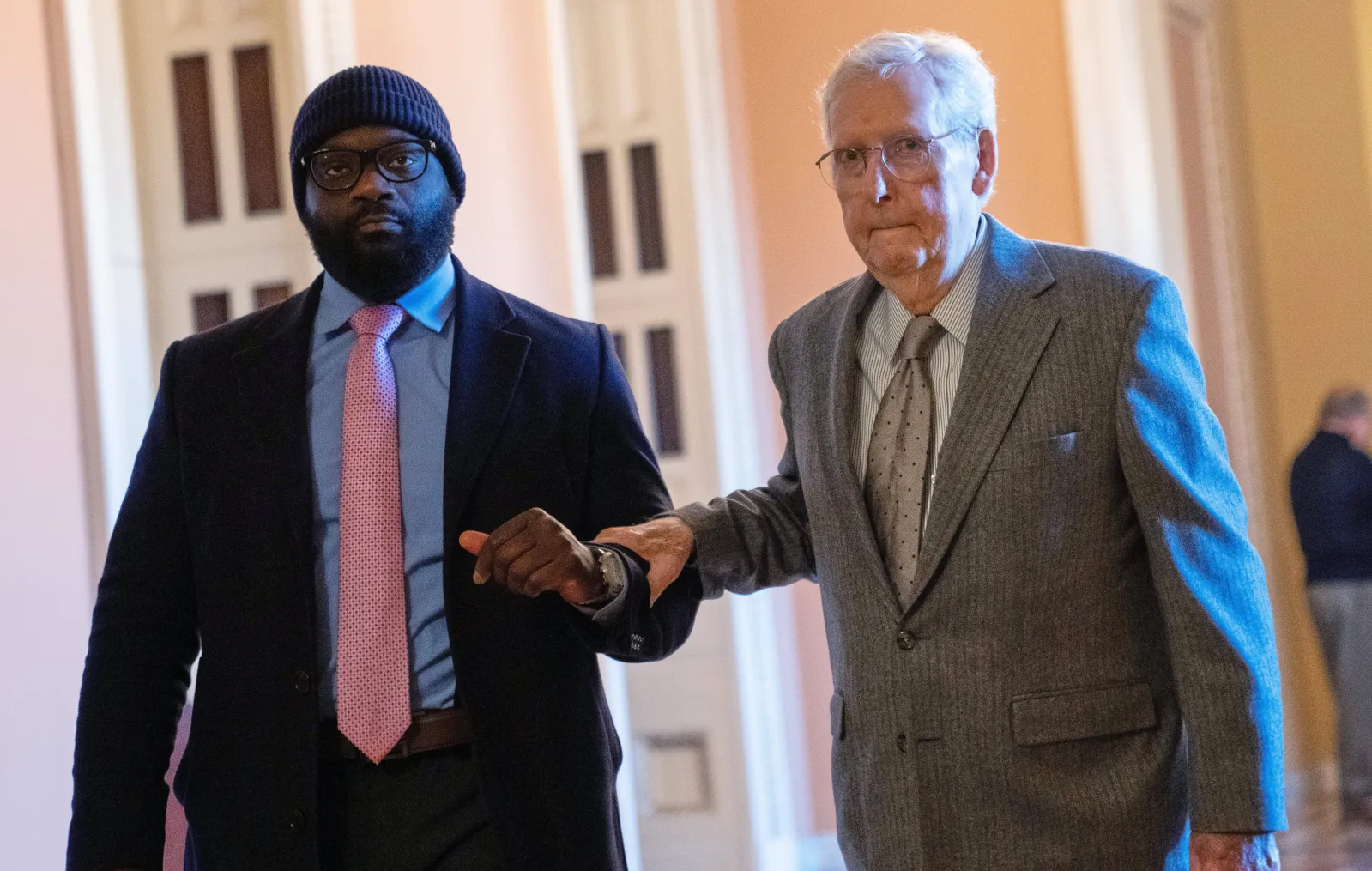
Additional requests for comment from dozens of McConnell's colleagues in the Senate on whether he should be more transparent as he recovers were not returned this week. Booker said he wasn't surprised by the muted response.
"There are some who don't want to speak out of a notion of respect for privacy," he told Newsweek. "While I understand and share that sentiment, the extreme secrecy, blatant contradictions, and dishonesty we have seen from McConnell’s team the last 50 days requires leaders from all parties to demand real answers."
Booker also noted that Barr has previously told reporters that he connected with McConnell on the phone earlier this month.
"What’s interesting is that my opponent has said that he's spoken with McConnell," the Senate hopeful said. "Barr was very vocal in speaking out when President Biden was running for re-election, expressing concerns for his health and calling for him to step aside. But now that Kentuckians are looking for their U.S. Senator, he’s quiet."
Newsweek reached out to Barr's campaign multiple times on Tuesday and Wednesday for comment.
"My opponent, Andy Barr, has made it clear he is staying silent because he doesn't care about Kentuckians having a voice in the Senate," Booker said. "He is part of a corrupt status quo that avoids discussing any issues that directly impact the American people."
McConnell, a polio survivor who announced in February that he planned to retire, has endured a series of medical incidents in recent years, including multiple falls and unexplained episodes. He also struggled to speak during a press conference in August 2023. Here's a closer look at recent events:
June 11: McConnell’s last Senate vote
McConnell's last recorded Senate vote before his hospitalization came June 11. Three days later, his office announced that the 84-year-old lawmaker had been hospitalized following a fall.
That distinction became important as the weeks went on: Although McConnell was still technically serving as a senator, he was not participating in Senate votes while recovering.
June 14: Fall and hospitalization
On June 14, emergency personnel responded to McConnell's Washington, D.C., residence after a 911 call regarding an unconscious person.
Publicly released emergency-dispatch audio referred to a cardiac arrest and CPR in progress. The audio fueled widespread speculation that McConnell had suffered a heart attack or another major cardiac event.
McConnell's office did not initially provide an explanation for the hospitalization. The senator would later explicitly say that he did not have a heart attack or stroke.
His office's initial message was that he was receiving excellent medical care.
July 2: Spokesperson says McConnell is recovering
As McConnell remained hospitalized, his office offered limited updates.
On July 2, a spokesperson said McConnell was improving, continuing his recovery in the hospital and working with staff on Kentucky and Senate matters while the upper chamber of Congress was out of session.
But there was no public appearance and no detailed explanation of what happened.
July 6: Republican leaders say they've spoken with McConnell
Amid the rampant speculation about McConnell, Republican leaders put out statements saying they had spoken with him.
Senate Majority Leader John Thune's spokesperson said he'd had a “lengthy and substantive conversation that covered a variety of topics, including national security" with McConnell via phone on July 6.
The following day Senator John Barrasso of Wyoming, the No. 2 Senate Republican and majority whip, said he had spoken with McConnell for roughly 20 minutes.
Barrasso's spokeswoman said McConnell was “fully engaged and is eager to get back to the Senate.”
“They caught up about the latest news impacting Senate races, the Graham Platner scandal and the recent Supreme Court ruling on coordinated spending limits,” as well as the Senate agenda, she said.
The statements provided the first indication from Republican leadership that McConnell was conscious, communicating and engaged in political affairs. But they did not answer the central questions about his medical condition or when he would return.
July 8: Beshear demands update
Kentucky Governor Andy Beshear, a Democrat, sent a letter to McConnell demanding that he provide Kentuckians with an update on his health and his ability to continue serving.
Beshear said Kentuckians had become increasingly concerned about McConnell's "health and well-being" and his "ability to hold office."
He also emphasized that allowing speculation to continue was unfair to both McConnell and Kentucky voters, and said he hoped the request would prompt a transparent update directly from the senator.
July 12: Public statement, first photo released of McConnell since hospitalization
After nearly a month of silence, McConnell issued his first detailed public statement.
He said he had fallen at home, was briefly unconscious and had been taken to the hospital. The statement explained that doctors had confirmed that he had not broken any bones, suffered a concussion, had a heart attack or suffered a stroke. He also said testing had found no tumors or hemorrhages.
While hospitalized, he said, he developed a “mild case of pneumonia.” McConnell also revealed that he had been transferred from the hospital to a rehabilitation facility.
“I still have unfinished business to complete on your behalf, and I have every intention of finishing the job you elected me to do,” he said.
He said he was not yet healthy enough to return to the Senate floor.
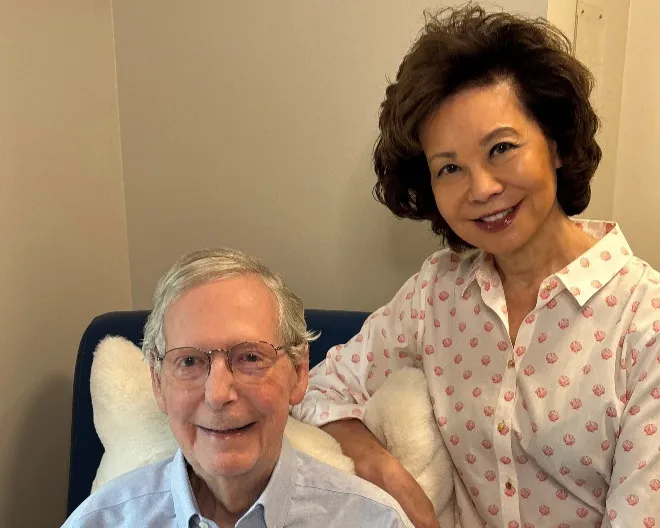
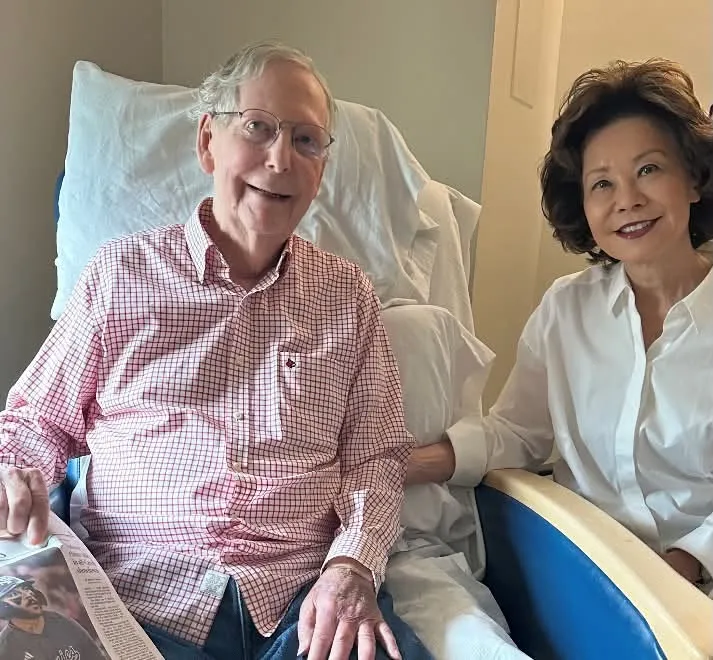
McConnell's office also released the first photo accompanying the statement. It showed McConnell sitting in what appeared to be a hospital bed beside his wife, Elaine Chao, while holding what appeared to be the July 12 sports section of The Washington Post. The image was credited to McConnell's office.
The photo quickly became the subject of intense online speculation. Some social-media users claimed it was old or fabricated. Those claims were investigated by fact-checkers who found no credible evidence establishing the photo as fake.
July 15-17: Beshear says he received alarming calls
During an interview with Katie Couric, Beshear revealed that prior to McConnell's July 12 statement, the governor received two calls from unidentified, non-state agencies suggesting that the senator died.
“I'd gotten two calls from different agencies, not state agencies, suggesting he'd passed," he told her.
Beshear did not identify the agencies and did not present those reports as established fact. Rather, he cited them as an illustration of how extreme the information vacuum had become.
July 16: Republicans split publicly
Republicans were no longer speaking with one voice about how much information should be provided.
Senator Tommy Tuberville of Alabama said there needed to be a clearer public update.
“Somebody needs to do something. Somebody needs to come out," he said.
Tuberville said Republicans needed McConnell back for key votes and suggested that a short video could reassure the public.
At the same time, Senator John Kennedy of Louisiana defended McConnell and dismissed rumors that he was incapacitated or dead, saying, “I believe Mitch.”
Kennedy said McConnell suffered a fall, was recovering and would return when he could.
Kentucky's junior senator, Rand Paul, said he had not spoken with McConnell since before the hospitalization. Paul nevertheless said he expected McConnell to return, perhaps for an important vote.
“I expect he'll be back—if there's an important vote—maybe even as soon as next week he'll be back, we'll see,” Paul said on July 22.
July 26-27: Second photograph, new medical statement
McConnell's office released a second photo of the senator on July 27, saying it had been taken the previous day. It again showed McConnell seated beside Chao, in what appeared to be his hospital room. Unlike the first photo, McConnell was not holding a newspaper.
His office simultaneously released a statement from the Office of the Attending Physician, who said McConnell had undergone a strenuous rehabilitation program involving multiple physical-therapy sessions each day designed to rebuild strength and reduce the risk of future falls.
However, McConnell was still not medically cleared to leave the rehabilitation facility or return to the office. His childhood polio was cited as an important factor in his mobility problems.
“I'm still working hard to get back to my full schedule of work in the Senate and in Kentucky, keeping up with intense physical therapy per my doctors' orders," McConnell said.
McConnell also announced that he would miss the annual Fancy Farm Picnic in western Kentucky—an important political event that he had attended for decades.
He still had not provided a live video or public appearance that independently demonstrated his ability to perform his Senate duties.
July 28: Beshear escalates his demand
Beshear sent a second, much more forceful letter. This time, he called on McConnell to directly and verbally address Kentuckians and provide “proof of your capacity to serve, or resign.”
The governor said that 43 days had passed since McConnell's hospitalization and that he had not voted or participated in official activities during that period. Beshear's intervention was politically explosive because McConnell's seat was already at the center of Kentucky's 2026 Senate campaign.
The governor also began discussing the possibility of a special election if the seat became vacant.
August 3: Special-election 'deadline'
August 3, exactly three months before the general election, became an unofficial deadline for Beshear to call a special election for McConnell's seat.
However, the governor pushed back on the idea that it represented an absolute legal deadline, saying it had “no legal impact” on his options if the seat became vacant. Kentucky law requires a special election to fill a U.S. Senate vacancy rather than simply allowing the governor to appoint a replacement.
McConnell did not appear publicly as the August 3 date passed.
August 6: McConnell leaves rehab facility and goes home
The biggest development came on August 6, when McConnell announced that he had been discharged from the rehabilitation center and would continue recovering at home.
“Earlier today, I was discharged from the rehabilitation center to continue my recovery at home," he said in a statement.
He said he and Chao were grateful for the support they had received and for the care of the doctors, nurses, therapists and hospital staff. Most importantly, he said he would continue an intensive physical-therapy regimen at home and remain engaged with his staff and Senate colleagues on Senate business.
However, it did not mean McConnell was returning to the Senate and McConnell gave no date for a return to Capitol Hill.
August 11: Details of new phone call revealed
Former McConnell aide Scott Jennings announced on CNN that he spoke with his former boss, adding that the lawmaker had been engaged and alert during their call. The pair discussed several issues, including the Michigan Senate race, the conservative commentator said.
"Being at home is better than being in the hospital, that's for sure," Jennings said, adding that McConnell aims to return to the Senate when lawmakers reconvene on September 14.
Jennings also noted that McConnell, a polio survivor, has always been "private" about his health but realizes the concern about his lengthy absence.
"He told me today, he said, 'I know this is unusual circumstances, I’m sitting here, the doctors tell me I don't have any life-threatening issues, it must seem rather strange,'" Jennings said. "So yeah, I got the feeling he's somewhat aware of it and frankly, somewhat frustrated by it."
Jennings said he had spoken with McConnell in July, describing the senator as perceptive and engaged in political discussions. Jennings said the pair talked about foreign policy and Senate politics, adding to the assurances from Republican allies that McConnell remained mentally capable of following events and preparing for a return.
August 14: Two-month mark
Friday will mark two months since McConnell's most recent hospitalization. No new photos or video footage of him have been released by his office since July 27. He remains at home continuing physical therapy, while a date for his return to the Senate has yet to be announced.
Mixed Republican Reaction
McConnell's prolonged absence has produced an increasingly varied response from his fellow Republicans. Early on, senior GOP senators sought to reassure the public that the ailing senator was alert, engaged and intent on returning to work. But as the weeks stretched on without a public appearance, some Republicans began openly calling for more information.
Thune said he spoke with McConnell by phone the day after he was hospitalized and said that the senator “sounded good” and wanted to return. Barrasso likewise said he had a lengthy conversation with McConnell and described him as "fully engaged" and eager to get back to the Senate.
Arkansas Senator John Boozman said he also connected with McConnell last week, saying he sounded "strong" during their conversation ahead of the high-stakes markup for the Agricultural Act of 2026.
“We had a long talk, he sounded very strong—wished us luck—and he hopes to be back at some point soon," Boozman told reporters on August 7.
But not every Republican was satisfied with the limited information coming from McConnell's office.
Tuberville became one of the most outspoken Republicans calling for a more visible update. As McConnell's absence continued, Tuberville said: “Somebody needs to do something,” arguing that a video from McConnell would go a long way toward reassuring the public.
Paul, McConnell's fellow Kentucky Republican, said he had not spoken directly with McConnell since before his hospitalization, but he remained hopeful that his colleague would return, particularly for an important Senate vote.
"I think we ought to have some consideration for the fact that he's trying to come back," Paul told reporters in Louisville on Tuesday.
The result was an unusual split within the party. McConnell's closest allies emphasized that he was mentally engaged and determined to come back, while other Republicans acknowledged that the absence of a direct public update was becoming increasingly difficult to explain.
Beshear Escalates Pressure
On July 8, after roughly three weeks of silence, Beshear wrote to McConnell asking him to provide Kentuckians with an update on his health and ability to serve. The governor said Kentuckians were increasingly concerned about McConnell's "health and well-being” and his “ability to hold office,” while also saying that allowing speculation to continue was unfair to McConnell and to the people of Kentucky.
Beshear later said he had received two calls from outside agencies suggesting that McConnell died—reports that were never substantiated but that, in Beshear's telling, demonstrated just how far the information vacuum had gone.
On July 27, Beshear then called on McConnell in a second letter to directly and verbally address Kentuckians and provide evidence of his "capacity to serve," or resign. The governor questioned whether the photos and written statements released by McConnell's office adequately demonstrated that the senator could speak, reason and carry out his duties. Under Kentucky law, a vacancy in the Senate would trigger a special election.
McConnell never accepted Beshear's premise that he needed to prove his fitness publicly. Instead, his office continued to provide written medical updates, photos and assurances that he was recovering.
What Happens Next
McConnell is continuing an intensive physical-therapy regimen at home, but his office hasn't said when he will return to the Capitol. He plans to remain engaged with his staff and Senate colleagues during the chamber's state work period, leaving his eventual return to Washington as the next major test of his recovery.
Contact Newsweek editors on this story: Samantha Beech and Dave Siminoff.