 3 days ago
35
3 days ago
35
The rising cost of homeowners insurance has become one of the biggest threats to housing affordability in Texas, with a new study finding that almost two-thirds of households in the state are unable to purchase the median-priced home in their county when premiums are factored in.
That homeowners are now paying much more for insurance than they used to—and are struggling to hold on to a policy—is a national issue.
A recent report by the National Association of Insurance Commissioners found that consumers saw average premiums rise by 18 percent in the Northeast, 25 percent in the Midwest, 27 percent in the Southeast and 43 percent in the West from 2018 to 2024, even after accounting for inflation.
Since the beginning of 2025, premiums have risen another 7 percent nationwide, according to the Bureau of Labor Statistics' producer price index.
But for Texas, a natural disaster-prone state that has historically offered cheap housing even in big, thriving cities such as Austin, Dallas and Houston, rising homeowners insurance rates are destroying the state's reputation as an affordable haven—and pricing out thousands of residents.
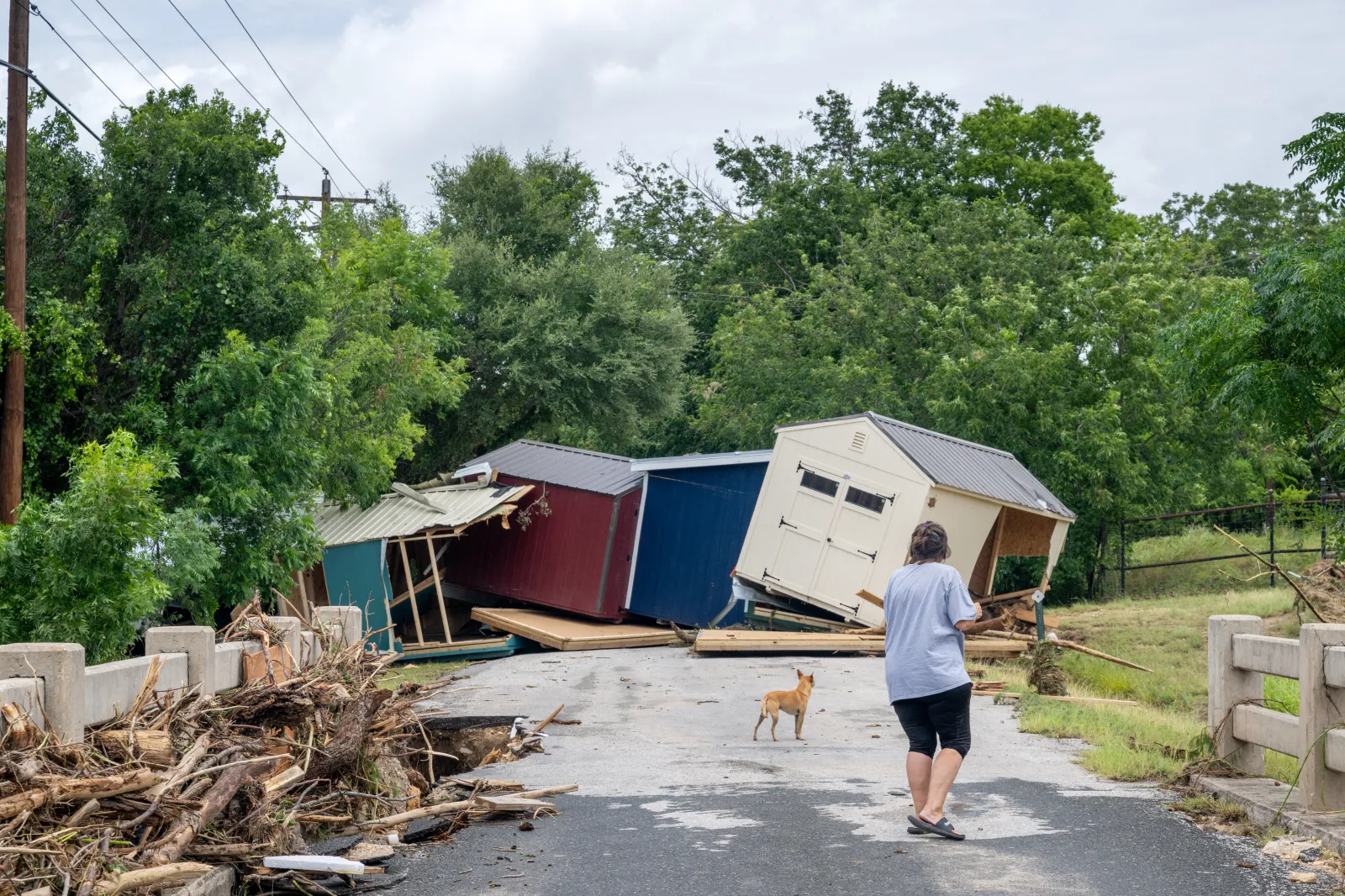
According to a new report from Rice University's Kinder Institute for Urban Research and Texas 2036, a statewide public policy organization, higher premiums have become a challenge "nearly everywhere" in Texas, including rural areas once considered less vulnerable than cities such as Houston and Dallas.
Not only have premiums become a bigger financial burden in Texas, they have also come to represent such a large share of housing costs that "a single year's increase can price tens of thousands of households out of buying a home," said Tracy Ayrhart, the vice president of data and research at Texas 2036.
How Much Have Homeowners Insurance Premiums Risen in Texas?
Texas' average homeowners insurance premium surged from $2,296 in 2019 to $2,983 in 2024 when adjusted for inflation, according to the Kinder Institute for Urban Research—up 30 percent from five years earlier. Behind these hikes, according to experts, are more expensive material costs and the higher risk posed by more frequent, more severe extreme weather events.
This is the same five-year period when home prices skyrocketed in Texas—and much of the country—following a surge in demand unleashed by historically low borrowing costs and a massive influx of out-of-state newcomers during the pandemic. According to the report, the median home value in Texas was $169,250 in 2024, up 31 percent from 2019.
Residents' income struggled to keep up with these increases. By comparison, the median household income in the state in 2024 was $65,035, up 3 percent from five years earlier and $5,365 short of the income needed to be able to afford the median home value.
Researchers calculated that, based on this data, more than 7 million Texas households, or roughly 64 percent of households statewide, could not afford the median-valued home in their county after accounting for insurance premiums and other housing costs.
The study defines "unaffordable" as anything that requires a household to spend more than 30 percent of gross income on the total costs of owning a home, including insurance premiums.
Insurance consumed 4.65 percent of median household income in the median Texas county in 2024, up from 3.68 percent in 2019. For households earning 80 percent of median income, the share reached 5.81 percent.
Even Modest Premium Increases Would Price Out Thousands More
According to Rice University's researchers, even modest hikes in the cost of homeowners insurance in the future will price thousands more Texas households out of homeownership.
They modeled four additional premium-growth scenarios:
- A 4 percent increase would price out another 20,077 households beyond the baseline.
- A 6 percent increase would price out another 30,023 households.
- A 9 percent increase would price out another 44,931 households.
- A 10 percent increase would price out another 49,896 households, increasing the unaffordable share to 64.5 percent.
These are modeled scenarios, not exact forecasts. The 4, 6 and 9 percent scenarios reflect observed average annual premium growth over preceding three-, five- and 10-year periods. The 10 percent case is a sensitivity test described as high but plausible.
Insurance costs would not single-handedly make homeownership unaffordable, but researchers considered their impact within the context of stubbornly high borrowing costs and property taxes.
The report assumes a 30-year fixed-rate mortgage at 6.85 percent, a 3.5 percent down payment, mortgage insurance equal to 0.85 percent annually and property tax equal to 2 percent of home value annually.
Any future increase would inevitably be felt by the most vulnerable households in the state, researchers found. The study showed that lower- and moderate-income households face statistically significant drops in homeownership as premiums rise, while wealthier households earning more than 120 percent of the median household income are largely insulated.
Black and Hispanic households were also found to experience substantially larger homeownership affordability gaps than white and Asian households.
Where Texas Households Face the Biggest Affordability Gaps
Among the 10 largest metropolitan areas in the state, the biggest affordability gaps were reported by would-be buyers in the following areas:
- Austin-Round Rock-San Marcos: $191,962
- Dallas-Fort Worth-Arlington: $124,212
- Houston-Pasadena-The Woodlands: $86,065
- San Antonio-New Braunfels: $77,716
- Killeen-Temple: $52,615
When considering all Texas metro areas—what is known as Core Based Statistical Area, or CBSA—Fredericksburg beat Austin for biggest affordability gap, at $256,541. Kerrville took the third spot after Austin at $138,019. College Station was fifth after Dallas with $121,628—showing that the problem reaches far beyond the state's most populous cities.
Kerrville and the wider Kerr County have been hit by devastating flash floods in 2025 and 2026. According to the city's mayor, Kerrville sustained an estimated $30 million in infrastructure damage to its water treatment plant, sewage lift stations and roads and bridges this summer alone.
At the county level, the largest affordability gaps were concentrated in Texas' fastest-growing metropolitan regions:
- Gillespie: $256,541
- Travis: $251,560
- Blanco: $233,328
- Kendall: $202,576
- Llano: $180,538
Rural Texas’ Insurance Problem
Although fast-growing metropolitan areas such as Houston, Dallas and Austin are feeling the greatest affordability pressure, many rural counties are also facing disproportionately high insurance burdens relative to home values.
"Texas is a huge state with very different housing markets and climates that can affect insurance prices, but one thing remains consistent across the state," Steve Sherman, the associate director of research at the Kinder Institute's Center for Housing and Neighborhoods, said in a statement.
But, he added, "homeowners insurance costs have become a growing affordability challenge nearly everywhere."
The report found that some of the greatest insurance burdens relative to property value were, in fact, in lower-value rural markets. These include the following counties:
- Stonewall, where premiums equal to 6.66 percent of median home value
- King: 5.88 percent
- Cochran: 5.54 percent
- Cottle: 5.14 percent
- Garza: 4.78 percent
Six of the 10 counties with the biggest increases in the premium-to-home-value ratio were in the High Plains and Northwest Texas, counties that generally had low home values but disproportionately high insurance burdens.
All 10 counties with the largest ratio increases also experienced declining median home values from 2019 to 2024, while insurance premiums rose—showing the potential that rising premiums have to reshape the housing market in the state and, as the researchers said, "dismantle homeownership as a tool for long-term wealth building for Texas' more vulnerable populations."
Contact Newsweek editors on this story: Ben Kelly and Shakeema Edwards.