 1 hour ago
24
NEWYou can now listen to Fox News articles!
Most people see a food delivery robot rolling down the sidewalk and simply walk around it. But one Philadelphia woman decided she wasn't moving. She stood directly in front of an Uber Eats delivery robot, refusing to let it continue. Police eventually arrived, and the 78-year-old retired professor ended up in handcuffs.
Her protest has now sparked a much bigger conversation about robots taking over human jobs and how much space these machines should get on our sidewalks. And there's a surprising detail about Pennsylvania law that makes this whole situation even more interesting.
Join our upcoming CyberGuy LIVE class: 5 Ways to Travel Smarter and Save Money
In this free live online class, Kurt "CyberGuy" Knutsson will share five practical ways to protect your trip and your wallet this holiday travel season. You’ll learn how to secure your phone and personal information, find better travel deals, avoid common scams, save money on bookings and use technology to make your travels easier and less stressful. No technical experience is needed.
Join us Saturday, Oct. 31, at 11 AM ET / 8 AM PT. Register for free now at CyberGuyLive.com.
WORKERS ERUPT OVER DC PLAN TO BRING ROBOTAXIS TO CITY STREETS: ‘THIS IS BULLS---’
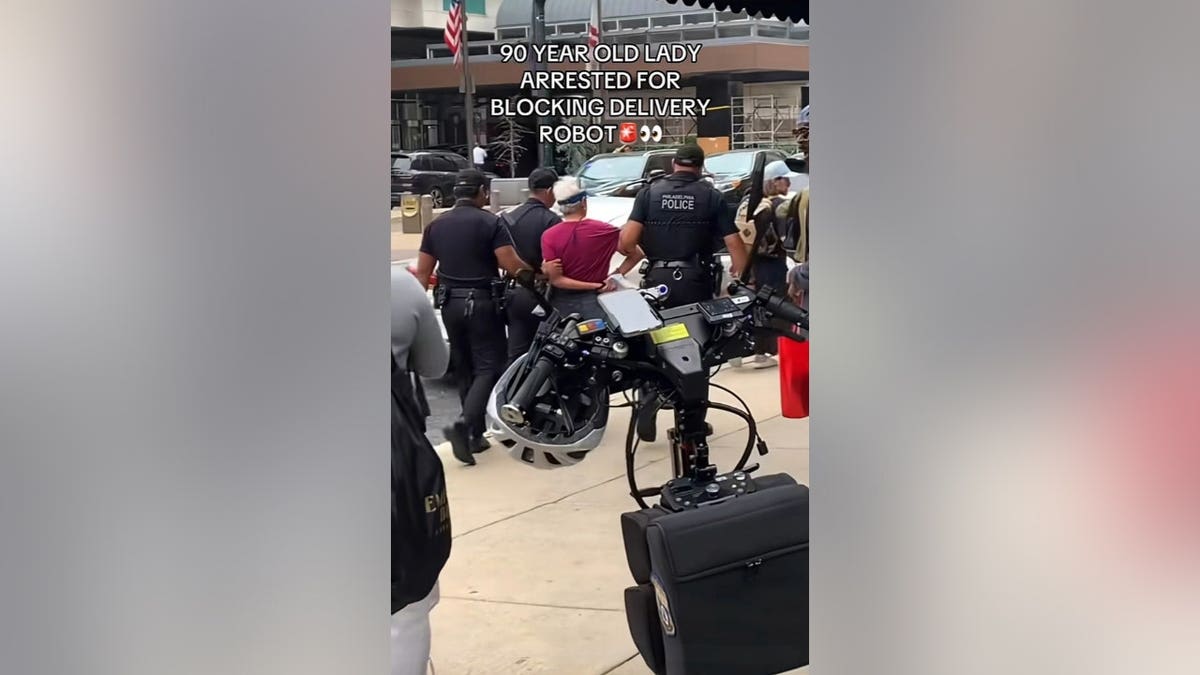
Philadelphia police escort 78-year-old retired professor Carolyn Marvin away in handcuffs after she refused to move out of an Uber Eats delivery robot's path during a sidewalk protest. (@thatsphillybusiness/TikTok)
Philadelphia woman's protest against delivery robot ends in arrest
On Oct. 14, Carolyn Marvin, a retired University of Pennsylvania professor, was leaving a flu shot appointment in Center City Philadelphia when she spotted an Uber Eats delivery robot. Instead of stepping aside, she positioned herself in front of the machine near Reading Terminal Market on Filbert Street. Police reportedly responded after witnesses reported a disturbance. Officers said Marvin repeatedly refused instructions to move out of the robot's path. They eventually arrested her and issued her a disorderly conduct citation.
The encounter was captured on video and quickly attracted attention online. However, Marvin wasn't surprised by the attention. She had been deliberately blocking delivery robots for months, turning what might look like a strange sidewalk encounter into her own form of public protest.
In an interview with PhillyVoice, Marvin explained that she believes corporations are using autonomous machines to displace human delivery workers. She argued that her actions fall under her First Amendment right to protest. Marvin was taken to police headquarters and later released. She said she plans to fight the citation in court and continue blocking delivery robots when she has the opportunity. She also encouraged others who oppose the machines to join her protests.
Why this 78-year-old professor refuses to move
Marvin's frustration goes beyond having robots share the sidewalk. She sees them as a direct threat to people who earn their living delivering food. Every order completed by a robot represents work that potentially could have gone to a human courier. That concern comes as more delivery companies experiment with automation to reduce operating costs.
Unlike a human courier, a robot doesn't collect tips or earn money for each delivery. Companies hope automation will eventually reduce operating costs, although the machines still require maintenance and monitoring.
However, whether Philadelphia's robot program has actually eliminated delivery jobs remains unclear. Uber has previously said its robots are intended to complement human delivery workers rather than replace them. Still, it's easy to understand why people who depend on delivery income might question how that arrangement will work as fleets expand.
Marvin also sees her protests as an opportunity to engage other pedestrians. She says people regularly stop to ask why she's blocking the machines. Those conversations are part of what motivates her to continue, even after her arrest.
Here's the surprising law about delivery robots and pedestrians
You might assume that Marvin's arrest means delivery robots have the right of way on Philadelphia sidewalks. But Pennsylvania law offers a rather different answer.
The state's vehicle code classifies personal delivery devices as pedestrians and generally requires them to follow pedestrian traffic rules. However, the robots must yield the right-of-way or safely navigate around pedestrians and cyclists in pedestrian areas. That's an important detail. A delivery robot does not automatically have priority over someone walking down the sidewalk.
Of course, requiring robots to yield does not necessarily give people the legal right to deliberately obstruct deliveries. Police say Marvin refused repeated instructions to move after officers responded to a disturbance. Her disorderly conduct charge does not establish that robots have priority over pedestrians or settle whether her particular protest was legally protected.
Meanwhile, Pennsylvania law requires operators to notify municipalities at least 30 days before beginning delivery robot operations. Municipal officials can also prohibit the machines in areas where, after consulting the operator, they determine the robots would pose a hazard. That leaves an interesting question about how cities should handle future confrontations between pedestrians and commercial robots.
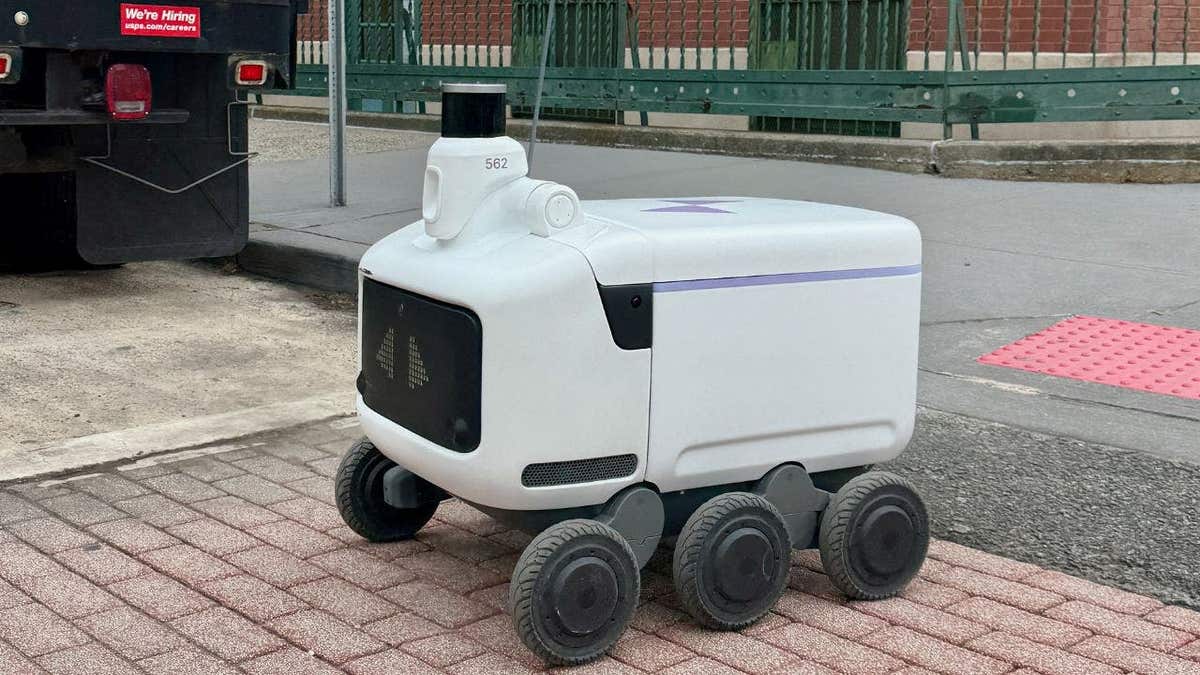
An Uber Eats delivery robot operates on a city sidewalk as companies expand automated food delivery despite concerns about jobs and pedestrian safety. (Oleg Yunakov / CC BY-SA 4.0)
Why Uber Eats keeps putting robots on sidewalks
Despite the controversy, companies continue investing in autonomous delivery because the technology offers some practical advantages. Uber Eats partnered with robotics company Avride to operate small, four-wheeled delivery machines that transport food over relatively short distances. The robots use cameras and sensors to navigate city streets. According to Avride, they travel at speeds of up to 5 mph and can carry up to 55 pounds of food or other goods.
The service launched in Philadelphia in March 2026. These robots can complete short deliveries without sending another car through traffic or requiring a courier to find parking. For customers, the convenience is obvious. Your food arrives inside a secure compartment that you unlock through the Uber Eats app. In Philadelphia, customers can reportedly opt out of robot delivery. However, availability and delivery options depend on the order and service area.
And the rollout is expanding. On Oct. 21, Avride announced an expansion of robot delivery in Philadelphia involving Wonder's Rittenhouse location and additional restaurants on the Grubhub platform. Robot delivery is now available from 25 Wonder restaurant concepts at the Rittenhouse location, with nine additional restaurants on Grubhub also participating. The company has not said whether the expansion will require more robots on Philadelphia sidewalks or whether its existing fleet will handle the additional orders.
Philadelphia isn't the only city pushing back against delivery robots
Philadelphia's confrontation comes amid growing frustration with autonomous machines operating in public spaces. In September, we reported on a robot traffic jam in Chicago, where at least a dozen Coco delivery robots clustered along a sidewalk. The company blamed a deployment error and said it corrected the problem.
The incident raised concerns about pedestrian accessibility, particularly for people who use wheelchairs or mobility aids. A blocked sidewalk can create a serious obstacle for someone who cannot easily move into the street or squeeze past a machine.
Philadelphia has experienced its own robot mishaps. In April, a woman reported that an Uber Eats delivery robot bumped into her from behind near 15th and Locust streets. Li Gordon-Washington reportedly suffered a scratch and later struggled to determine which agency should handle her complaint. Avride acknowledged that its robot made minor contact with her while completing a turn.
These incidents help explain why some residents are losing patience. While the machines may be designed to navigate around people, they still have to handle unpredictable human behavior and crowded public spaces.
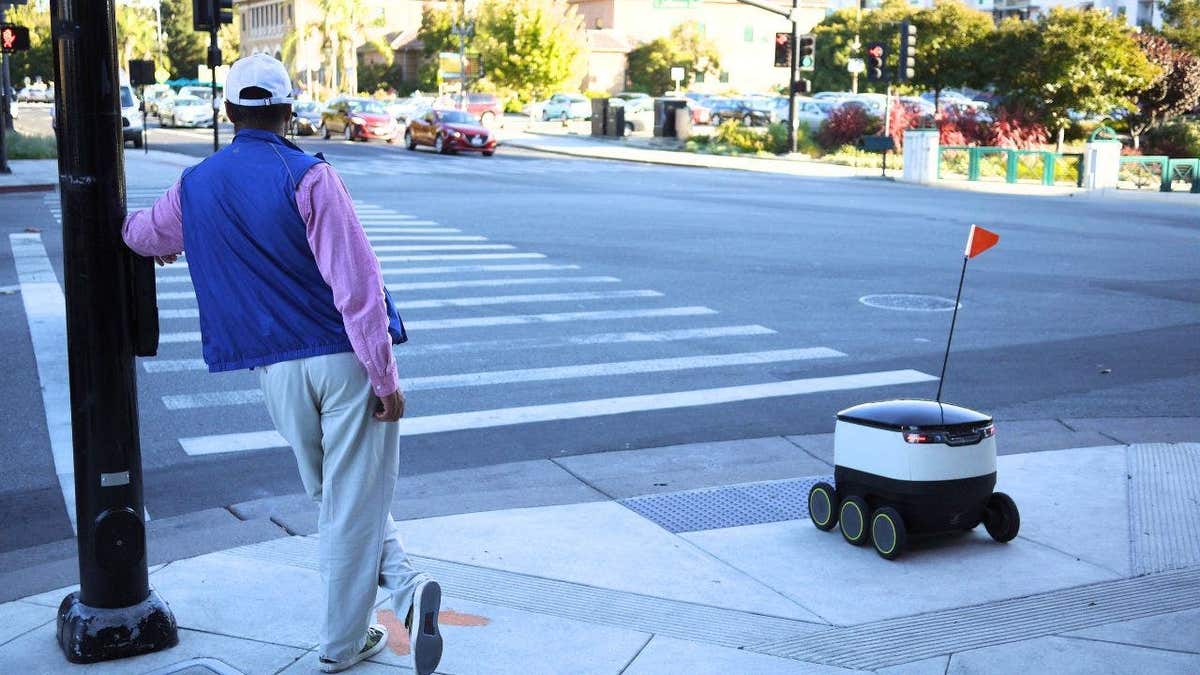
A pedestrian walks near a delivery robot at an intersection, raising questions about who should have the right of way in public spaces. (Christopher Down / CC BY 4.0)
What this means to you
Delivery robots may soon become a familiar part of your neighborhood, especially if you live near busy restaurants or shopping districts. You could find yourself sharing sidewalk space with machines carrying someone else's dinner. That raises practical questions about safety and accessibility, along with concerns about jobs.
If you encounter a robot blocking a curb ramp or creating a hazard, keep your distance and report the problem to the operator or local authorities. In Pennsylvania, delivery robots must display operator identification and contact information. Documenting the location and the robot's identification number can help officials investigate a complaint.
There's also an opportunity for residents to get involved before delivery robot programs expand. Local governments can evaluate where these machines operate and whether particular routes create safety hazards. Paying attention to those decisions gives communities a chance to have a say in how their sidewalks are used.
For people whose livelihoods depend on deliveries, the questions run deeper. They deserve clear information about how companies plan to use automation and what that could mean for future work opportunities.
Kurt's key takeaways
I've covered plenty of robots that can do impressive things, and I can appreciate the technology behind these delivery machines. But I never expected to see a 78-year-old retired professor arrested after refusing to let one deliver somebody's lunch. What really caught my attention was Pennsylvania's law requiring robots to yield to pedestrians. That makes the confrontation even more thought-provoking.
I understand why police would respond when a public dispute escalates, and I certainly wouldn't encourage anyone to interfere with a delivery. At the same time, I understand Marvin's frustration. We're watching companies introduce machines that can perform work people have traditionally been paid to do, and we still don't have clear answers about how many jobs could eventually disappear.
I think companies introducing this technology need to be much more transparent about its impact on workers. And when they want to operate on public sidewalks, residents deserve a genuine say in how that happens. I hope this incident encourages a serious conversation about those issues before another confrontation ends with someone in handcuffs.
If delivery robots make food delivery more convenient but eventually cost human workers their jobs, should cities still allow them to operate on public sidewalks? Let us know by writing to us at Cyberguy.com
Sign up for my FREE CyberGuy Newsletter
- Get my best tech tips, urgent security alerts and exclusive deals delivered straight to your inbox.
- For simple, real-world ways to spot scams early and stay protected, visit CyberGuy.com - trusted by millions who watch CyberGuy on TV daily.
- Plus, you'll get instant access to my Ultimate Scam Survival Guide free when you join.
CLICK HERE TO DOWNLOAD THE FOX NEWS APP
Copyright 2026 CyberGuy.com. All rights reserved.
Kurt "CyberGuy" Knutsson is an award-winning tech journalist who has a deep love of technology, gear and gadgets that make life better with his contributions for Fox News & FOX Business beginning mornings on "FOX & Friends." Got a tech question? Get Kurt’s free CyberGuy Newsletter, share your voice, a story idea or comment at CyberGuy.com.