 2 hours ago
20
NEWYou can now listen to Fox News articles!
FIRST ON FOX: A new analysis from a conservative AI safety group found that deep-red counties with large data centers or proposed projects shifted further toward Democrats in last week's midterm elections than comparable counties without such projects.
Humans First’s analysis, obtained by Fox News Digital, examined public election returns and data-center project records in 1,540 counties across 16 states. The memo used several comparisons to measure what the group describes as a "data center penalty." Across all counties examined, those hosting large data centers shifted an additional 2.2 percentage points toward Democrats compared with non-host counties in the same states. The pattern appeared in 14 of the 16 states and 25 of the 27 governor and Senate races examined.
Restricting the analysis to deep-red counties — those President Donald Trump won by at least 20 points in 2024 — produced a 2.1-point raw gap between counties hosting large data centers and comparable counties without projects.
Among deep-red counties with projects still in the proposal stage, the gap was 1.1 percentage points after accounting for past voting patterns, rural or urban status, population size, racial and ethnic makeup and recent voting trends.
TEA PARTY FOUNDER LAUNCHES NATIONWIDE 'DATA CENTER REVOLT' AGAINST AI DATA CENTER EXPANSION

Humans First’s analysis examined public election returns and data center project records in 1,540 counties across 16 states. (Nathan Howard/Getty Images)
The group identified 114 proposed large data center projects across 92 deep-red counties, potentially setting up more local fights.
The memo found that Republican vote totals fell an additional 1.1% in deep-red host counties compared with comparable counties without large data centers, while Democratic vote totals showed no significant change.
The memo cautioned that its findings show an association rather than proof that data centers caused voters to change their behavior. County-level results also cannot determine whether Republicans switched their votes or simply stayed home.
"Our analysis looked at how counties with data centers voted and how those counties moved to the left," Humans First Chairwoman Amy Kremer told Fox News Digital.
"I think this happened for the reason I’ve been warning conservatives and Republicans about for some time: People engage politically when issues affect them personally. There’s nothing more personal than your pocketbook, your health care, your kids and family, your home and your community. A data center involves all of those things, which is why I believe these counties moved away from Republicans," she continued.

The group identified 114 proposed large data-center projects across 92 deep-red counties, potentially setting up more local fights. (Photo by Brendan Smialowski / AFP via Getty Images)
Humans First’s September "Data Center Revolt" bus tour made 35 stops in 27 states, including 14 stops in the states covered by the analysis. Nine of those stops were in deep-red counties, all of which hosted a large data center project. Those nine counties shifted 2.2 points further toward Democrats after the analysis accounted for its controls, compared with a 0.75-point shift among deep-red host counties overall. The group said those same nine counties showed no comparable gap from 2020 to 2024.
The findings do not establish whether the group's visits influenced voting behavior or whether those counties already had stronger opposition to data center development.
Separately, voters favored restrictions on data center development or rejected measures supporting such projects in 46 of 47 local data center ballot measures in 2026, according to Ballotpedia. The measures included different types of proposals, including restrictions on development and advisory questions.
Kremer said this is a local control issue, stressing that Republicans should focus on protecting property rights and ensuring people have control over how things affect their lives.
"Whether you’re talking about AI technology or the infrastructure needed to build AI data centers, the American people have not had a seat at the table," Kremer said. "They haven’t had a say in how the technology affects them or how the data center buildout affects their communities. In many places across the country, developers and companies have gone in and cut deals behind closed doors, under a cloak of darkness, using nondisclosure agreements and shell companies. By the time people in the community find out about the project, it’s too late to stop it."
"These projects affect the quality of life and how much money people have. They can increase the cost of electricity and water, while tax abatements are given to trillion-dollar companies — some of the wealthiest companies in the world. That is money coming out of the pockets of the American people," she continued.
Kremer added, "When you talk about Iran and gas prices, tariffs and now the AI data center buildout, all of these costs are coming out of people’s pockets. That’s when people engage politically, and I think that’s what we saw last Tuesday."
The concerns come amid a broader debate over how data centers should pay for the electricity and grid infrastructure they require. The Energy Department estimates data centers used 4.7% of U.S. electricity in 2024 and, in its reference case, could account for 11.8% by 2030. The Federal Energy Regulatory Commission has directed regional grid operators to address safeguards against shifting the costs of serving large electricity users onto other customers. Those developments do not establish that data centers caused higher household rates in the counties examined by Humans First.
Tax incentives also vary by state. The National Conference of State Legislatures reported that at least 38 states offer incentives specifically for data centers, including equipment-tax exemptions and, in some states, exemptions involving electricity or property taxes. The Data Center Coalition, an industry trade group, says such incentives are similar to those offered to other capital-intensive industries and argues that data centers generate jobs, investment and tax revenue.
Humans First does not support a nationwide or statewide moratorium on data centers, but Kremer said individual communities should be free to approve or reject projects.
DATA CENTERS FORGOT THE CONSUMER — AND THAT COULD COST AMERICA THE AI RACE
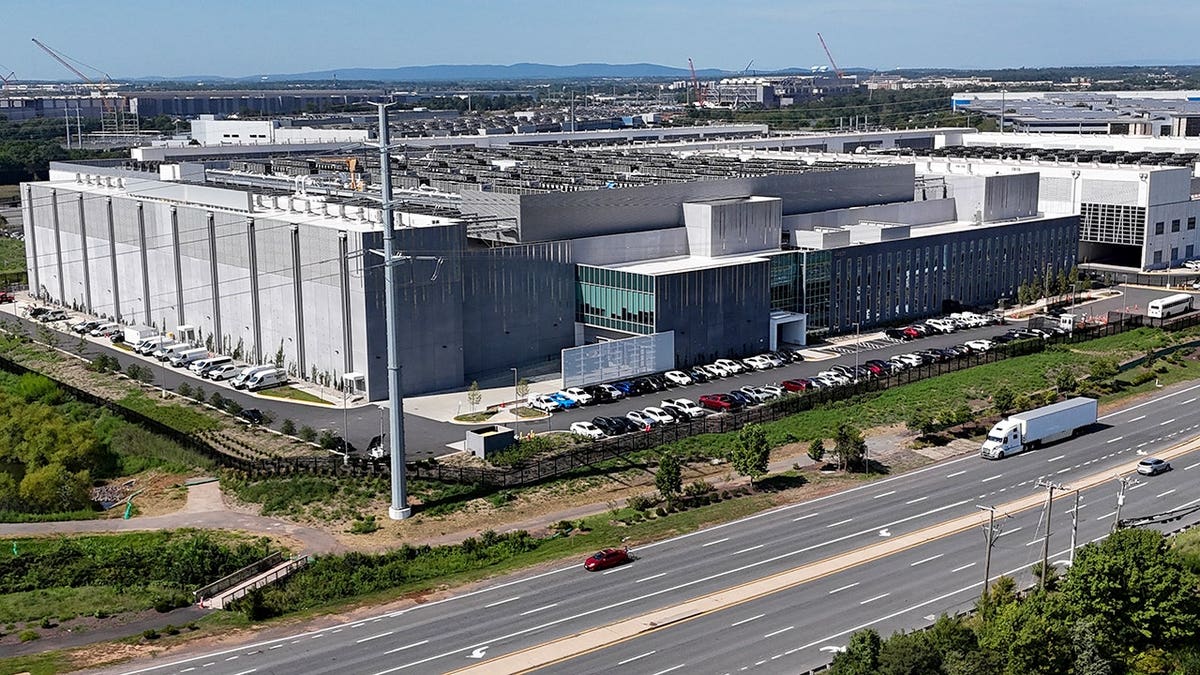
Voters favored restrictions on data center development or rejected measures supporting projects in 46 of 47 local ballot measures decided in 2026, according to Ballotpedia. (Anna Moneymaker/Getty Images)
CLICK HERE TO DOWNLOAD THE FOX NEWS APP
"If a community comes together and votes for a moratorium, that is its prerogative. If a community wants a data center, that is its prerogative as well. It is all about local control," she said.
Kremer said she learned that people engage more when it comes to issues that affect them personally, noting that data centers "encompass all of those issues."
"Whether you’re talking about pocketbook issues, health care, kids and family, or your home and community, the data center battle is a physical manifestation of all those concerns," she said. "When it comes to the economic impact on their communities, I think data centers absolutely played a role in the election."
"I hope we can get on the right page and give local control back to communities. People should have a say in how they live and what goes into their communities. That is very personal, and I hope we can move in that direction," Kremer added.