 1 hour ago
21
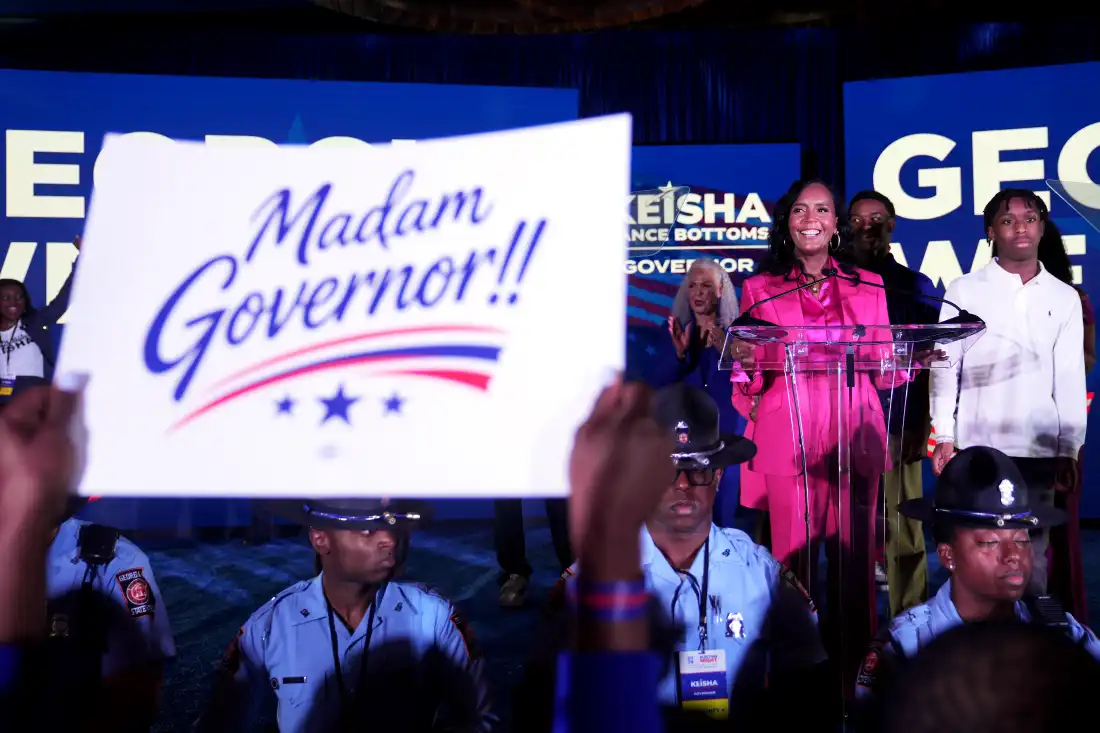
Georgia Gov.-elect Keisha Lance Bottoms speaks during an election night watch party on Nov. 3 in Atlanta. Bottoms will be the nation's first Black woman governor. Megan Varner/Getty Images hide caption
Megan Varner/Getty Images
Stay connected: NPR Politics Podcast | NPR Politics newsletter | NPR app
Tuesday's dramatic midterm results have transformed the electoral map, ensuring the future path to power for Democrats and Republicans alike must run through the South.
Black voter turnout surged in states like Louisiana and Georgia, as Democrats flipped Senate seats in North Carolina, South Carolina and Texas. Mississippi is too close to call.
Republican-led efforts to redraw House districts to gain more favorable districts in places like Alabama, North Carolina, Texas and Florida backfired, with Democrats poised to net several seats in the region.
Loading...
In several states, the margins at the top of the ticket were so large that the blue tsunami carried down ballot races along with it, flipping several state legislative chambers and statewide offices along the way.
Even in contests where Democrats ultimately did not prevail, the millions of dollars of investment from both sides and the wide-ranging repudiation of the Trump administration from every demographic group highlight the South's important role in control of Congress and the White House in future election cycles.
Redistricting
In the aftermath of a Supreme Court ruling earlier this year that gutted part of the Voting Rights Act, Republican-led Southern states rushed to redraw House maps to create additional seats that would better withstand a midterm environment where voters punished the party in power.
They included changes in Tennessee that split Memphis into three districts (and where Democratic state Rep. Justin Pearson is within a few thousand votes of winning), a redraw of several Alabama districts that sought to unseat Rep. Shomari Figures (who won by nearly 8 points in the new Trump +14 configuration) and a target of nine seats in Texas and Florida.
Loading...
As of Wednesday night, Republicans have won one of them, according to a race call by the Associated Press.
Before Election Day, there were signs that the ruling, along with the war in Iran, rising costs, concerns about corruption with the Trump administration and other top issues would serve as a motivator for turnout among Black voters.

In primaries held after the ruling, Black voter participation soared. Ashley Kennedy Shelton with the Louisiana-based Power Coalition for Equity and Justice previously told NPR that the court decision was "personal" for Black voters.
"Everybody's spending more money on their electricity bills, their gas bills, their food bills," she said. "All of these different things are really personally impacting voters. And I think that for all the folks that used to say, 'I don't do politics!' I think they realize that politics is absolutely doing them, and they have to get involved."
In South Carolina, where Democrat Annie Andrews flipped a U.S. Senate seat, the state saw record voting for a gubernatorial election year, driven in part by elevated Black turnout. It's a similar story in Louisiana, where Democrat Jamie Davis narrowly lost to Sen.-elect Julia Letlow by less than two percent in a state Trump won by more than 15 points in 2024.
Mississippi's Senate race is too close to call, with Democrat Scott Colom leading by less than 1200 votes against incumbent Republican Cindy Hyde-Smith in a state with the highest share of Black voters in the country.
State level
It's not just Congress where the South is the center of shifting power. Big Democratic victories — or swings away from Republicans — at the top of the ticket led to an avalanche of shifting offices at the state and local level.
Democratic Sen. Jon Ossoff's 18-point victory in Georgia helped propel former Atlanta mayor Keisha Lance Bottoms to victory in the governor's race, as Democrats swept every single statewide elected office, gained control of the state utility regulator and are set to win a majority in the state House.
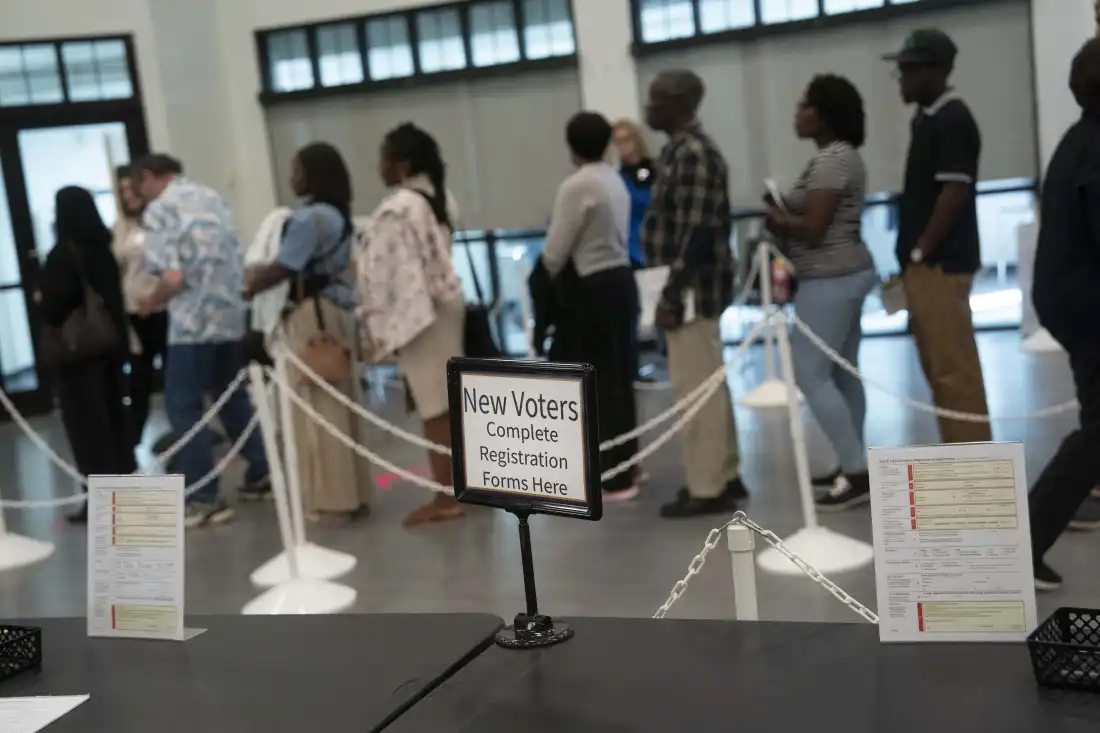
In this file photo from the 2026 election, people wait to vote in early voting for the midterm elections on Oct. 25 in Cary, N.C. Allison Joyce/AFP via Getty Images hide caption
Allison Joyce/AFP via Getty Images
In North Carolina, former Gov. Roy Cooper's 20-point victory was enough to potentially flip multiple congressional seats and win control of the state House.
Texas Democrats won a majority of seats in their state House, while Republican House supermajorities in Florida and South Carolina have ended, too. The down ballot gains extend into states that aren't as purple or blue, with dozens more pickups reported in Alabama, Arkansas, Kentucky and Tennessee.
2028 is now
The expansive majorities in the House and Senate built upon southern swings have implications far beyond the makeup of the next Congress, as both parties look ahead to the 2028 presidential election.

In the leadup to Election Day this year, potential presidential contenders from both parties have made varying efforts to offer financial support and campaign for nominees in tight races, including notable appearances by former Transportation Secretary Pete Buttigieg, Georgia Democratic Sen. Raphael Warnock and Kentucky Gov. Andy Beshear, chair of the Democratic Governors Association.
On the Republican side, Texas Sen. Ted Cruz and Vice President JD Vance are among those who focused on the region.
Even though Republicans held on to the Florida governor seat and U.S. Senate seat, closer-than-expected margins in statewide races and House races alike make the state an attractive investment for both parties seeking to gain an edge with voters for 2028, just like Democrats' romp in historically red Texas.
Together, Texas, Florida, Georgia and North Carolina represent more than a third of the 270 electoral votes needed to win the White House.