 4 days ago
37
4 days ago
37
President Donald Trump’s approval rating ahead of the midterm elections sits at a lower point than other modern American presidents, according to polling data from the Pew Research Center and Quinnipiac University.
Midterms are often seen as a referendum on a sitting president, so approval numbers are watched closely in the months leading up to those elections. Historically, when a president has a poor national approval rating, their party tends to lose seats in the midterms. Trump’s declining approval rating has driven Democratic hopes that they could retake a majority of seats in both the House of Representatives and the Senate.
Trump isn’t alone in having a poor approval rating—polls showed nearly all 21st Century presidents underwater ahead of their midterms, with the exception of President George W. Bush in 2002, when Republicans were able to fend off a blue wave and actually pick up congressional seats.
But the latest approval polls show him in a worse position than any recent president in the mid-to-late summer ahead of the midterms, a potential worrying sign for Republicans who have hoped to hold onto their majorities. Democrats have their challenges, as well, including polling that consistently shows poor favorability for the party.
But many Democrats believe frustration with Trump over inflation and gas prices will be the key issue in November, even as Republicans seek to turn the midterms into a referendum on the rise of progressivism in the Democratic Party.
Newsweek reached out to the White House for comment via email.
Trump Approval Rating Compared to Biden, Bush and Obama
Quinnipiac University and the Pew Research Center have consistently tracked presidential approval ratings across recent administrations and offer key insights into how Trump’s approval stacks up against his predecessors.
The latest Quinnipiac poll, conducted among 963 registered voters from July 23-27, 2026, showed 32 percent of respondents approving of Trump, while 58 percent disapproving. That is a modern historical low for this point in a presidency for their polling.
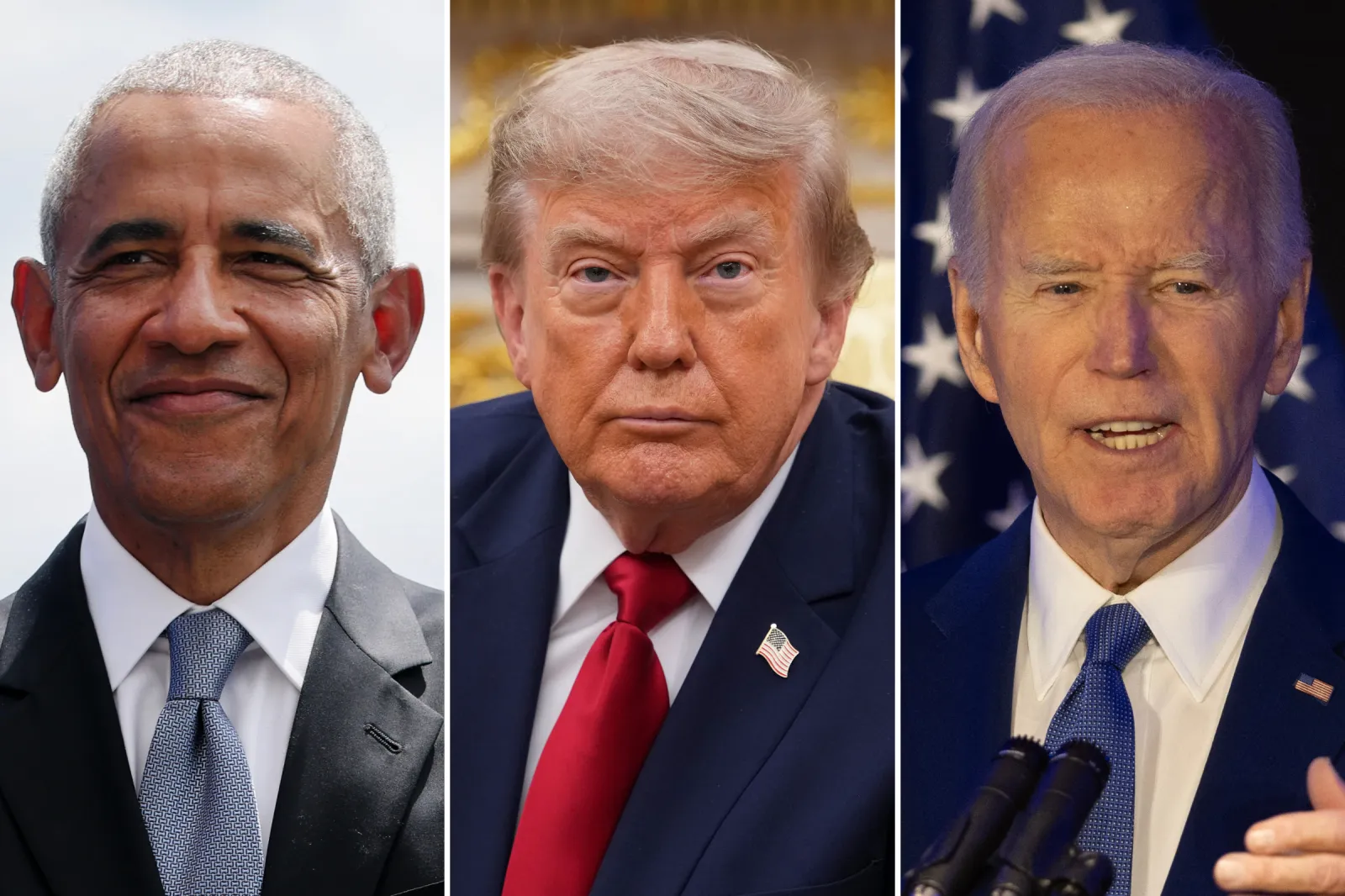
In August 2022, the pollster found that former President Joe Biden’s approval rating stood at 40 percent, while 52 percent disapproved. In August 2018, during Trump’s first term in office, his approval fared better with 41 percent approving and 54 percent disapproving.
Former President Barack Obama’s approval was better in both of his terms. In June 2014, his approval stood at 40 percent and disapproval at 53 percent. In July 2010, just months before a major GOP wave in the midterms, his approval rating stood at 44 percent and disapproval at 48 percent.
President Bush’s approval rating initially remained high due to his leadership following the September 11 terror attacks in 2001, though his favorability had waned by 2006 amid growing frustration over the Iraq War.
In August 2006, 39 percent of respondents said they approved of Bush, compared to 53 percent who disapproved of him. In November 2002, a year after the attacks, 62 percent of respondents said they approved of Bush, compared to 30 percent who disapproved.
Pew Research Center data show a similar story. In 2002, 67 percent of respondents said they approved of Bush. Obama’s approval stood at 47 percent in 2010, while Trump’s stood at 40 percent in 2018.
In 2022, only 37 percent of respondents told Pew they approved of Biden. But Trump’s 2026 approval is still slightly worse at 34 percent in the latest July 13 numbers from the research center.
How Have Congressional Races Gone in Recent Cycles?
Republicans won control of the House in 2024 with less than a 2-point edge in the popular vote. They won 220 seats to the Democrats’ 215. They also won a Senate majority, flipping four races to hold a total of 53 seats.
In 2022, the GOP won the popular vote by just under 3 points, securing 222 seats to the Democrats’ 213. However, the Democrats picked up one Senate seat to give them a majority with a total of 49 seats, along with two independents who caucus with the party.
Democrats held a slim majority after the 2020 elections—222 seats to 213 while winning the popular vote by about 3 points. Democrats also picked up three Senate seats. They ended up with 48 seats plus two independents who caucus with Democrats, and then-Vice President Kamala Harris served as the tiebreaker.
In 2018, the last blue wave, Democrats won 235 seats to the Republicans’ 199. They won the popular vote by nearly 9 points. However, Republicans were able to net two Senate seats, expanding their majority to give them a total of 53 seats.
Two years earlier in 2016, Republicans won the House popular vote by only about a point while losing 6 seats to Democrats. Republicans still held a majority, 241 to 194. On the Senate side, Republicans lost two seats but still held a majority, with a total of 52 seats.
In 2014, Republicans gained ground in both chambers, winning a 247-188 majority in the House while flipping 13 seats. In the Senate, Republicans flipped 9 seats to give them a total of 54 seats.
In 2012, Democrats picked up 8 seats in the House, winning the popular vote by about a point. Republicans, however, still had a 234-201 majority. In the Senate, Democrats held a majority with 53 seats after flipping two GOP-held seats.
Republicans had a very strong year in 2010, flipping a net of 63 House seats while winning the popular vote by nearly 7 points. Republicans also flipped six Senate seats, but Democrats still had a majority, holding a total of 51 seats, along with an additional two independents caucusing with them.
Why Is Trump’s Approval Faltering?
The economy is viewed as a major issue for Trump; Americans often vote based on who they believe will improve their material economic conditions, and polls regularly show economic issues as the top concern for voters.
Trump campaigned on tackling affordability and inflation, issues emerging in the wake of the COVID-19 pandemic—and his focus on economic issues helped propel his return to the White House. But as the midterms approach, inflation has remained elevated, and voters have shown they are increasingly frustrated over Trump’s approach to the economy.
In the Quinnipiac poll, just 34 percent said they approved of Trump on the economy, down from 42 percent in January. Only 3 percent said they view the economy as being "excellent," while 25 percent say it is in "good" condition. Thirty percent said it is "not so good," while 41 percent said it is "poor."
The Iran war is also unpopular with voters, with only 34 percent of respondents in the Quinnipiac poll saying they support the "U.S. military action against Iran," down from 40 percent in March.
Gas prices have also increased during the war because of disruptions in the Strait of Hormuz, a major passageway for the global oil supply, that has faced closures amid the conflict that began at the end of February. Costs topping $4 per gallon have caused pain at the pump for consumers and a major polling headache for Trump.
Trump addressed his approval rating in a Truth Social post earlier in August.
"My REAL Polling Numbers, not those made up by the Fake News Media, are the best they have ever been, and why wouldn’t they be with the biggest tax cuts and employment numbers EVER, the biggest outside Investment in America in World history, a totally secure Border, a giant Victory in Venezuela, the Denuclearization of Iran, unparalleled respect and success throughout the World, and much more?" he wrote.
Democrats’ Chances of Flipping the House and Senate in Midterms
Overall, prediction markets favored Democrats to flip the House as of Monday morning. Kalshi placed their chances of flipping the House at 85 percent, while Polymarket gave them an 89 percent chance.
However, Republicans were still favored in the Senate, having a 54 percent chance of holding onto Congress’ upper chamber, while Polymarket gave them a 55 percent chance of holding onto their majority on Monday.
Prediction markets allow traders to buy and sell contracts tied to political outcomes and current events, aggregating real‑money wagers into probability estimates.
Prices fluctuate as traders react to polling, fundraising, candidate developments and broader political trends. They measure trader sentiment at a given moment but do not always accurately predict the future.
Control of Congress could come down to just a handful of competitive races.
In the Senate, the Cook Political Report shows the Senate races in Alaska, Maine, Michigan and Ohio as tossups. Meanwhile, there are 18 toss-up House races.
What Happens Next?
Trump’s approval rating will continue to be closely watched in the coming months as the midterms inch closer. Polling, fundraising and the national political environment in the coming weeks could offer key clues as to whether Trump's low approval rating translates into electoral losses for the GOP.
Contact Newsweek editors on this story: Jason Lemon and Trevor Davies.