
 2 days ago
36
2 days ago
36
The United States and 40 other countries have issued a statement urging advance notice of missile launches after China test-fired a nuclear-capable missile last month.
While the submarine-based launch, believed to be a Julang-2 or -3 intercontinental ballistic missile (ICBM), carried a dummy warhead, its flight of roughly 4,500 miles over the Pacific rattled countries around the region.
The U.S. and treaty allies in the region condemned the launch as destabilizing, including Japan and Australia, which said Beijing had provided no more than two hours' notice. Two U.S.-aligned Pacific nations that signed the statement, the Marshall Islands and Palau, also issued protests.
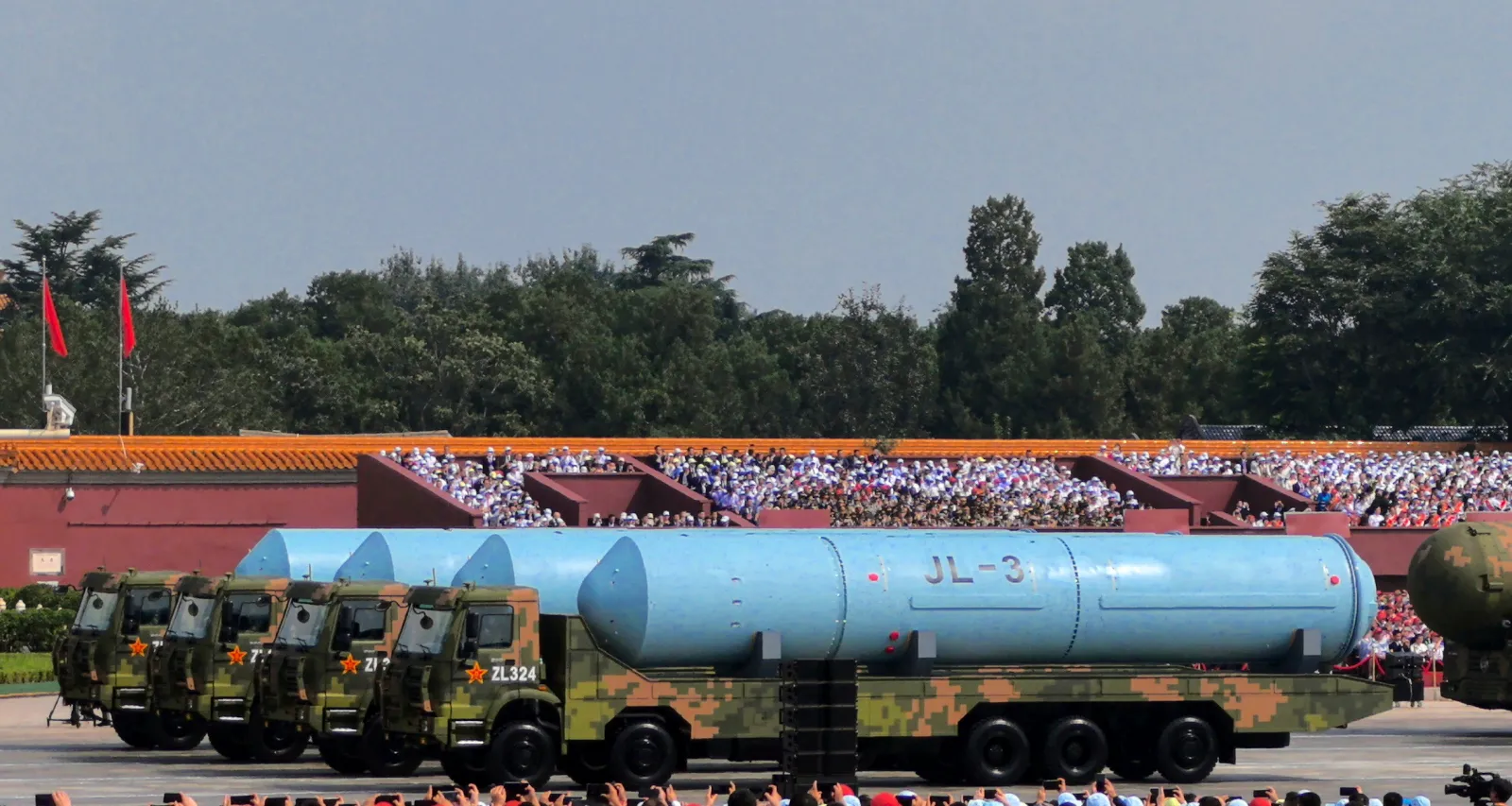
"Recent missile testing activity in the Pacific area did not follow the standard practices adopted by most states to notify and deconflict ICBMs, submarine-launched ballistic missiles, and space launch vehicles," the joint statement released on Tuesday said, without calling out China by name.
A surprise test involving nuclear-capable missiles in particular is "dangerous" and "increases the risk of miscalculation," the statement added, calling for "all countries, particularly nuclear-weapon states" to give a minimum 24 hours of notice.
Beijing Accuses Washington of 'Double Standards'
Beijing pushed back Tuesday after U.S. State Department representative Victoria Nibarger repeated the criticism during a meeting at a United Nations-linked disarmament conference in Geneva.
China has always conducted its ICBM tests safely and responsibly, Chinese Ambassador for Disarmament Affairs Li Chijiang said, according to state media.
He accused Washington of using the conference to engage in "political manipulation" and apply "double standards," pointing out that China has conducted only three ICBM test launches while the U.S. has carried out more than 300. "What qualifications do you have to criticize China?" he asked.
Yet the recent test launch and its route were fundamentally different from the U.S.'s handling of ICBM tests, experts say.
"Similar U.S. tests in the Pacific do not cross over island states traveling from the U.S. West Coast to the Marshall Islands. These do not inhabit island space the same way the Chinese test did," Robert Underwood, a former congressman and director of the Pacific Center for Island Security think tank, told Newsweek.
"Ultimately this test is about China demonstrating the viability of its nuclear triad and a strategic counter-strike capability," he added.
U.S. officials have voiced concern over China's rapidly expanding nuclear arsenal, which the Stockholm International Peace Research Institute estimates reached at least 600 warheads in early 2025, up from roughly 350 in 2020. Beijing has rejected U.S. calls to join nuclear arms-limitation talks, saying its stockpile is at the minimum level needed for defense and that it lags far behind those of the U.S. and Russia.
Newsweek reached out to the Pentagon and Chinese Foreign Ministry by email with a request for comment.
Contact Newsweek editors on this story: John Feng and Cristina Diciu.