 1 week ago
40
1 week ago
40
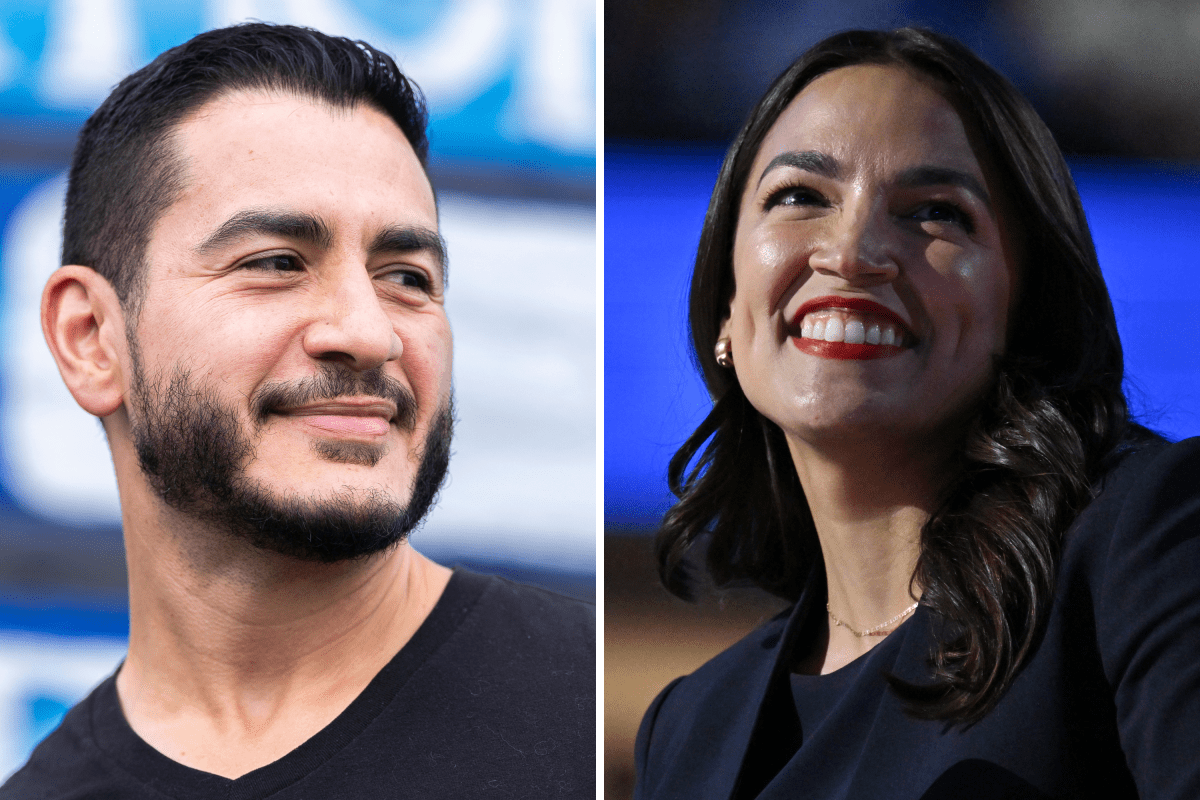
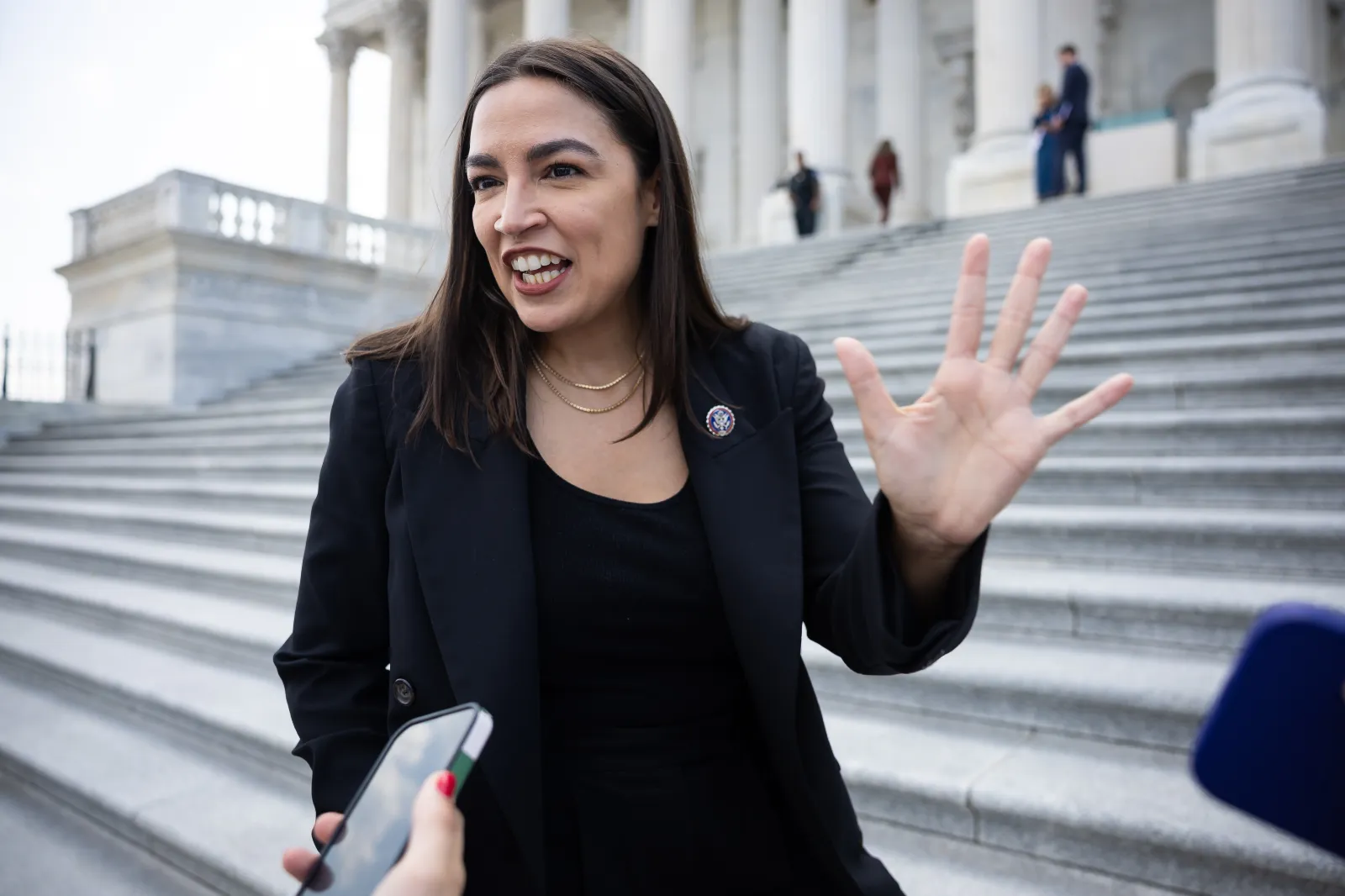
A new national poll reveals that while a majority of Democrats are eager for sweeping changes within their party, high-profile progressive leader Representative Alexandria Ocasio-Cortez faces low favorability ratings that could complicate her emergence as a unifying national figure.
The CNN/SSRS survey, which was conducted between July 23-27, found that a majority of Democrats and Democratic-leaning independents favor significant changes to the party's leadership and strategic direction. At the same time, the poll registered a 26 percent national favorability rating for Ocasio-Cortez, one of the party’s most prominent progressive voices. Her unfavorable rating was at 36 percent.
Among adults ages 18 to 34—a demographic frequently viewed as a core source of support for the New York Democrat—her favorability stood at 28 percent. The congresswoman's favorability went up to 30 percent among those aged 35 to 49.
The poll surveyed 1,225 respondents, with the margin of error being +/-3.2 at the 95 percent confidence level.
The findings underscore a complex strategic dilemma for Democrats as they grapple with their future. While rank-and-file voters express widespread dissatisfaction with current leadership, the data indicates that high visibility has not yet translated into broad national appeal for one of the party's most prominent alternatives.
Ocasio-Cortez has repeatedly stated she is not running for president in 2028, though she remains a leading voice in the party's progressive wing and a prolific national fundraiser.
Newsweek has reached out to Ocasio-Cortez's office and the Democratic National Committee for comment via email and contact form respectively.
A Divided Electorate and the Search for Direction
According to the survey, roughly one-third of Democrats identify as democratic socialists, underscoring the enduring influence of progressive ideology within the coalition. Concurrently, a broad majority favors replacing existing leadership and overhauling the party's approach.
However, Ocasio-Cortez's public standing remains polarized. Despite her large social media following and her significant fundraising ability, her 26 percent favorability rating trails the typical marks of nationally prominent politicians with presidential-level name recognition, who historically register positive ratings in the 40 to 50 percent range depending on the political environment.
What Have Potential Democratic Frontrunners for 2028 Said
The 2028 Democratic presidential race is still in its early stages, with no major candidates having formally announced campaigns, but several figures have already emerged as potential contenders.
Vice President Kamala Harris, who has traveled to states like Michigan and South Carolina in recent months, suggested she could run again without making a formal announcement.
“I might. I am thinking about it,” she told Reverend Al Sharpton in April after he asked whether she planned to run for president in 2028 during the National Action Network’s annual convention. Harris noted she “served for four years being a heartbeat away from the presidency of the United States.”
“I spent countless hours in my West Wing office footsteps away from the Oval Office. I spent countless hours in the Oval Office and the Situation Room. I know what the job is, and I know what it requires,” she said.
California Governor Gavin Newsom discussed the possibility of running in a June 2025 interview with The Wall Street Journal.
“I'm not thinking about running, but it's a path that I could see unfold,” he said.
Ocasio-Cortez addressed presidential speculation in a conversation with David Axelrod, a former adviser to President Barack Obama, earlier this year.
"My ambition is to change this country,” she said. “Presidents come and go. Senate, House seats, elected officials come and go. But single-payer healthcare is forever. A living wage is forever, workers' rights are forever, women's rights, all of that, and so anyways...to a finer point to your question is that when you aren't attached, when you haven't been like fantasizing about being this or that since the time you were 7 years old, it is tremendously liberating."
Georgia Senator Jon Ossoff has said he is not planning to run, telling CNN, “I am not running for president in 2028, I have no interest in running for president in 2028.”
He said he is “laser-focused” on winning reelection in Georgia this year in a race the Cook Political Report forecasts as "Lean Democratic."
What Happens Next
With the next presidential election a couple of years away, party strategists note that Democrats face a dual imperative: satisfying a restless base demanding structural reform while identifying standard-bearers capable of building consensus across a diverse electoral coalition.
Contact Newsweek editors for this story: Steve Mollman and Anthony Murray.