
 1 week ago
45
1 week ago
45
Artificial intelligence has helped scientists create entirely new viruses that can function and replicate in a laboratory, marking a major step forward in using AI to design biological systems, the BBC has reported.
Researchers created 16 novel bacteriophages—viruses that infect and kill bacteria rather than humans—using AI-designed genetic sequences. The breakthrough marks the first time AI has successfully generated complete viral genomes that have produced working viruses.
While AI has already been used to accelerate drug discovery, including the development of new antibiotics, designing a viable virus from scratch is a far more complex challenge. Researchers say the technology could eventually help create virus-based medicines, transforming viruses into precision tools to target infections, cancer and other diseases.
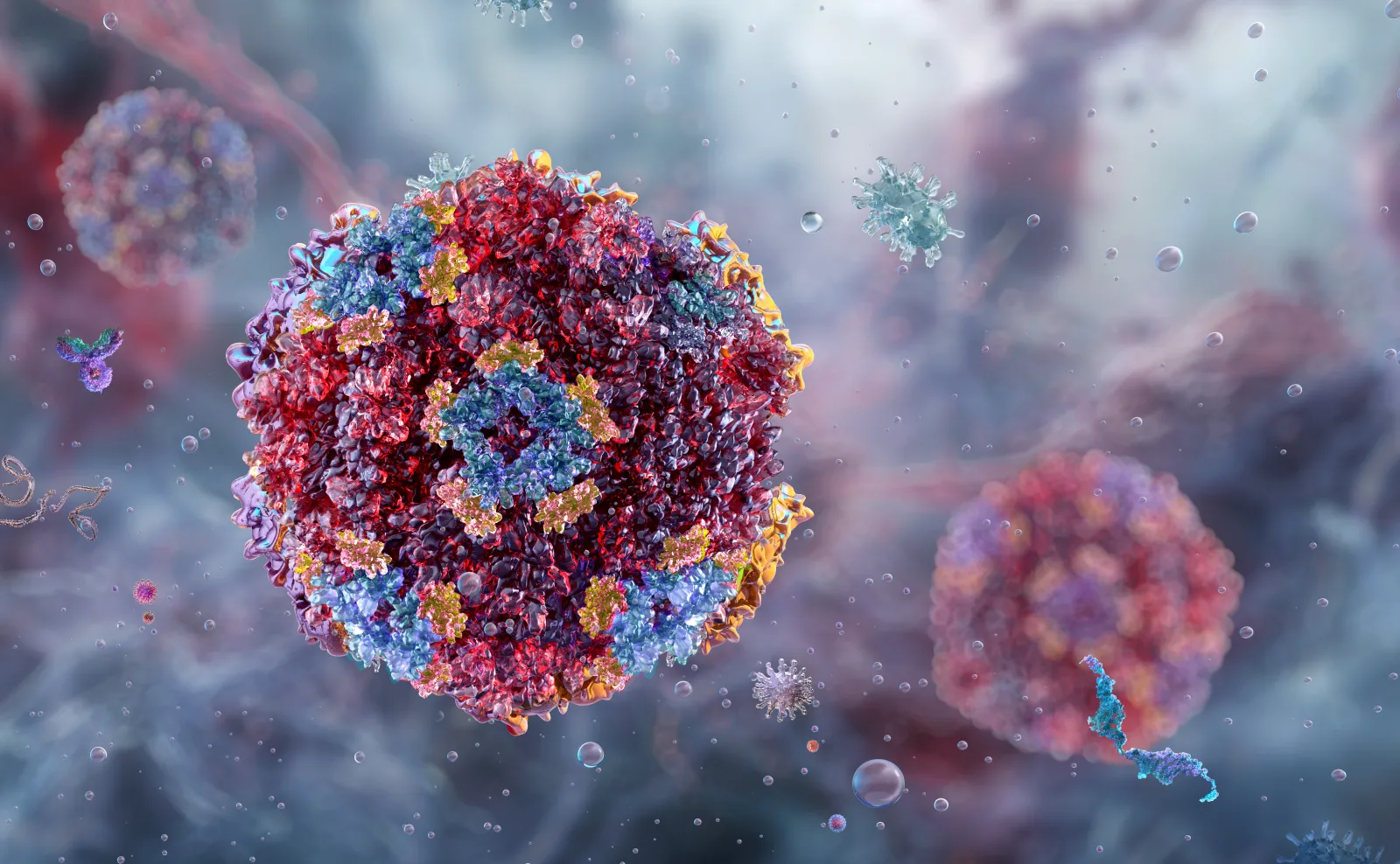
Viruses are not inherently harmful, experts say. Their natural ability to enter cells and deliver genetic material is what makes them useful tools in medicine, from gene therapy to cancer treatments.
"This is a next step in the complexity that's designable by generative AI," Brian Hie, assistant professor at Stanford University, told the BBC. "This is the first time generative AI has been used to design a complete genome."
Hie said the AI-designed viruses represented "new territory" because they were capable of replicating and performing functions inside cells.
How AI Designed the Viruses
The technology works similarly to large language models such as ChatGPT, which predict patterns and sequences in text. However, instead of learning human language, the AI models—known as Evo1 and Evo2—were trained to interpret the "language of life."
The systems analyzed vast amounts of genetic data from viruses, bacteria, plants and humans to identify patterns within DNA sequences.
Researchers then used the models to design bacteriophages—viruses that target specific species of bacteria rather than human cells.
Fighting Antibiotic-Resistant Infections
Unlike viruses that infect humans, bacteriophages target bacteria. Scientists have studied bacteriophage, or phage, therapy for decades as a potential alternative or supplement to antibiotics, particularly as drug-resistant infections become a growing global health threat.
The challenge has been finding the right phage for the right bacterial strain. Many naturally occurring phages are highly specific, meaning a treatment that works against one strain of bacteria may not work against another.
AI could help speed up that process by designing or identifying phages capable of targeting specific bacteria, potentially allowing researchers to respond faster to infections that no longer respond to traditional antibiotics.
Researchers say this could be particularly valuable against so-called "superbugs"—bacteria that have evolved resistance to multiple antibiotics.
Viruses Designed To Fight Cancer
Beyond infectious disease, one of the most promising areas for engineered viruses is cancer treatment.
Scientists have already developed oncolytic viruses, which are designed to infect and destroy cancer cells while stimulating the body's immune response against tumors, as reported by the Cancer Research Institute.
One example is T-VEC, a genetically modified virus approved to treat certain melanoma patients.
AI could potentially improve these therapies by helping scientists design viruses that are better at targeting tumors, avoiding healthy tissue and triggering stronger immune responses.
Researchers are investigating whether engineered viruses could eventually play a larger role in treating cancers that remain difficult to treat, including some brain, pancreatic and solid tumors.
Expanding Gene Therapy
Viruses are already among the most important tools in gene therapy because they can deliver genetic material into human cells.
Modified viral vectors are being studied or used in treatments for several inherited conditions, including sickle cell disease, as reported by the FDA, alongside cystic fibrosis, muscular dystrophy and inherited forms of blindness.
The challenge is that existing viral delivery systems have limitations. Some trigger immune reactions, while others struggle to deliver genetic material to the correct tissues.
AI could help researchers design improved viral vectors that are more precise, efficient and safer.
For gene therapy researchers, the appeal of AI is speed. Instead of testing thousands of possible designs manually, scientists could use AI models to identify the most promising candidates before moving them into laboratory testing.
Future Possibilities: HIV and Neurological Diseases
Researchers are also exploring whether engineered viral systems could contribute to future treatments for conditions including HIV and neurological disorders, as reported by the National Institutes of Health.
In HIV research, scientists have investigated ways to use engineered biological systems to target infected cells or deliver therapeutic genetic material.
For neurological diseases such as Parkinson's disease, Huntington's disease and some forms of dementia, one of the biggest challenges is delivering treatments into the brain. Scientists hope improved viral vectors could eventually help overcome that barrier.
However, these applications remain largely experimental, and many are years away from becoming routine medical treatments.
A Distinction Between Medicine and Risk
The rapid development of AI-designed viruses has renewed debate about biosecurity.
Scientists stress that designing a virus to serve as a medicine is fundamentally different from creating a pathogen designed to cause harm.
Scientists have described the development as a major milestone that could open new possibilities for medicine, including treatments for diseases that remain difficult to tackle. However, experts have also warned that AI's growing ability to design biological systems raises urgent questions around safety and security.
As reported by the BBC, in a commentary published alongside the study in the journal Science, Dr. Thomas Inglesby and Dr. Moritz Hanke of the Center for Health Security at Johns Hopkins University said the findings raise "urgent biosafety and biosecurity questions."
The researchers wrote that the issue is no longer "whether generative viral genome design will exist" but whether the technology can be developed without "enabling serious harm."
They added that viruses with the potential to cause disease "should not be pursued."
Therapeutic viruses are typically engineered with specific goals: targeting cancer cells, delivering genes or attacking bacteria. They are designed for controlled use in laboratory and clinical settings.
However, experts acknowledge that advances in AI biology require careful oversight. Questions remain about how these technologies should be regulated, how genetic designs should be screened and how researchers can ensure safety as AI tools become more powerful.
The Road Ahead
Despite the initial excitement, AI-designed viral medicines are not expected to reach patients overnight.
Potential treatments must still undergo extensive laboratory research, animal studies, clinical trials and regulatory approval before they can be widely used.
AI may allow scientists to design viral therapies faster and more accurately, but experts say it will not replace the careful testing required to prove that a treatment is safe.
The future of AI-designed viruses may ultimately depend on balancing two possibilities: using the technology to create a new generation of precision medicines while ensuring the same tools cannot be misused.
For researchers, the promise is clear—viruses that once represented disease could become some of medicine's most powerful weapons.
Contact Newsweek editors on this story: Ben Kelly and Tony Phillips.