 3 days ago
34
3 days ago
34
Democratic and Republican voters across a series of politically competitive states and congressional districts broadly agree that Supplemental Nutrition Assistance Program (SNAP) benefits should be increased, new polling shows, as grocery prices continue to put pressure on household budgets.
Surveys conducted across 11 states and 28 competitive congressional districts found that a majority of voters from both major parties supported higher SNAP benefits for people living alone. Most Democrats also backed increased assistance for single mothers, while Republican support for raising those benefits was more mixed.
The findings come as Americans continue to contend with food prices that are significantly higher than they were before the COVID-19 pandemic, despite a slowdown in inflation in recent years.
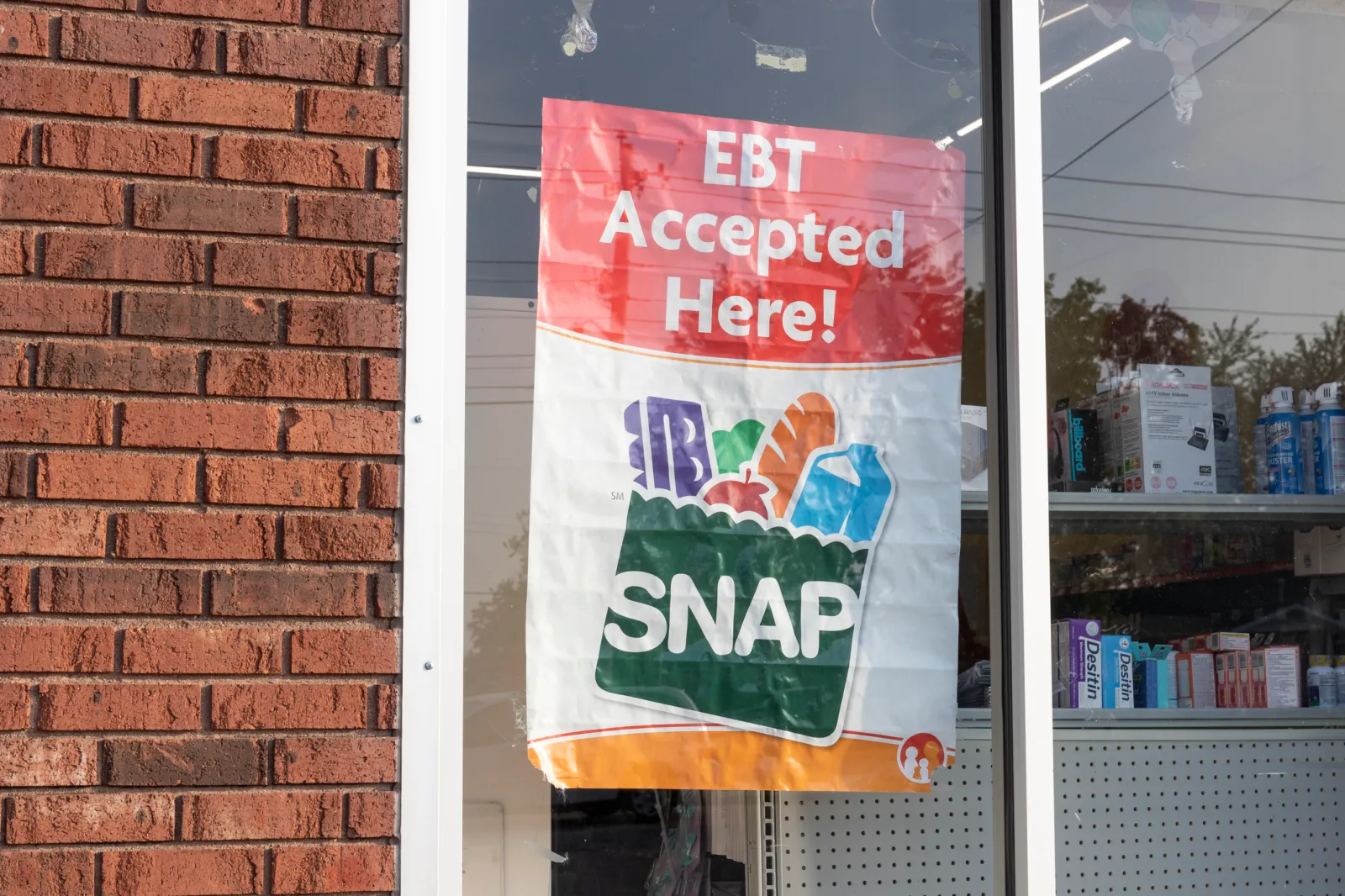
Bipartisan Support for Higher SNAP Benefits
SNAP, commonly known as food stamps, is the largest federal food assistance program in the United States and provides monthly grocery benefits to households with low or no income. The new surveys indicate there is considerable bipartisan appetite for increasing that assistance.
The state surveys covered Alaska, Georgia, Iowa, Maine, Michigan, Minnesota, Nebraska, New Hampshire, North Carolina, Ohio and Texas. They were conducted between May 27 and June 25 among a combined 19,564 adults, with samples ranging from 600 to 2,000 respondents in each state. The polling was conducted by the Program for Public Consultation, the Civic Innovation Center at the University of Maryland’s School of Public Policy and Voice of the People.
Among respondents asked about SNAP benefits for individuals living alone, between 71 percent and 93 percent of Democrats in those 11 states said benefits should be higher than the current average of $170 per month. Republican support ranged from 58 percent to 87 percent. Nationally, 88 percent of Democrats and 70 percent of Republicans supported an increase.
The parties differed somewhat over how large the benefits should be. Across the battleground states, the median Democratic respondent selected a monthly benefit of $250, compared with $230 among Republicans. Nationally, the median Democrat also favored $250, while the median Republican chose $200.
Support remained widespread, though less uniform, when voters were asked about SNAP assistance for single mothers. Between 58 percent and 80 percent of Democrats in the surveyed states and districts said the current average monthly benefit of $530 should be increased.
Republicans favored higher benefits in 10 of the 11 states and in 19 of the 28 congressional districts, with support ranging from 51 percent to 73 percent. In the remaining state and nine districts, most Republicans did not back an increase, although nowhere did a Republican majority favor reducing benefits.
Nationally, 67 percent of Democrats and 52 percent of Republicans said monthly SNAP benefits for single mothers should be higher.
The median preferred amount across the battleground areas was $600 among Democrats and $554 among Republicans.
Grocery Costs Remain Elevated
Support for higher food assistance comes against the backdrop of a prolonged rise in the cost of eating. Bureau of Labor Statistics data show grocery prices are roughly 35 percent higher than they were in 2016. The cost of food eaten away from home, including restaurant meals, has risen by about 51 percent over the same period.
Much of the increase came during and immediately after the pandemic. Grocery prices jumped 11.4 percent in 2022, the largest annual increase in decades, before rising another 5 percent in 2023.
Inflation has since eased, but food prices have continued to climb from those already elevated levels. Groceries were 2.7 percent more expensive in June 2026 than they were a year earlier, while food away from home rose 3.4 percent. The U.S. Department of Agriculture expects grocery prices to rise 2.7 percent this year, with restaurant and other food-service prices increasing 3.5 percent.
The increases are being felt across income groups. A Washington Post-Ipsos poll of 2,648 adults conducted in July found that 65 percent of Americans considered groceries unaffordable, compared with 33 percent who said they were affordable.
Among adults earning less than $50,000 annually, 82 percent described groceries as unaffordable. The share stood at 70 percent among those earning between $50,000 and $100,000 and 56 percent among people earning more than $100,000.
Last year, an AP-NORC survey conducted in August similarly found that 53 percent of adults regarded grocery expenses as a major source of stress, while another 33 percent considered them a minor source.
Voters Back Help With Healthier Food
The SNAP polling also found especially strong bipartisan backing for government incentives aimed specifically at fruits and vegetables. Across the battleground states and districts, between 78 percent and 97 percent of Democrats supported discounts on fruits and vegetables purchased with SNAP benefits, while Republican support ranged from 68 percent to 93 percent.
The findings coincide with a recent proposal in Congress that would provide some low-income households with an additional $60 per month specifically to purchase fresh produce.
The Fresh Bucks for Fresh Produce Act would establish a pilot program through the USDA allowing participating states to provide monthly produce benefits to households earning no more than 80 percent of their area's median income. Households already receiving SNAP would automatically meet the program's income test.
The measure comes as policymakers increasingly debate how SNAP should be used to encourage healthier eating. Several states have moved toward restricting purchases of products including soda, energy drinks and candy.
Contact Newsweek editors on this story: Ben Kelly and Dave Siminoff.