 4 days ago
36
4 days ago
36
The Trump administration is moving toward mandatory online filing for green cards, citizenship, asylum and other immigration benefits under a new rule published in the Federal Register on Monday.
The interim final rule, which the Department of Homeland Security published, does not immediately make any forms online-only. Instead it would allow U.S. Citizenship and Immigration Services (USCIS) to require electronic filing for immigration benefit requests once a form has been available online for at least 180 days. It would also establish a process that allows the agency to make forms online-only after providing at least 60 days' notice.
The rule could affect a wide range of immigration benefits, including green card applications and renewals, family-based petitions, citizenship requests, asylum claims, employment authorization applications and Temporary Protected Status filings.
Many of the forms covered by the rule are already available electronically. As of December 2025, USCIS offered online filing for 22 forms, including Form I-90 to replace a permanent resident card, Form I-130 for family sponsorship, Form I-485 for adjustment of status, Form I-751 to remove conditions on permanent residence, Form I-765 for work authorization, Form I-589 for asylum and Form N-400 for naturalization.
The key change is that online filing would no longer be optional for forms designated by USCIS. The agency said about 43 percent of individual applicants voluntarily filed online in fiscal year 2025 when an electronic option was available, while fewer than 6 percent of attorneys and accredited representatives did so.
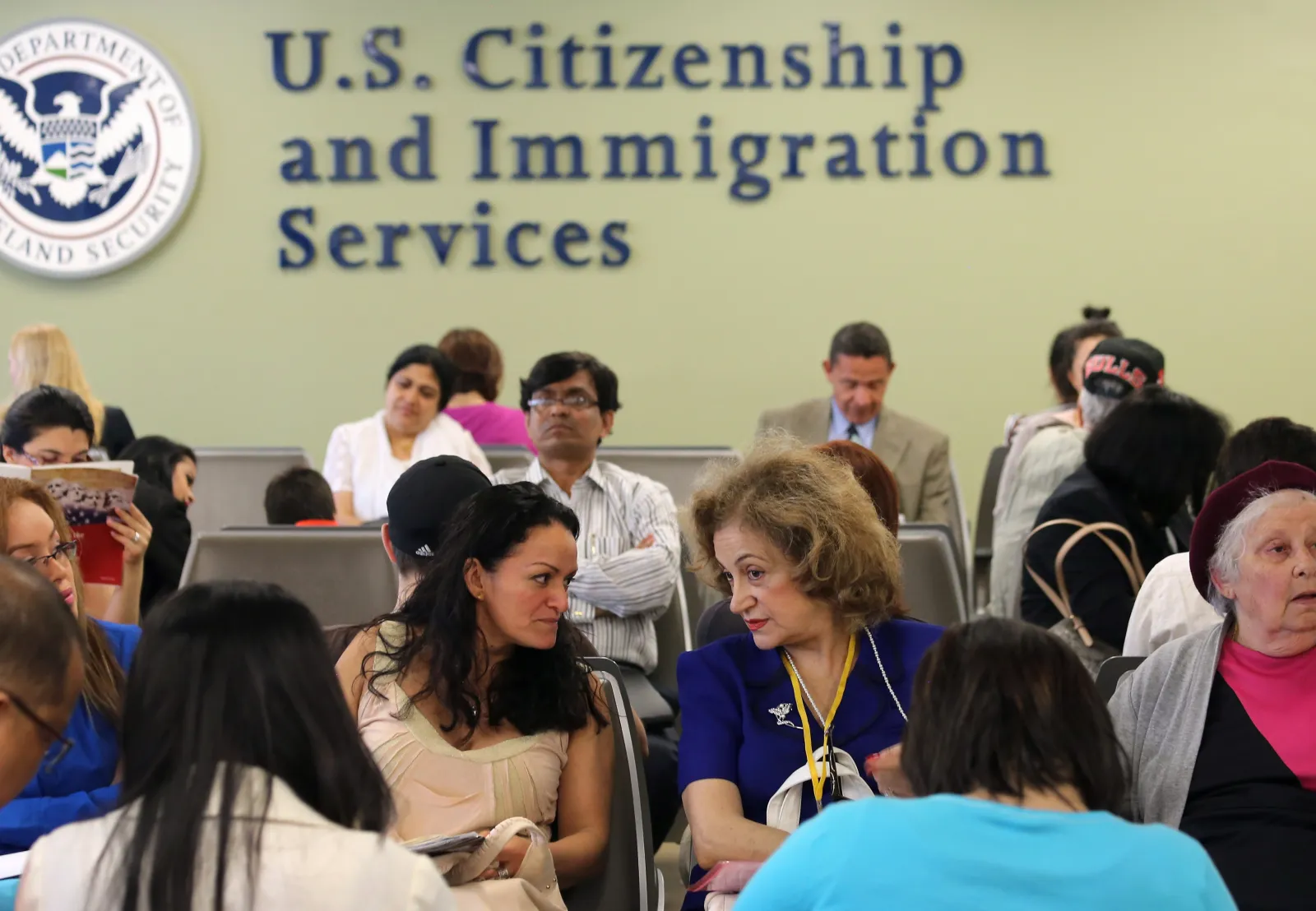
How the Rule May Affect Green Card Holders
For green card holders and applicants, the shift could eventually require online submission of some of the immigration system's most commonly used forms. Those include applications to replace a green card, petitions filed by U.S. citizens and permanent residents on behalf of relatives, applications for lawful permanent residence, and petitions to remove conditions on residence.
Citizenship applicants could also be affected. Forms already eligible for e-filing include the N-336 requests for hearings on certain naturalization decisions, N-565 applications to replace citizenship documents, and N-600 and N-600K related to certificates of citizenship.
DHS Moves To Strengthen Fraud Detection
DHS said the rule is intended to speed up USCIS's transition away from paper-based processing and reduce reliance on the Treasury Department's lockbox system, which receives and processes mailed applications. The agency said electronic filing would improve efficiency, reduce errors, and strengthen fraud detection and security screening by making immigration data easier to access and analyze.
Adam Klein, a co-founder of Globali.ai and former senior DHS official who worked on the development of electronic immigration forms, told Newsweek that the benefits of e-filing have long been apparent because it gives the government more structured data, which he said can improve "accuracy, fraud detection, efficiency, and ultimately the quality and speed of decision-making."
"This rule is more significant than simply USCIS going digital," Klein added.
He said policymakers have historically balanced those advantages against concerns that mandatory technology requirements could disadvantage some applicants, particularly older people and lower-income populations with limited internet access or digital literacy.
"There is a legitimate efficiency and national-security case for mandatory electronic filing. There is also a legitimate access question," Klein said.
How To Request E-Filing Waiver
The rule would also create a waiver process for people who cannot file online. Applicants could request an exemption by submitting a new form, I-936, if electronic filing would cause an undue hardship. USCIS said it would review requests on a case-by-case basis, taking into account factors such as access to technology and other barriers to online filing.
The rule proposes a $25 fee for the waiver request, although some humanitarian applicants would be eligible for fee waivers under existing law. DHS estimates roughly 249,000 people may seek such waivers annually.
USCIS says it has processed more than 452 million pages through its lockbox network in fiscal year 2025, spent about $10.9 million on postage related to paper filings and incurred roughly $253 million in labor costs associated with paper processing.
DHS estimates the rule would generate about $518 million in annual net savings for applicants and petitioners through reduced paperwork, fewer rejected filings and lower filing burdens, while creating roughly $15 million in annual costs associated with the waiver process.
The rule is scheduled to take effect on August 11, with comments accepted through October 13.
Contact Newsweek editors on this story: Ben Kelly and Shakeema Edwards.