 3 days ago
37
3 days ago
37
The government of Greenland has issued a stern notice to an American oil exploration company with several links to the administration of Donald Trump, who continues to voice a desire for the U.S. to acquire the territory for reasons of national security and its increasingly crucial natural resources.
As documented in a LinkedIn post from one of its partners, the Texas firm Greenland Energy began shipping drilling equipment to Greenland in late July ahead of breaking ground on land in the eastern part of the territory.
This is despite the government having given no permission for this transfer or for the start of exploratory drilling, leading it to issue a “strong warning” to the licensee, a separate firm in partnership with Greenland Energy, that “all future logistical matters must be notified and approved by the Mineral Resources Authority before they are carried out.”
When approached for comment, the company referred Newsweek to its August 6 letter to shareholders, in which it said that “the permitting process continues to move forward through constructive engagement between the operator and Greenlandic authorities.”
The company said that after “high-level meetings between project leadership and Greenlandic regulatory and oversight authorities,” the project would initially be scaled back to one well rather than two, which it described as the “most responsible course of action.”
Newsweek has reached out to Greenlandic and Danish authorities, and contacted the White House via email for comment.
How Trump is Linked to the Plan
As highlighted in reporting by The Guardian and the Danish outlet Danwatch, Greenland Energy is involved with several individuals who boast indirect links to the administration and the president.
According to Securities and Exchange Commission (SEC) filings from May, the billionaire hedge fund manager and CEO of Citadel Kenneth Griffin acquired a 9.3 percent stake in Greenland Energy. While Griffin has since come to be known as one of the president’s major Wall Street critics, The Guardian notes that he donated $1 million dollars to Trump’s 2025 inaugural committee.
In June, the company announced that it had appointed Carol Craig to its board. Craig’s defense firm, Sidus Space, has been involved in President Trump’s planned “Golden Dome” missile defense system.
Greenland Energy Chairman Larry Swets has previously been involved in a venture with Paolo Tiramani, a businessman who claims to have donated $10 million to Trump’s White House ballroom project. According to The Guardian, Swets' wife has also posted images to social media that appear to have been taken at the president's Mar-a-Lago club in Florida. Swets, however, has denied any close links to the president.
Meanwhile, Greenland Energy enlisted Phil McGraw, the TV personality better known as Dr. Phil, to host a six-part documentary series about the drilling project. Dr. Phil previously served on Trump’s “Religious Liberty Commission,” and has often appeared at events lending support to the president or his policies.
“The docuseries will chronicle Greenland Energy's historic Jameson Land Basin project and its planned 2026 campaign in East Greenland, the country's first modern onshore oil exploration,” according to a June press release. “The Arctic adventure series will capture the mission of these modern-day wildcatters, as well as the people and character of the country of Greenland itself.”
Trump’s History with Greenland
The President voiced a desire to purchase Greenland during his first stint in the White House, and control over semi-autonomous Danish territory has remained a source of Transatlantic tension ahead of and throughout his second term.
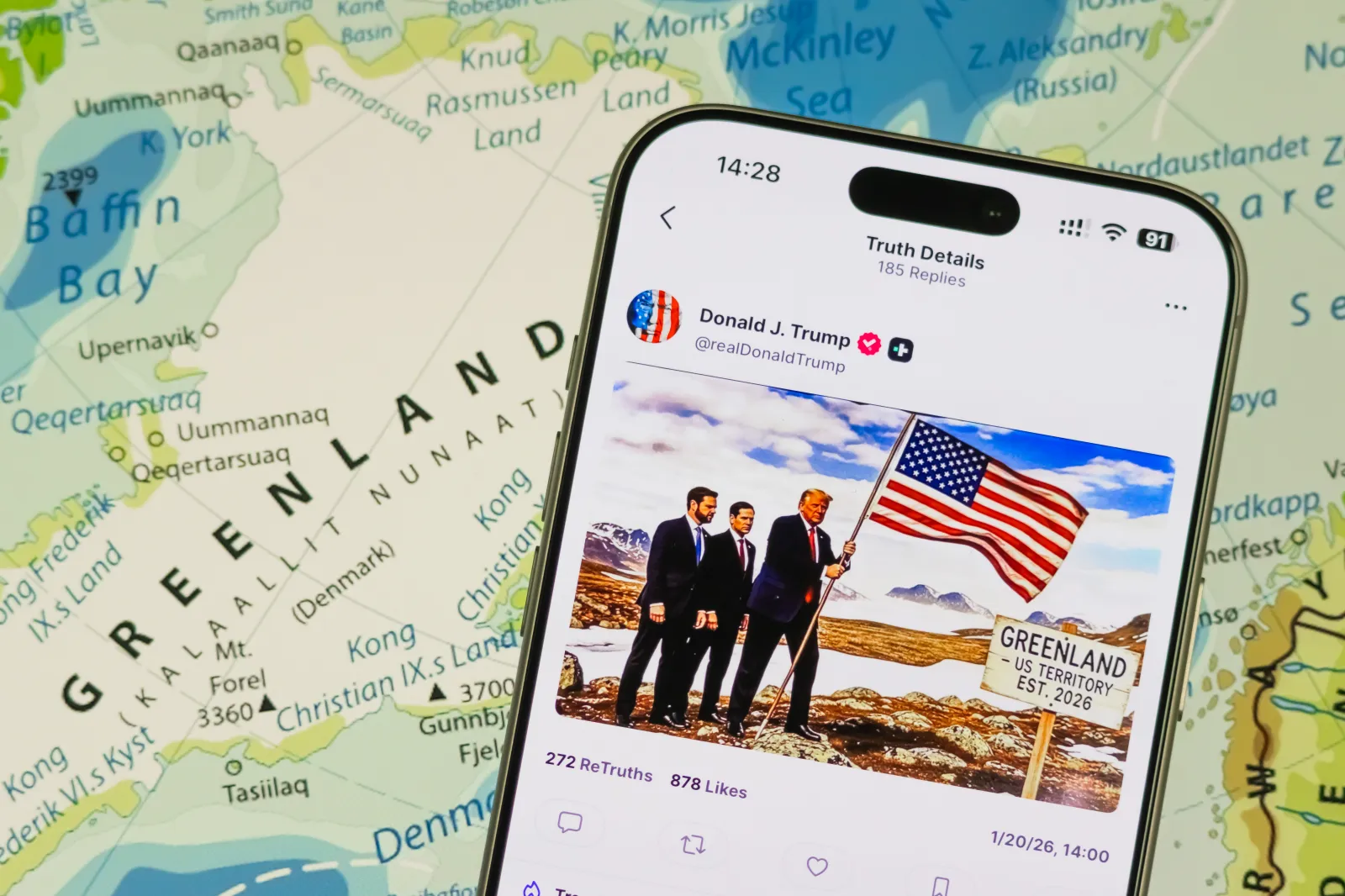
Trump called “ownership and control” of Greenland an “absolute necessity” in December 2024, and has since argued that the territory is of paramount importance for U.S. national and energy security.
Last March, Trump refused to rule out the use of military force to take over the island, and similar remarks over the course of his presidency have aroused concern from America’s European allies as well as U.S. lawmakers.
The president has even threatened U.S. allies with tariffs over their refusal to support the acquisition, though he backed down from this plan in January after reaching a “framework of a future deal” for the territory.
Officials from both Greenland and Denmark have rejected the possibility of U.S. ownership, and the three parties have this year been working on a compromise that could address American concerns about Arctic security as well as those to do with sovereignty.
However, Trump has continued posting images and statements indicating he still sees U.S. control over Greenland as vital for national security, and last week told the radio host Steve Gruber he believed this would be achieved by the time he leaves office.
Where Is the Company Hoping to Drill?
While no commercial production yet exists, Greenland is thought to possess significant untapped oil and gas potential. The U.S. Geological Survey has in the past estimated that Northeast Greenland alone holds around 31 billion barrels of oil equivalent (BOE) in technically recoverable oil, gas and natural gas liquids.
And President Trump's special envoy to Greenland, Louisiana's Republican Governor Jeff Landry, told Fox News back in May that Greenland could "be exporting 2 million barrels of oil a day right now," and that this could ease the supply pressures caused by the Iran war.
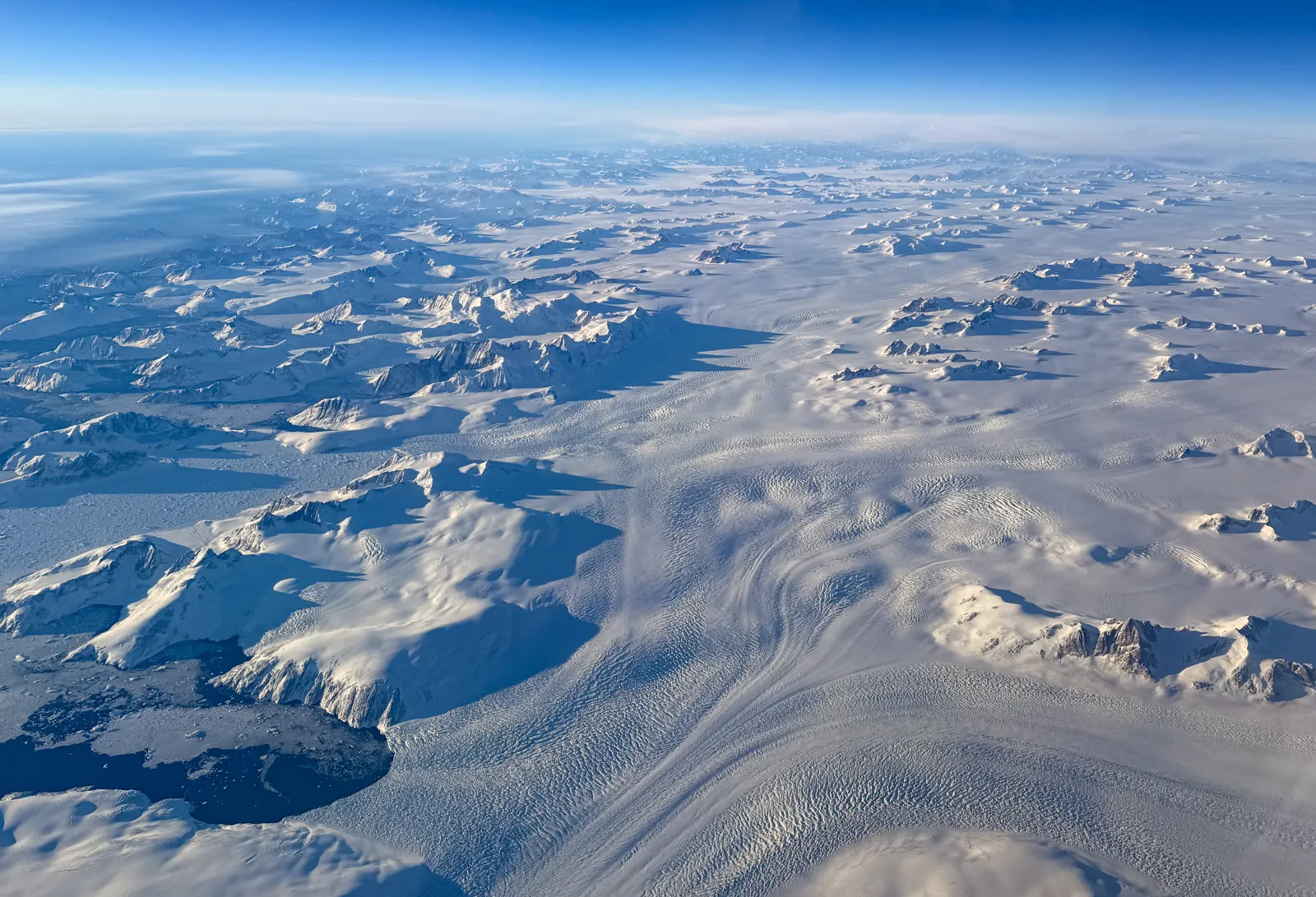
Greenland Energy was established last year and is focused on unlocking what it calls the territory’s “vast hydrocarbon potential through innovative exploration.” Its primary focus is the 8,100-kilometer-squared Jameson Land Basin, described by the company as “one of, if not the last, highly prospective, yet completely undrilled basins globally, but with a clear genetic link to the North Sea as well as a scale similar to many of the world’s major producing regions.”
In 2021, Greenland’s government announced that it would stop issuing new oil and gas exploration licenses and effectively banned the practice over environmental concerns.
However, the project in question has been made possible due to a pre-existing license originally granted to White Flame Energy, which was acquired—along with its rights—by the firm 80 Mile in 2024.
80 Mile remains the licensee of Jameson, but Greenland Energy will assume a majority stake in the venture in exchange for providing $60 million in funding while carrying out the “technical planning, operational readiness, logistics, and overall project coordination.”
What Happens Next?
In a recent letter to shareholders, Greenland Energy wrote that “recent high-level meetings between project leadership and Greenlandic regulatory and oversight authorities have been constructive, and we continue to be encouraged by the progress being made toward the remaining approvals required for drilling.”
However, a notice issued by Greenland’s Ministry of Industry and Mineral Resources notes that no permits have been granted to extract oil, that the project is “still in the exploration phase,” and that there are several steps still required—including preliminary studies and public hearings—before the company can commence with the drilling.
Given the projected timeframe, Greenland’s mineral authorities told Danwatch they do not believe the company will be able to secure the necessary approvals by the end of 2026 to either transfer their equipment or begin drilling.
Contact Newsweek editors on this story: John Fitzpatrick and Trevor Davies.