 6 days ago
35
6 days ago
35
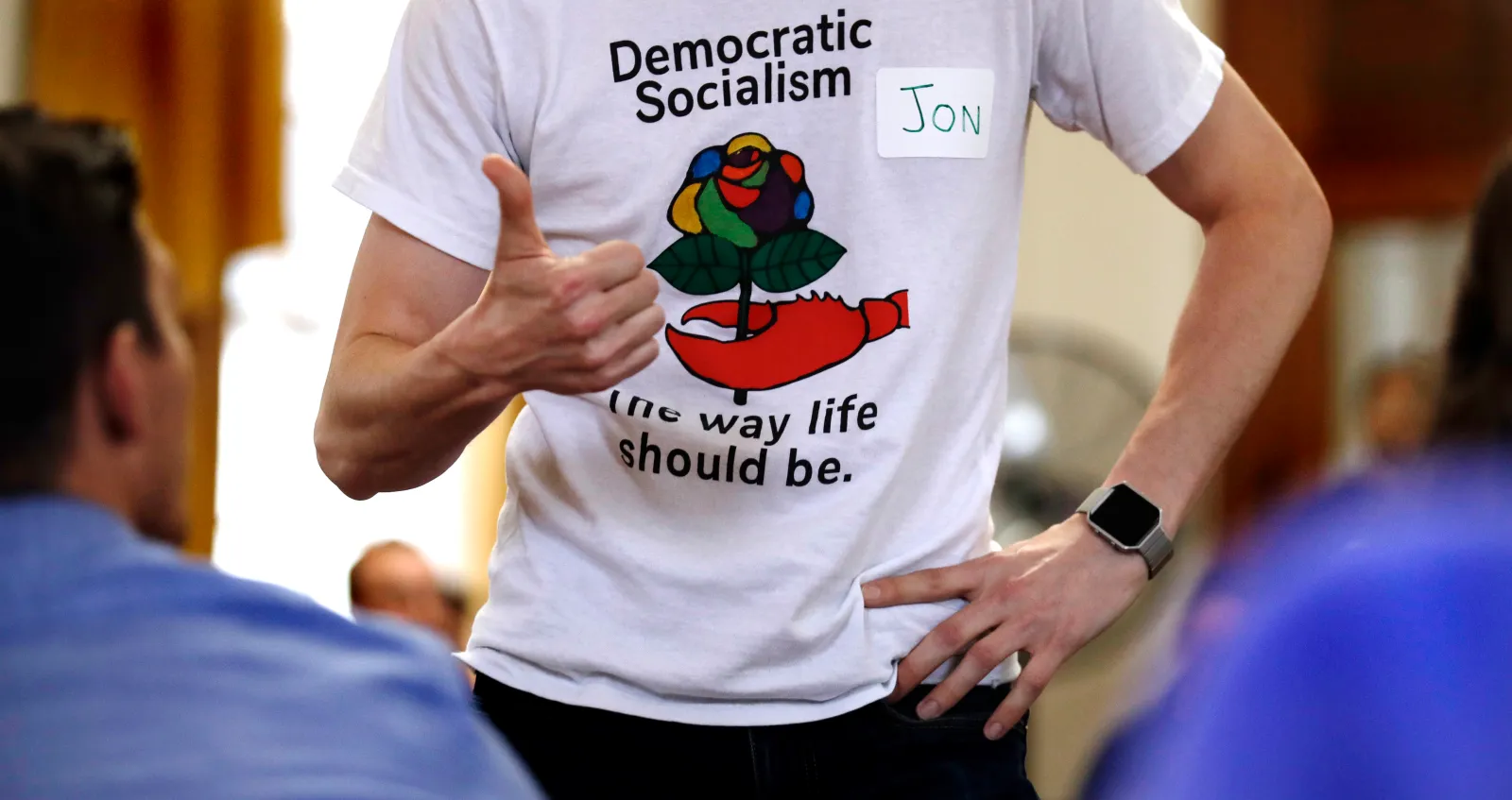
As progressive candidates gain prominence in Democratic politics in recent elections, polling suggests some of the Democratic Socialists of America's (DSA) policy positions resonate beyond the party's left flank and may even attract some independent and Republican voters.
A series of recent primary victories by democratic socialist and DSA-backed candidates has renewed debate over the direction of the Democratic Party and its platform, particularly after the party's losses in the 2024 elections left Republicans in control of the White House and both chambers of Congress.
In Colorado, Melat Kiros defeated longtime Representative Diana DeGette in a closely watched congressional primary, while in New York, Claire Valdez and Darializa Avila Chevalier won Democratic nominations in races seen as tests of the movement's growing influence.
Critics argue the candidates are out of step with the broader electorate and risk moving the Democratic Party too far left, potentially alienating moderate voters and pushing them to Republican candidates, while others note many of the proposals may be too costly and unrealistic in practice. Supporters counter that they are tapping into voter frustration over the political establishment and advancing policies they say address everyday concerns.
Recent polling suggests several policies associated with the democratic socialist movement, including universal healthcare and higher taxes on wealthy Americans and corporations, enjoy wider public support. Others, such as efforts to defund or abolish police departments, remain far less popular and have not attracted majority backing.
With independent voters roughly split on whether they would be more likely to support a democratic socialist or MAGA-aligned candidate, polling suggests some DSA policies are more popular with those outside the Democratic Party than the democratic socialist label itself.
A Reuters/Ipsos poll found that 22 percent of independents were more likely to support a democratic socialist candidate, compared with 25 percent who said the same of a MAGA candidate. But the gap widened when voters were asked who they would be less likely to support: 43 percent said a democratic socialist candidate, while 59 percent said a MAGA candidate.
Polling on individual issues does not necessarily translate into support for the DSA platform as a whole. The organization advocates a range of proposals, from public ownership of major industries to abolishing the Senate, many of which have limited national polling. This analysis instead focuses on five of the group's most prominent and frequently debated proposals that have been the subject of recent public-opinion surveys.
"People want a fighter, and I think they appreciate that we just come right out and say it," DSA co-chair Megan Romer said about DSA during an August 7 episode of The New Yorker Radio Hour. The group has just under 130,000 members according to Romer, who says membership has grown significantly since New York City Mayor Zohran Mamdani's election last year.
Newsweek has reached out to the DSA for comment via email on Friday.
Universal Healthcare
Among the DSA’s policy priorities, universal healthcare is one of the most supported by the broader public. The group's "Workers Deserve More" platform calls for healthcare at no cost to patients, greater investment in public hospitals and clinics, and publicly funded medical education. Recent polling suggests those goals resonate with voters.
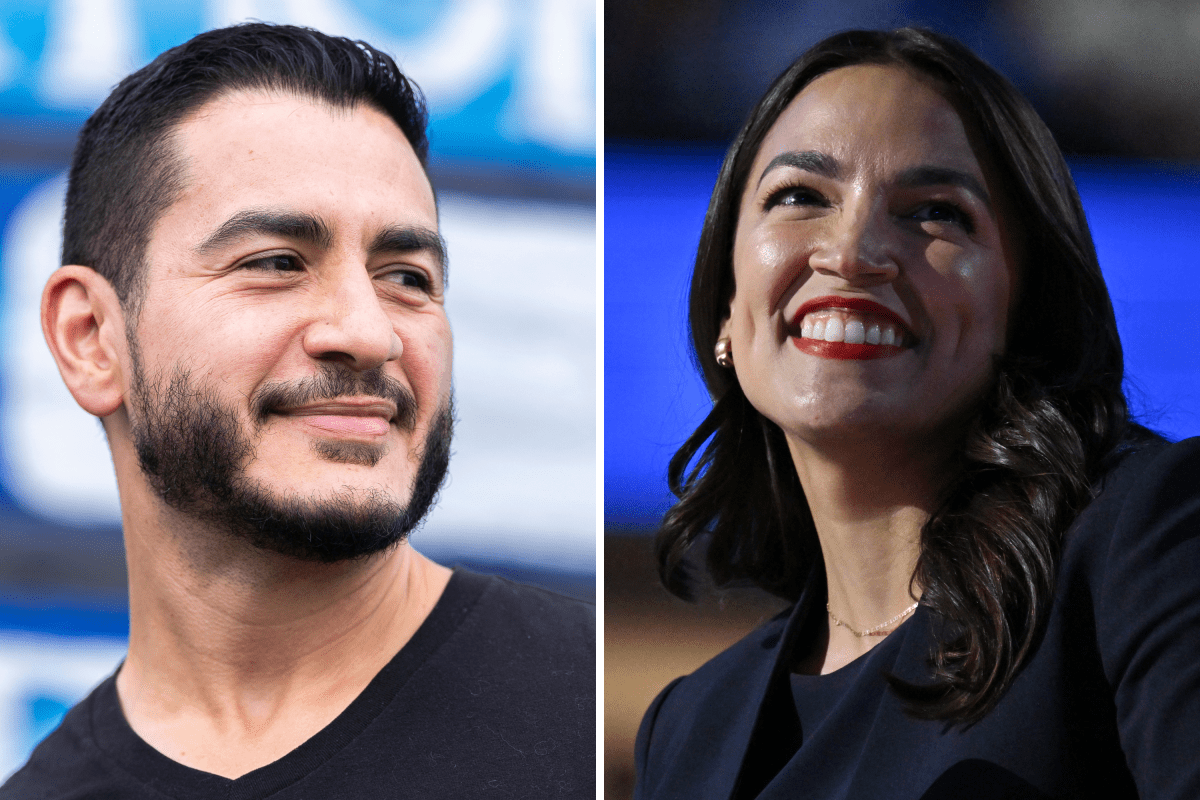
Michigan Democratic Senate nominee Abdul El-Sayed, who won his primary this week, is not a DSA member and has said he is a capitalist, was backed by prominent democratic socialist figures including Bernie Sanders, Alexandria Ocasio-Cortez and Mamdani, and has heavily campaigned on a Medicare for All platform. The former health official narrowly beat out Democrat Representative Haley Stevens, a more moderate candidate, and will now face off with Republican Mike Rogers in November, putting to the test if progressives can secure elections in purple states.
El-Sayed's victory has drawn attention because he campaigned heavily on several progressive issues in a state that has often decided close national elections and voted for President Donald Trump in 2024 and 2016.
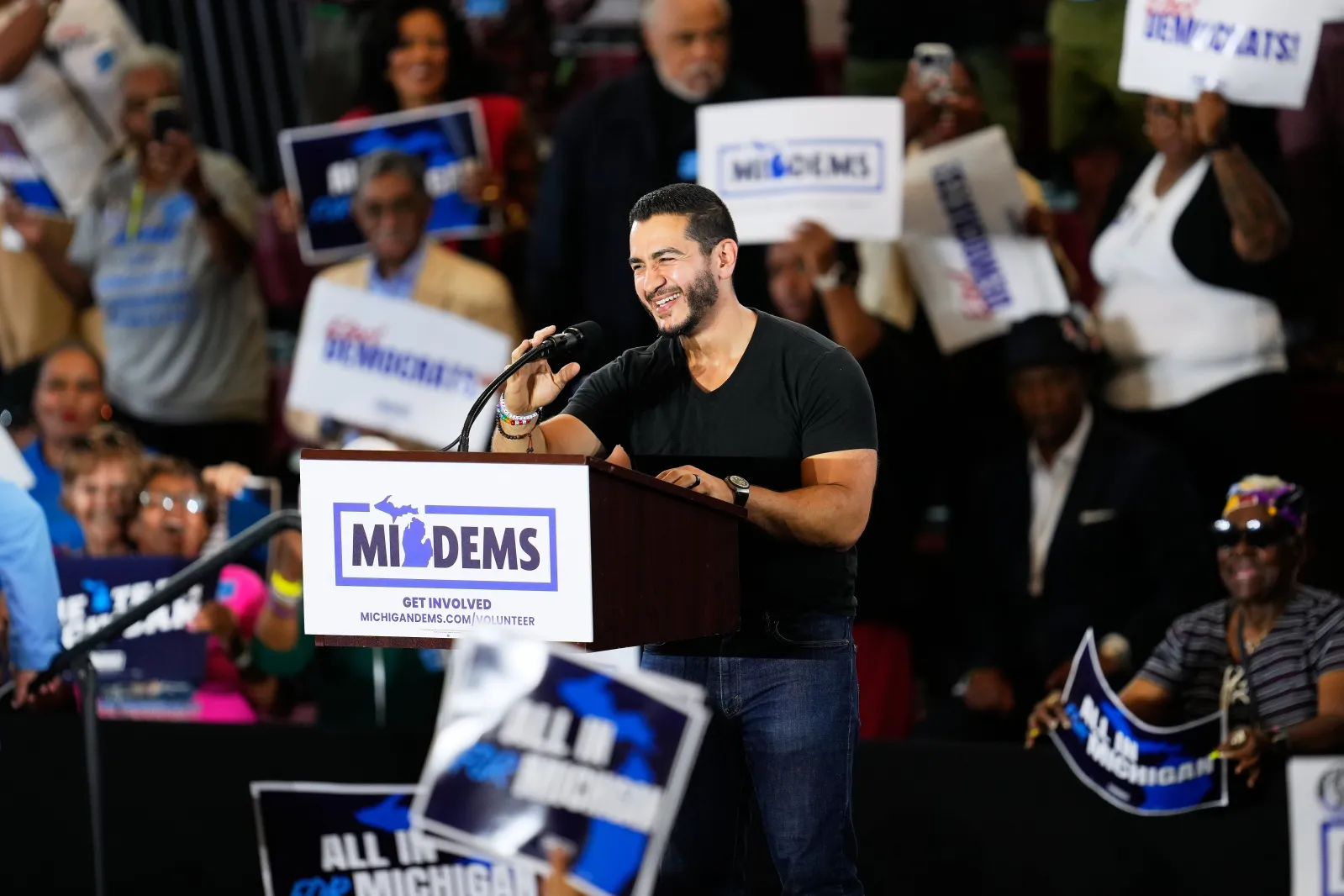
A Reuters/Ipsos poll of 1,097 independent voters found that 60 percent support government provided healthcare coverage for all Americans, while 17 percent don’t support or oppose, and 21 percent oppose. The poll was conducted between July 29-August 3 and has a margin of error of plus or minus 3 percentage points.
The findings show that while voters may remain divided over democratic socialist labels and potential policy enactment, government-provided health coverage continues to attract support from many independents.
Sanders has been among the leading proponents of Medicare for All, repeatedly introducing legislation that would create a government-run health insurance program covering all Americans. Opponents, including Republican lawmakers, argue the proposal would come with significant costs, expand federal control over healthcare and require transitioning millions of people away from employer-sponsored insurance plans. Medicare for All generally refers to a government-run health insurance system that would cover all Americans, though different proposals vary on the role private insurance would continue to play.
Another poll found that a majority of Americans back Medicare for All, 52 percent, while 39 percent oppose it and about 9 percent are unsure. The July 31 Civiqs poll found that along party lines, about 89 percent of Democrats support a universal healthcare agenda, 53 percent of independents, and only 10 percent of Republicans.
A Data for Progress poll of 1,207 likely voters conducted between November 14-17, 2025, also found majority support for Medicare for All, 65 percent, and 26 percent opposed. A majority of Democrats and independents support the measure, 78 percent and 71 percent, respectively, while 49 percent of Republicans do. The poll has a margin of error of plus or minus 3 percentage points.
Healthcare costs and insurance coverage remain among the economic concerns frequently cited by voters.
Increase Taxes on Corporations and Billionaires
DSA calls for “aggressive wealth taxes on the richest individuals and corporations” to fund public goods and infrastructure, and for public ownership of the largest corporations and essential industries.
Polling suggests proposals to increase taxes on wealthy Americans, billionaires and large corporations enjoy broad public support. Democrats are the most supportive of such measures, while independents have generally backed them by majority margins and Republicans have shown more mixed views.
The Reuters/Ipsos poll that was conducted between July 29-August 3 found that among independents, 64 percent said they support increasing taxes on corporations and billionaires, while only 15 percent oppose the idea. About 18 percent said they neither support nor oppose it.
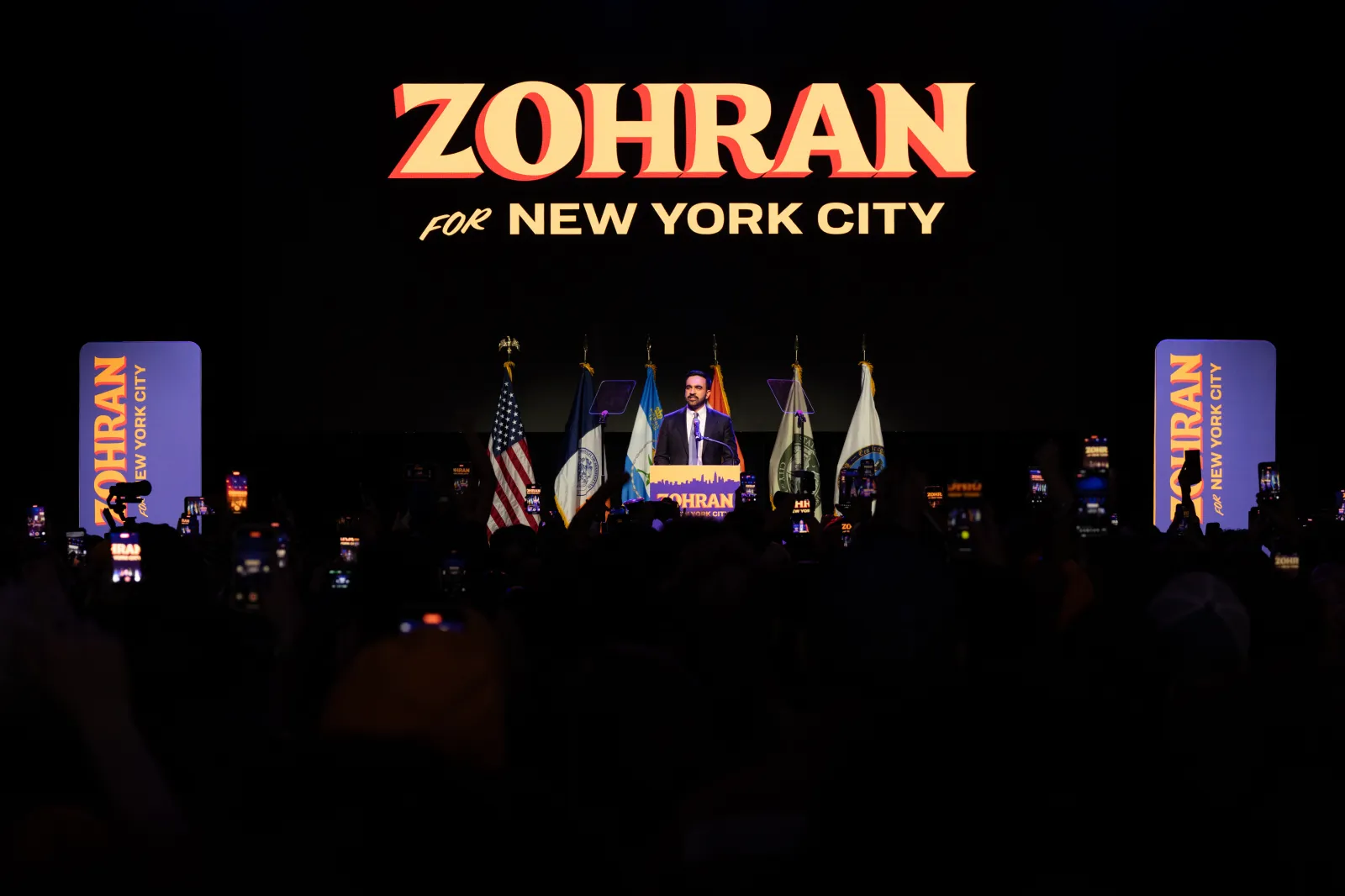
While progressives have argued for higher taxes on high earners and corporations, critics, including many Republicans and business groups, contend that higher taxes could discourage investment, slow economic growth and reduce business expansion.
A January Economist/YouGov poll found that 62 percent of Americans believe the amount billionaires are taxed is either much too low, 46 percent, or somewhat too low 16 percent. Democrats overwhelmingly believe billionaires’ taxes are too low, 85 percent, while 64 percent of independents do and about 39 percent of Republicans think so. The poll of 1,551 U.S. adults was conducted between January 2-5 and has a margin of error of plus or minus 3.3 percentage points.
A Gallup poll conducted in September 2025 found that 63 percent of Americans support raising income tax rates on upper-income earners as a way to reduce the federal debt. Support was highest among Democrats, at 86 percent, followed by 62 percent of independents and 38 percent of Republicans.
Support for Palestinian Statehood and Opposition to Additional U.S. Aid for Israel
The DSA’s platform calls to “recognize the rights of the Palestinian people, including the right of return, the right to resist military occupation, and the right to self-determination in a free Palestine with Jerusalem as its capital.” It also seeks to end all U.S. military and economic aid to Israel as well as prosecute U.S. and Israeli leaders over what the organization describes as genocide in Gaza. Israel has denied genocide allegations related to the war.
Americans' views of Israel and the Palestinians have shifted markedly in recent years. A February 2026 Gallup poll found 46 percent of Americans viewed Israel favorably, while a record 37 percent viewed the Palestinian Territories favorably, the highest the poll has recorded. Gallup polls show that Israel's favorability has declined significantly from the much higher ratings it received in previous decades, while views of the Palestinian Territories have become increasingly positive. Israel has long been one of the United States' closest allies, enjoying support from both Republican and Democratic administrations.
Public opinion shifted during the war in Gaza and amid debate over U.S. military support for Israel, which has become an increasingly contentious issue within Democratic politics, and one that played a significant role in the 2024 presidential election. Following Hamas' October 7, 2023, attack on Israel, which killed around 1,200 people and took 250 hostage, Israel launched air and ground campaigns into Gaza, killing more than 73,000 people, according to Gaza's Health Ministry. Israel has said its campaigns in Gaza are to dismantle the militant group Hamas.

Another poll found Americans' views of Israel have turned more negative in recent years, with 60 percent holding a somewhat unfavorable opinion of the country while 37 percent hold a somewhat favorable. The Pew Research poll of 3,507 U.S. adults found that 80 percent of Democrats hold an unfavorable view of the country, while 41 percent of Republicans do.
The survey was conducted between March 23-29, roughly a month into the U.S. and Israeli war with Iran that has consistently polled unfavorably with Americans.
Americans’ support for a Palestinian state remains relatively high, according to recent polling. A February 2026 Gallup poll found that 57 percent of U.S. adults support the establishment of an independent Palestinian state, while 28 percent oppose it. Support was strongest among Democrats, at 77 percent, though a majority of independents, 57 percent, also backed Palestinian statehood. About one-third of Republicans, 33 percent, said they supported the proposal.
The U.S. has provided Israel with billions of dollars in military assistance for decades, reflecting one of Washington's closest foreign alliances. Yet recent polls suggest Americans are increasingly divided over the relationship and are less inclined to back additional economic and military aid to the country.
About 37 percent of Americans somewhat support the U.S. providing additional economic and military support to Israel, a May New York Times/Siena poll found. A majority, 57 percent, somewhat oppose the U.S. doing so. The poll of 1,507 registered voters was conducted between May 11-15 and has a margin of error of plus or minus 2.8 percentage points.
Supporters of continued U.S. aid to Israel argue that the assistance is necessary to help protect a key U.S. ally and maintain regional stability. They contend that Hamas' control of Gaza and persistent security threats facing Israel make an immediate cutoff of military and economic support impractical.
The Reuters/Ipsos poll found that among independents, only 27 percent support continuing to provide military and economic support to Israel. About 28 percent have no opinion while 43 percent oppose the matter.
While DSA's calls to end military aid to Israel and recognize a free Palestine remain controversial, recent polling suggests Americans have become more critical of Israel's government and more supportive of Palestinian self-determination than in previous decades.
Abolish ICE
DSA's platform calls for sweeping changes to U.S. immigration policy, including enforcement efforts, such as abolishing Immigration and Customs Enforcement (ICE). In a recent July interview with Fox News host Shannon Bream, when asked if the DSA wants to abolish ICE, DSA co-chair Romer responded, "absolutely."
Immigration enforcement has been a defining issue of Trump's second term. The administration has pledged to carry out a sweeping deportation campaign and has expanded ICE operations as part of its broader effort to crack down on illegal immigration. He heavily campaigned on the issue, which many Americans backed.
These policies have drawn praise from supporters who argue they strengthen public safety by removing undocumented immigrants with criminal backgrounds and enforce immigration laws, while prompting criticism from immigrant rights advocates and progressive groups that say the agency's tactics are overly aggressive and harmful to migrant communities.
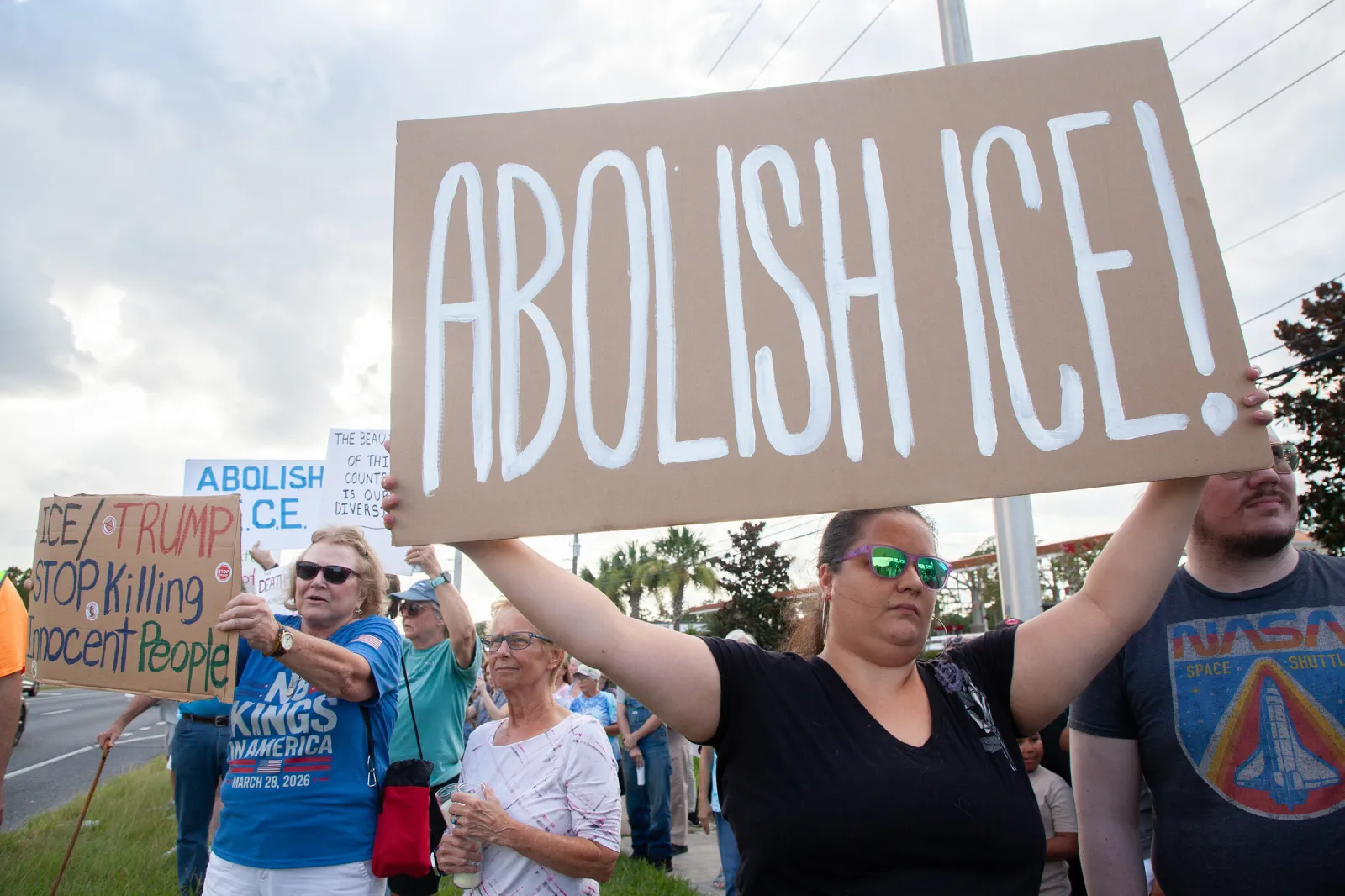
An Economist/YouGov poll this spring found that half of Americans somewhat or strongly support abolishing ICE, while 39 percent somewhat or strongly oppose abolishing ICE, and 10 percent are unsure. Along party affiliation, a majority of Democrats and independents support the measure, about 77 percent of Democrats and 52 percent of independents, while 23 percent of Republicans do. The poll surveyed 1,515 people and has a margin of error of plus or minus 3.4 percentage points.
The poll was conducted between February 27 and March 2, during a period of heightened national debate over immigration enforcement and ICE operations, following two fatal shootings of U.S. citizens, Renee Nicole Good and Alex Pretti, by federal agents.
An NPR/PBS News/Marist Poll survey of 1,462 adults found that 65 percent of Americans, up from 54 percent in June 2025, believe ICE officers have gone too far in enforcing immigration laws. The poll was conducted between January 27-30 and has a margin of error of plus or minus 2.9 percentage points.
Defund the Police
The push to defund police departments surged into the national spotlight after George Floyd's murder in 2020, but the movement lost momentum as many Democratic officials distanced themselves from the slogan amid concerns it was politically damaging. While calls for police reform drew broad public support after Floyd's death, proposals to defund or abolish police departments were considerably more divisive. Public support for reducing police funding fell after the protests, while many Americans continue to express broad support for police reforms aimed at increasing accountability and community oversight.
DSA, however, has continued to embrace defunding the police, arguing that those funds should be redirected to public services as part of a broader effort to eventually abolish the force.
Despite DSA's long-term goal of abolishing police, Romer said the change would not happen overnight. "I am not in favor of getting rid of police entirely tomorrow," Romer said during her appearance on The New Yorker Radio Hour.
She went on to note that the group views defunding as, "pulling some of that funding back and then moving it out elsewhere. To the extent to which we are fully funding social services, to which are fully-funding schools, lunch programs for kids, after-school programs for kids. Communities should be clean and they should be safe. We should be funding, putting trees up."
Opponents of efforts to defund police departments argue that law enforcement agencies play a critical role in public safety and that reducing funding could make communities less safe.
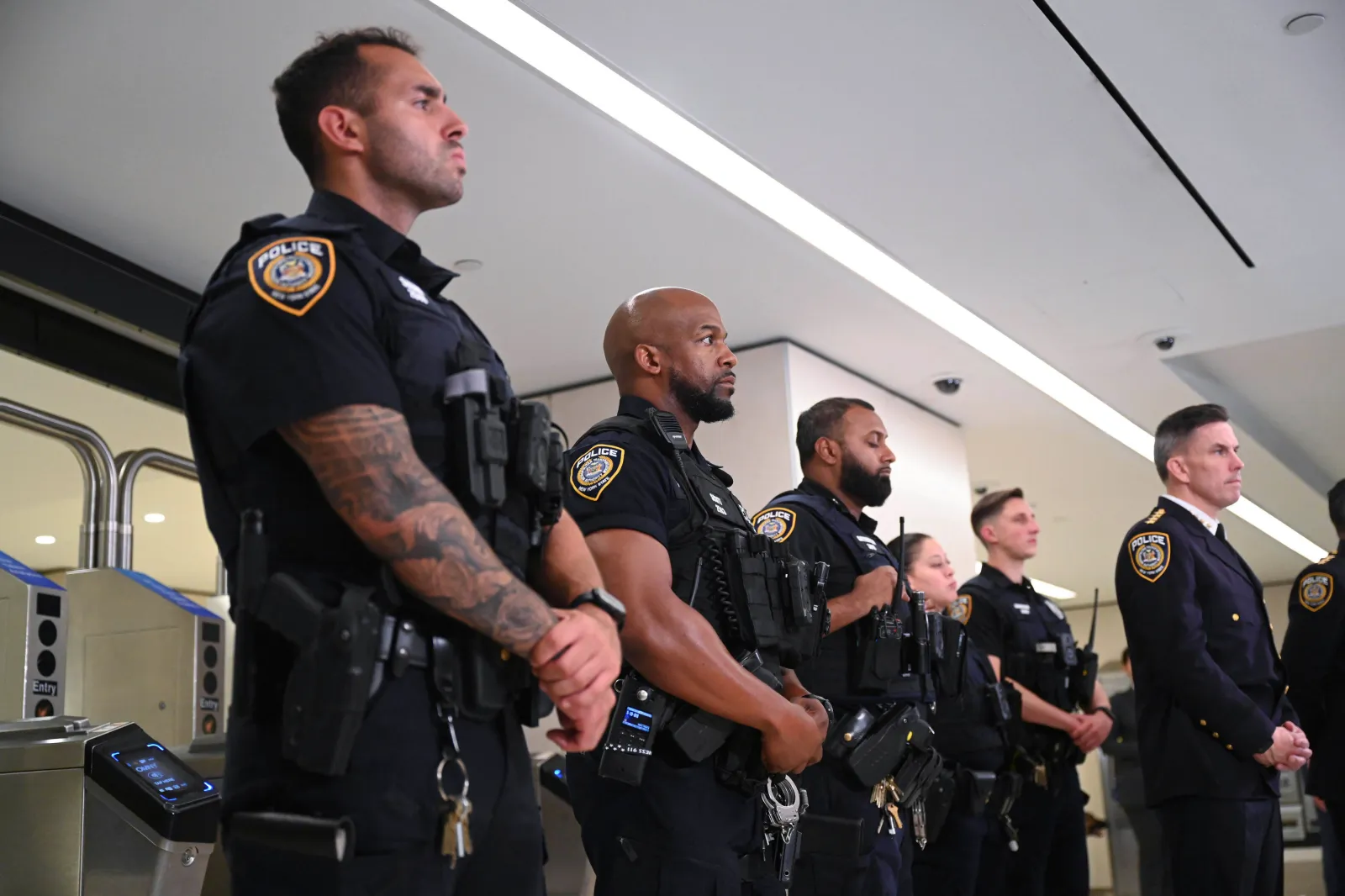
As public attention shifted away from the debate over defunding police departments, relatively little recent polling has focused on the issue. More recent surveys have tended to focus on views of immigration enforcement and agencies such as ICE.
A Gallup survey conducted in 2022 found that just 15 percent of Americans supported abolishing police departments. At the same time, about half said policing in the country needed major changes, while another 39 percent favored minor changes.
In September 2021, a Pew Research poll of 10,371 people, found that 47 percent of Americans wanted to see an increase in police spending in their area, a clear jump from a similar June 2020 poll that found 31 percent saying so. In terms of reducing spending on police, it fell significantly to 15 percent, down from 25 percent in 2020. The survey was conducted between September 13-19, 2021, and has a margin of error of plus or minus 1.6 percentage points.
Contact Newsweek editors for this story: Jason Lemon and Anthony Murray.