 1 week ago
56
1 week ago
56
After a report that President Donald Trump privately told donors he wants Vice President JD Vance to succeed him, early polling shows Vance's hold on the 2028 Republican field is looser than it was six months ago.
"At the end of the day, we need to elect JD," Trump said during an Oval Office meeting with donors roughly two weeks ago, The Washington Post reported Thursday, citing two people with knowledge of the comments who spoke on the condition of anonymity.
The 2028 race remains unsettled in both parties more than two years before Election Day. Vance still leads national Republican surveys by double digits, but his advantage over Secretary of State Marco Rubio in New Hampshire has narrowed from 46 points in February to 10 points in July.
On the Democratic side, New York Representative Alexandria Ocasio-Cortez has moved to the front of the New Hampshire field, while California Governor Gavin Newsom and former Vice President Kamala Harris have each lost roughly half their support since the winter.
No candidate in either party has declared a run, and strategists in both camps say the November midterm elections will help shape the field. Trump has publicly avoided endorsing a successor, praising both Vance and Rubio while declining to choose between them.
Newsweek reached out to the White House for comment on Thursday.
What The Polls Say
The vice president leads AOC and Newsom in hypothetical 2028 matchups, but the early numbers offer only a snapshot of a race still taking shape.
A July Zogby Analytics poll found JD Vance ahead of two leading Democratic contenders among likely voters, with the vice president receiving 45 percent support against Ocasio-Cortez’s 37.6 percent and leading Newsom 45.1 percent to 38.1 percent.
The results give Vance leads of roughly 7 points against both Democrats, suggesting an early advantage among likely voters. But the survey also showed a significant level of uncertainty, with between 17 percent and 23 percent of respondents selecting “not sure” across the matchups.
That undecided share reflects the fluid nature of early presidential polling. No major candidate has officially launched a 2028 campaign, meaning name recognition, party loyalty and broader political sentiment are likely playing a major role in shaping voter preferences at this stage.
The same Zogby survey also tested Secretary of State Marco Rubio against the Democratic contenders. Rubio narrowly led Newsom 40.3 percent to 36.2 percent and edged Ocasio-Cortez 39.2 percent to 38.3 percent, showing a weaker but still competitive position than Vance.
Prediction markets tell a similar story about a tightening Republican contest, and a more competitive one than the primary polling suggests.
On Kalshi's market for the winner of the 2028 presidential election, Vance was priced at 18 percent on Thursday and Rubio at 16 percent, a gap of two points. Newsom followed at 12 percent, Georgia Senator Jon Ossoff at 11 percent, Ocasio-Cortez at 7.7 percent and Harris at 4.8 percent.
Polymarket's equivalent market had Vance at 22 percent and Rubio at 13 percent Thursday, with Newsom and Ocasio-Cortez tied at 11 percent, Ossoff at 10 percent and Harris at 4 percent. Vance was down five points on the platform and Rubio up seven.
A Quiet Year for Vance, and a Reset
The report lands at a useful moment for a vice president who has spent much of 2026 out of the spotlight while Rubio has occupied it.
Rubio’s rise this year has been fueled by visibility. He has led the administration’s response in Venezuela, played a central role in the Iran conflict, mediated talks between Israel and Lebanon, and drawn attention for a widely circulated fill-in appearance at the White House press briefing. Trump has called him the best secretary of state in the country’s history.
Vance’s assignments have been less public-facing but more institutional.
Since March 2025, he has served as finance chair of the Republican National Committee, becoming the first sitting vice president to hold the position. In that role, he has helped raise more than $60 million for the committee, according to The New York Times.
The RNC reported $128 million in cash on hand in its June filing with the Federal Election Commission. Republican National Committee Chairman Joe Gruters described Vance to Fox News Digital as a fundraising powerhouse for the committee heading into the midterms.
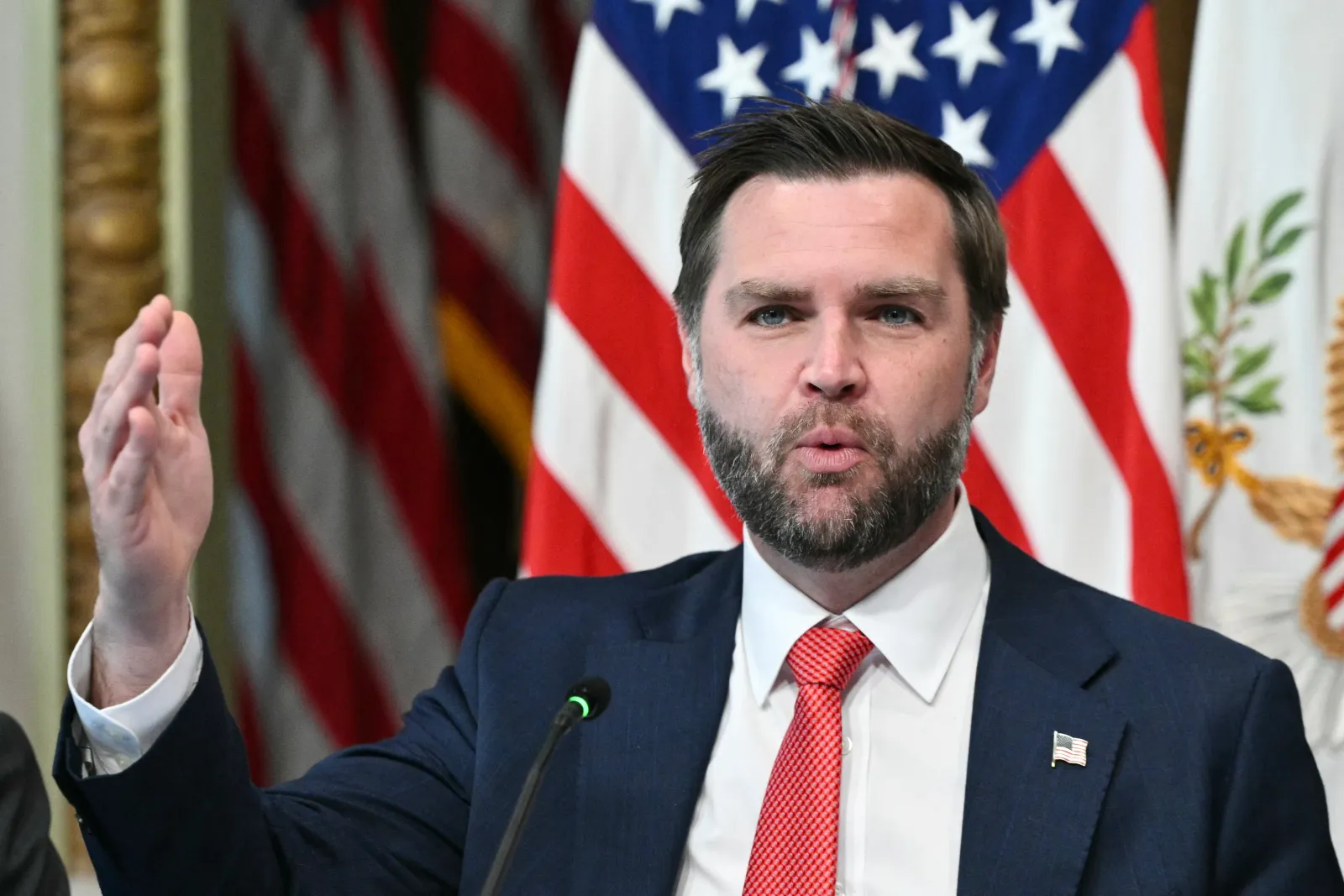
Vance has also built relationships with donors beyond the RNC. He headlined a June fundraiser at the Palo Alto home of venture capitalist Chamath Palihapitiya that raised $4.2 million, according to Axios. He has also headlined events in Florida, Oklahoma, Tennessee and Texas.
The role gives Vance sustained access to the donor class at a time when Rubio, traveling as secretary of state, has fewer opportunities to build a political operation. Rubio currently has no comparable organization or network of aides focused on a potential 2028 campaign.
Vance also played a role in negotiating the June ceasefire with Iran. The agreement collapsed in July, but advisers told the Post that his involvement remained a political asset because the deal itself was popular with voters, even as they disapproved of Trump’s handling of the conflict.
Yet, a Marquette Law School poll conducted July 22-29 showed a contrast between Vance’s early strength in 2028 polling and his broader public image. While Vance has emerged as an early Republican frontrunner, 38 percent of respondents viewed him favorably and 54 percent unfavorably. Rubio, meanwhile, had the strongest favorability numbers among the Republicans tested, with 34 percent viewing him favorably and 45 percent unfavorably.
New Hampshire Shows How Much Can Still Change
The sharpest movement has come in the state that has hosted the first Republican presidential primary for a century, with major shifts emerging on both sides of the aisle.
The University of New Hampshire Survey Center’s Granite State Poll, conducted July 15 to July 20, found Vance leading Rubio 36 percent to 26 percent among likely Republican primary voters. In February, Vance held a much larger advantage, leading Rubio 53 percent to 7 percent.
The shift represents a 17-point decline for Vance and a 19-point gain for Rubio in five months.
Kentucky Senator Rand Paul and Haley each received 8 percent in the New Hampshire survey, while DeSantis received 6 percent. The poll surveyed 1,458 New Hampshire residents and had an overall margin of error of plus or minus 2.6 percentage points. The Republican primary subsample of 579 likely voters had a margin of error of 4.1 percentage points.
Saint Anselm College’s March survey of New Hampshire Republicans showed a similar trend, with Vance leading Rubio 46 percent to 27 percent.
The Democratic field has also shifted. The same Granite State Poll found Ocasio-Cortez leading with 22 percent, narrowly ahead of former Transportation Secretary Pete Buttigieg at 21 percent. Arizona Senator Mark Kelly followed with 9 percent, Newsom with 8 percent, Vermont Senator Bernie Sanders with 6 percent and Harris with 5 percent.
Since February, Ocasio-Cortez has gained seven points in New Hampshire, while Newsom has fallen seven points and Harris five points. Saint Anselm’s polling showed a similar movement, with Buttigieg holding steady at 29 percent while Ocasio-Cortez rose from 10 percent to 17 percent.
Nationally, however, the Democratic field remains far more open. Emerson College’s May survey found Buttigieg leading at 18 percent, followed by Newsom at 16 percent, Ocasio-Cortez at 11 percent, Shapiro and Harris at 10 percent each, and Beshear at 9 percent. Eighteen percent of respondents were undecided.
What's Next
While no major 2028 candidates have formally declared, presidential hopefuls typically begin testing runs, building donor networks and visiting early-voting states shortly after the midterms. Formal campaign announcements are expected throughout 2027, ahead of the first primary contests in early 2028.
Key dates:
- November 2026: Midterm elections.
- Late 2026-Early 2027: Potential candidates begin organizing campaigns.
- Throughout 2027: Formal presidential campaign announcements.
- Early 2028: Primary elections begin.
- November 7, 2028: Presidential Election Day.
Vance has not announced a 2028 bid, but with President Donald Trump unable to seek another term, he is expected to remain a prominent figure in discussions about the GOP's future.
Contact Newsweek editors on this story: Jason Lemon and Gray R. Thomas