 1 week ago
40
1 week ago
40
Nearly every day, there's news of another round of layoffs, partly due to artificial intelligence, but when it comes to whether President Donald Trump has a serious layoff problem on his hands, his situation isn't all that different from that of former President Joe Biden.
Despite campaigning on lowering costs and strengthening the economy, Trump is facing growing political headwinds from voters who remain frustrated about their financial situation. Inflation has accelerated in recent months, consumer confidence remains weak, and polling shows the economy continues to rank among Americans' top concerns. Trump's approval rating heading into the midterms is underwater, and the economy has become his worst-performing issue.
Layoffs are only one indicator for assessing the labor market, and economists have warned that some unemployment data may be skewed by people leaving the workforce because they've become so discouraged about finding a job. While layoffs are in line with where they've been the past few years, major companies announcing large-scale layoffs have sparked concerns about broader trends and Americans' job security.
Layoffs Under Donald Trump vs. Joe Biden
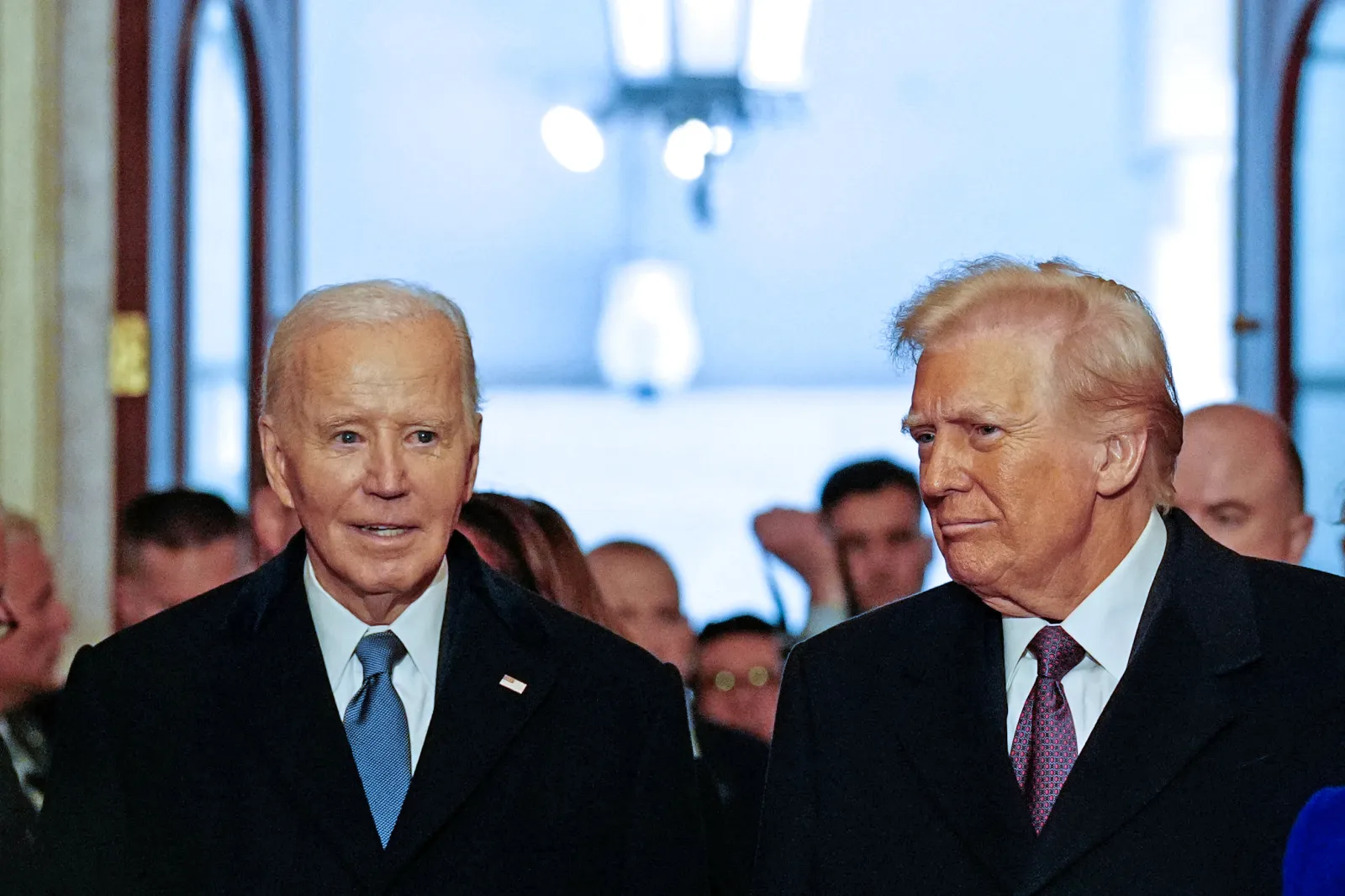
According to data from the Bureau of Labor Statistics (BLS), average monthly layoffs during Biden's final 17 months in office stood at roughly 1.66 million. During Trump's first 17 months of his second term, that figure rose to approximately 1.75 million. Layoffs have averaged about 92,000 higher per month during the period analyzed under Trump than they did during Biden's final months in office.
"It’s not quite enough to indicate a huge spike across the entire economy," Wayne Hochwarter, a business professor at Florida State University, told Newsweek. "That said, I completely understand why it might feel like things are getting tougher. Layoffs tend to get a lot of attention because they often happen in very visible sectors like the federal government, tech, media, and companies focusing on AI."
The data shows that some of the highest monthly layoff totals occurred during Trump's current term. The largest monthly figure in the Trump-era dataset reached 1.891 million layoffs in October, exceeding the highest monthly total recorded during Biden's final months, when layoffs hit 1.831 million in November 2024.
Companies continue to focus on efficiency initiatives, cost-cutting, and automation. Many businesses that expanded aggressively during the pandemic recovery have spent the past two years trimming payrolls, even as overall unemployment remains historically low. Analysts have pointed out that layoffs can increase even in a relatively healthy labor market when employers seek to rebalance staffing levels or invest in new technologies.
At the same time, the layoff figures do not necessarily indicate widespread economic distress. Job openings remain substantial by historical standards, and the overall unemployment rate is at a healthy level. But, people who lose their jobs are struggling to find new ones as economists still characterize the economy as a "low fire, low hire" environment.
Biggest Layoffs in 2026
Several household-name companies announced significant workforce reductions in 2026 as executives looked for ways to reduce costs and reposition their businesses. The cuts spanned industries ranging from sports media to telecommunications, underscoring how broad-based the restructuring trend has become.
Among those with the largest layoffs are Ideal US Talent Systems Worker OpCo LLC, with an estimated 10,000 layoffs, and Corizon Health, with an estimated 7,000 layoffs, according to WarnTracker.
ESPN
ESPN has carried out a new round of layoffs as part of broader restructuring tied to Disney and the integration of NFL Network into ESPN's operations. Among the highest-profile departures was longtime NFL analyst Ryan Clark, who joined ESPN in 2015 and became a regular presence on programs including NFL Live, First Take and SportsCenter. ESPN Chairman Jimmy Pitaro told employees the company had been evaluating its organizational structure following the NFL Network acquisition, leading to "difficult decisions" affecting jobs across the company.
The cuts also reached several other prominent television personalities and journalists. Reports indicated longtime baseball broadcaster Karl Ravech, veteran SportsCenter anchor David Lloyd, fantasy football and injury analyst Stephania Bell, NFL insider Tom Pelissero and former NFL players turned analysts including Cam Newton and Bart Scott were among those affected. Many of the layoffs were connected to overlapping roles created after ESPN absorbed NFL Network, though some reductions occurred elsewhere in the company as well.
Clark's departure generated particular attention because he learned of the decision while appearing on NFL Live. Reports said ESPN informed him during a commercial break after media inquiries signaled news of the layoffs was about to become public. Subsequent reports suggested some executives had become frustrated with aspects of Clark's on-air conduct, including a public dispute with colleague Peter Schrager, though Clark later argued that the company was "using layoffs as a cover" for a decision it had already made about his future.
ESPN also had layoffs in 2024, the last year of Biden's presidency. Three prominent on-air and writing personalities were cut, including Robert Griffin III, who had two years left on his contract, Sam Ponder, who was about to enter the last year of her contract, and Zach Lowe.
Centene
Health insurer Centene announced it would offer buyouts to most of its 61,000 employees to leave their jobs after facing losses with Obamacare and Medicaid memberships. The company has spent recent years examining operating expenses and adjusting to changing enrollment patterns across government-sponsored health programs.
Health insurers face a unique set of challenges, including fluctuating Medicaid enrollment, changes in government reimbursement rates and evolving regulatory requirements. As companies seek to preserve profit margins, workforce reductions have become one tool for lowering administrative costs.
The company is projecting up to $415 million in severance costs this year.
Amazon
Amazon's workforce reductions remained part of a years-long effort by the technology and e-commerce giant to streamline operations following its rapid pandemic-era expansion. Like many major technology companies, Amazon hired aggressively when online demand surged and later reassessed staffing levels as growth normalized.
The company's restructuring efforts have touched multiple divisions over the past several years, including corporate functions, devices, cloud computing operations and other business units. Executives have repeatedly stressed a commitment to operating more efficiently while continuing to invest in strategic growth areas.
Amazon has laid off at least 31,000 employees in 2025 and 2026, according to WarnTracker. During Biden's presidency, Amazon laid off at least 27,000 employees, according to WarnTracker.
Verizon
Verizon also implemented workforce reductions in 2026 amid a rapidly evolving telecommunications landscape. Wireless carriers face intense competition, ongoing infrastructure investments and changing consumer expectations around connectivity and digital services.
In 2025 and 2026, Verizon cut over 16,000 jobs, according to WarnTracker. It's closed hundreds of retail stores, leading to the company needing fewer employees. During Biden's presidency, Verizon planned to reduce its workforce by 4,800 jobs through voluntary separation programs and other headcount reduction initiatives.
Whether the layoff trend becomes a larger political liability for Trump may depend less on the raw numbers and more on how Americans feel about their personal financial security. While the labor market continues to generate jobs and unemployment remains relatively low, surveys show many workers are increasingly anxious about rising costs, the growing role of automation and the difficulty of finding comparable work after losing a job. Those concerns could weigh heavily on voters as the administration heads toward the midterm elections.
For now, the data suggests the United States is not experiencing a layoff crisis on the scale seen during past recessions. But with major employers across industries continuing to trim staff and invest in AI-driven efficiencies, workforce reductions remain a highly visible reminder of the economic uncertainty many Americans feel. As Trump seeks to persuade voters that the economy is on the right track, layoffs are likely to remain an important measure of whether that message is resonating.