
 1 week ago
32
1 week ago
32
Texas has emerged as one of the nation's leading destinations for data centers, attracting billions of dollars in investment from technology companies seeking to support the rapidly growing demand for AI and cloud computing.
But that growth is increasingly colliding with concerns over the state's electricity infrastructure, prompting Governor Greg Abbott to order a review of proposed data centers seeking to connect to the Texas grid.
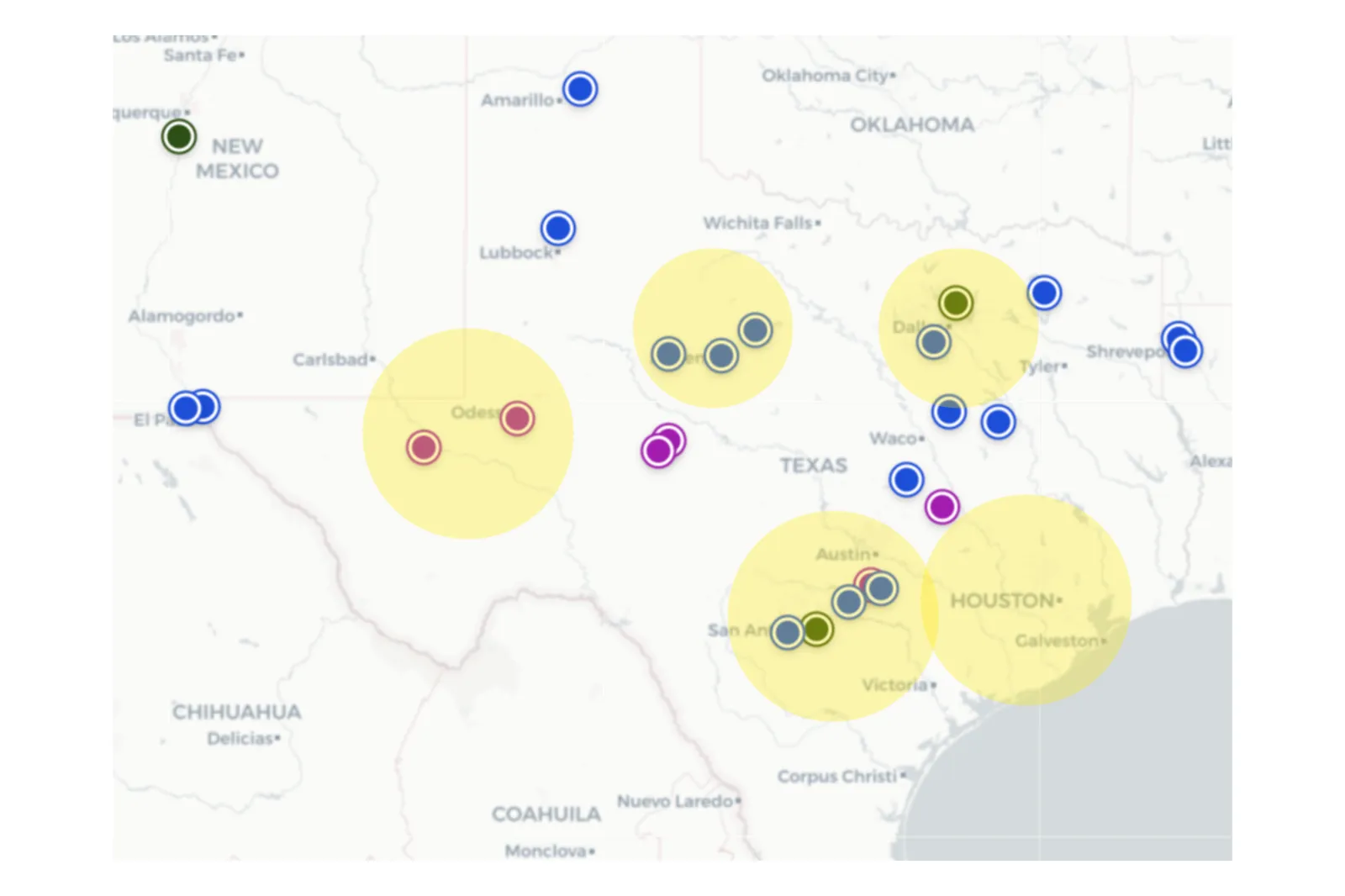
This map highlights the regions where the Electric Reliability Council of Texas (ERCOT) forecasts some of the largest increases in electricity demand and data from the Brockovich AI Data Center Reporting identifies the data center projects that are either under construction or have been proposed, that could face additional scrutiny as state regulators conduct audits of facilities awaiting grid approval.
Why It Matters
Texas is at the center of the AI infrastructure boom.
ERCOT's long-term planning documents show unprecedented growth in projected electricity demand, with much of the increase linked to large-load customers such as hyperscale data centers. The grid operator has identified data centers as a major driver of future load growth, and ERCOT told Texas lawmakers in July that about 90 percent of the 474 gigawatts of large-load interconnection requests currently under review are from data center projects—which is "more than five times Texas’ record peak electricity demand for ERCOT," Abbott said in his letter.
Utility-submitted forecasts show large-load requests increasing from roughly five gigawatts in 2026 to more than 109 gigawatts by 2032.
For comparison, ERCOT's all-time peak demand record is currently about 85.5 gigawatts, underscoring the scale of future power needs contemplated by grid planners.
Abbott Orders Data Center Audit
On August 3, Abbott directed the Public Utility Commission of Texas (PUCT) and ERCOT to conduct a "comprehensive verification and audit" of data centers seeking interconnection to the state grid before additional projects are allowed to move forward.
In his letter to regulators, Abbott said:
"Our top priority is to protect Texans' safety and quality of life […] Any project that fails to comply with the requirements set forth by the PUC and ERCOT, and by state law, must be denied connection to the Texas grid […] Simply put, Texans must come first."
The governor directed regulators to collect information about each facility's projected electricity demand, water consumption, ownership, tax incentives and generation plans.
Projects that fail the review could be denied access to the grid.
ERCOT subsequently told Fox News that the directive "effectively pauses all data center projects" moving through the interconnection process while the review is being conducted.
Newsweek has reached out to ERCOT, Governor Abbott's office, and PUCT for comment via email.
Dallas-Fort Worth: The State's Largest Power-Demand Hotspot
ERCOT's latest forecasts indicate that Oncor's service territory, which covers much of Dallas-Fort Worth, accounts for the largest concentration of projected large-load growth.
Counties including Dallas, Collin, Denton, Tarrant, and Ellis have become magnets for hyperscale campuses because of their access to transmission infrastructure, fiber networks, and available land.
Among the projects attracting attention is the Red Oak Data Center Campus in Ellis County, an approximately 830-acre development south of Dallas that drew significant public opposition before winning local approvals earlier this year. The site sits within one of the fastest-growing data-center corridors in Texas and could be affected by delays if additional ERCOT approvals are required.
Texas is also home to the proposed $1.1 billion Fort Worth Data Center Project in the Veale Ranch area. The project has already faced scrutiny from residents concerned about power consumption, water use and infrastructure impacts. City officials previously delayed consideration of a tax incentive package following public opposition.
Houston: Industrial Demand Meets AI Growth
The Houston region, served by CenterPoint Energy, represents another major area of concern for planners.
Houston's electricity demand growth is being layered on top of one of the nation's largest concentrations of industrial and petrochemical facilities. The Houston Ship Channel corridor hosts more than 400 petrochemical facilities and is described as one of the largest U.S. refining and petrochemical concentrations.
Other parts of the Houston region, including Fort Bend, have attracted growing interest from data-center developers because of available land, access to electric infrastructure, and proximity to Houston's established telecommunications and fiber-network ecosystem.
While no major Houston-area hyperscale project has emerged as a focal point of the audit debate, several proposed data-center developments in the Houston region could be affected by ERCOT's ongoing review under Abbott's order.
Austin-San Antonio Corridor
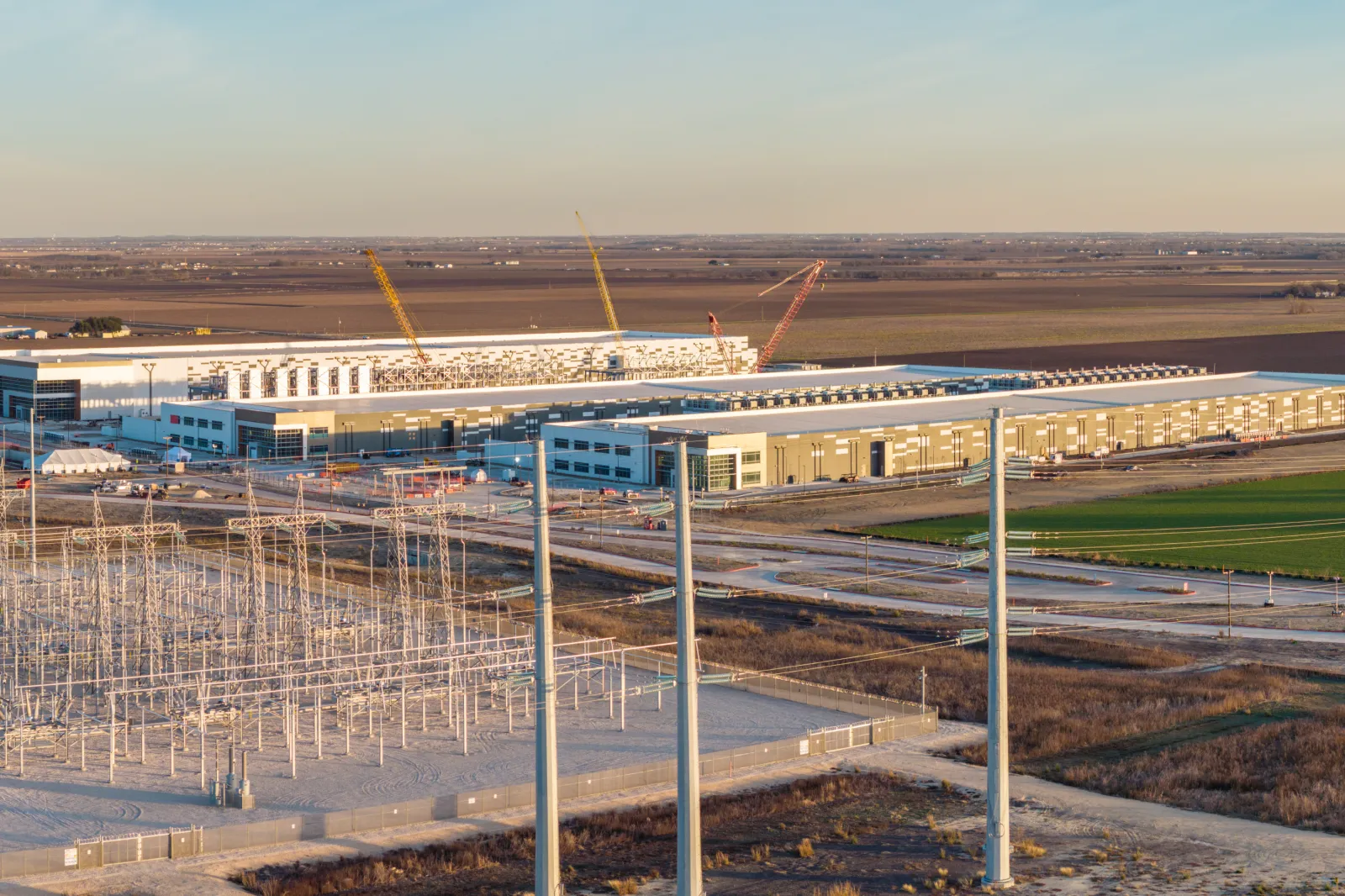
ERCOT planners are also watching the rapidly growing corridor between Austin and San Antonio.
The region combines some of the state's fastest population growth with major technology investments, including Samsung's semiconductor manufacturing campus in Williamson County and expanding data-center development across the Austin-San Antonio corridor.
ERCOT and local utilities have warned that population growth, industrial development and large-load customers—such as data centers—are expected to increase electricity demand.
Additional hyperscale campuses proposed for the corridor that are still awaiting ERCOT approvals could be impacted by the governor's temporary review process.
Permian Basin Faces Different Pressures
The Permian Basin tells a different story.
Demand growth in Midland, Ector, Reeves and surrounding counties is being driven not only by data centers but also by oil-and-gas electrification, hydrogen projects, natural gas processing facilities and other large industrial developments. The pressures have become significant enough that ERCOT created a dedicated Permian Basin Reliability Plan to study future transmission needs.
Any future data-center developments proposed for the region could face delays if they remain in the ERCOT interconnection queue during the audit process.
Abilene Provides a Preview of the Challenges Ahead
Abilene has emerged as one of Texas' most important AI infrastructure hubs thanks to the massive Stargate project backed by OpenAI and Oracle.
Earlier this year, however, OpenAI said it would not pursue a further expansion of its flagship Stargate campus in Abilene. Microsoft later partnered with data center developer Crusoe on additional AI data center construction at the site, making the two companies neighbors within the broader campus.
What Projects Could Be Affected?
To summarize, projects that could face additional scrutiny include:
- Red Oak Data Center Campus (Ellis County)
- Fort Worth's $1.1 billion Veale Ranch Data Center Project
- Future hyperscale campuses across Dallas-Fort Worth, Houston and Central Texas that remain in ERCOT's approval queue
- OpenAI and Oracle's Stargate development in Abilene, where expansion plans have already been scaled back
As Texas races to become the nation's leading AI and cloud-computing hub, regulators now face a difficult balancing act: Encouraging economic development while ensuring the electric grid can support the unprecedented demand that comes with it.
Contact Newsweek editors for this story: John Fitzpatrick and Robert Greenall