 5 days ago
36
5 days ago
36
Representative Thomas Massie escalated his criticism of the Iran war on Saturday night, arguing that the conflict could ultimately become the Trump administration's "biggest and most costly blunder."
In a pair of posts on X, the Kentucky Republican suggested the war would prove more damaging than a string of other policies he has sharply criticized, including the administration's handling of the Jeffrey Epstein files, tariffs, government spending and other domestic issues.
"Of all the stupid things this administration has done," Massie wrote. "Hiding Epstein files, trying to pass tariffs without Congress, advocating for more spending, ignoring DOGE, indemnifying glyphosate, starting a war in the Middle East will prove to be the biggest and most costly blunder."
In a follow-up post, Massie argued that the conflict could carry steep economic and political costs.
"$100+ billion in direct military costs, $100+ billion in costs to consumers, incalculable political capital burned," Massie wrote. "But those insults and injuries pale in comparison to the diminished standing of our great country among the world. We should walk away from this now."
Massie's comments came as debate continued over the costs and future direction of the conflict, with the administration facing ongoing questions about military spending and the economic disruption tied to tensions in and around the Strait of Hormuz.
Newsweek reached out to the White House on Sunday.
Why It Matters
Massie's comments are significant not simply because they criticize President Donald Trump, but because they reflect a widening split inside the America First movement over the Iran war.
The congressman has emerged as one of the most persistent Republican opponents of the conflict since it began, repeatedly arguing that Congress, not the president, has the constitutional authority to decide whether the United States enters a war. Massie previously sponsored and backed war powers efforts aimed at limiting U.S. military involvement in Iran without congressional authorization and has repeatedly argued against further escalation.
Trump and Massie's Long-Running Clash
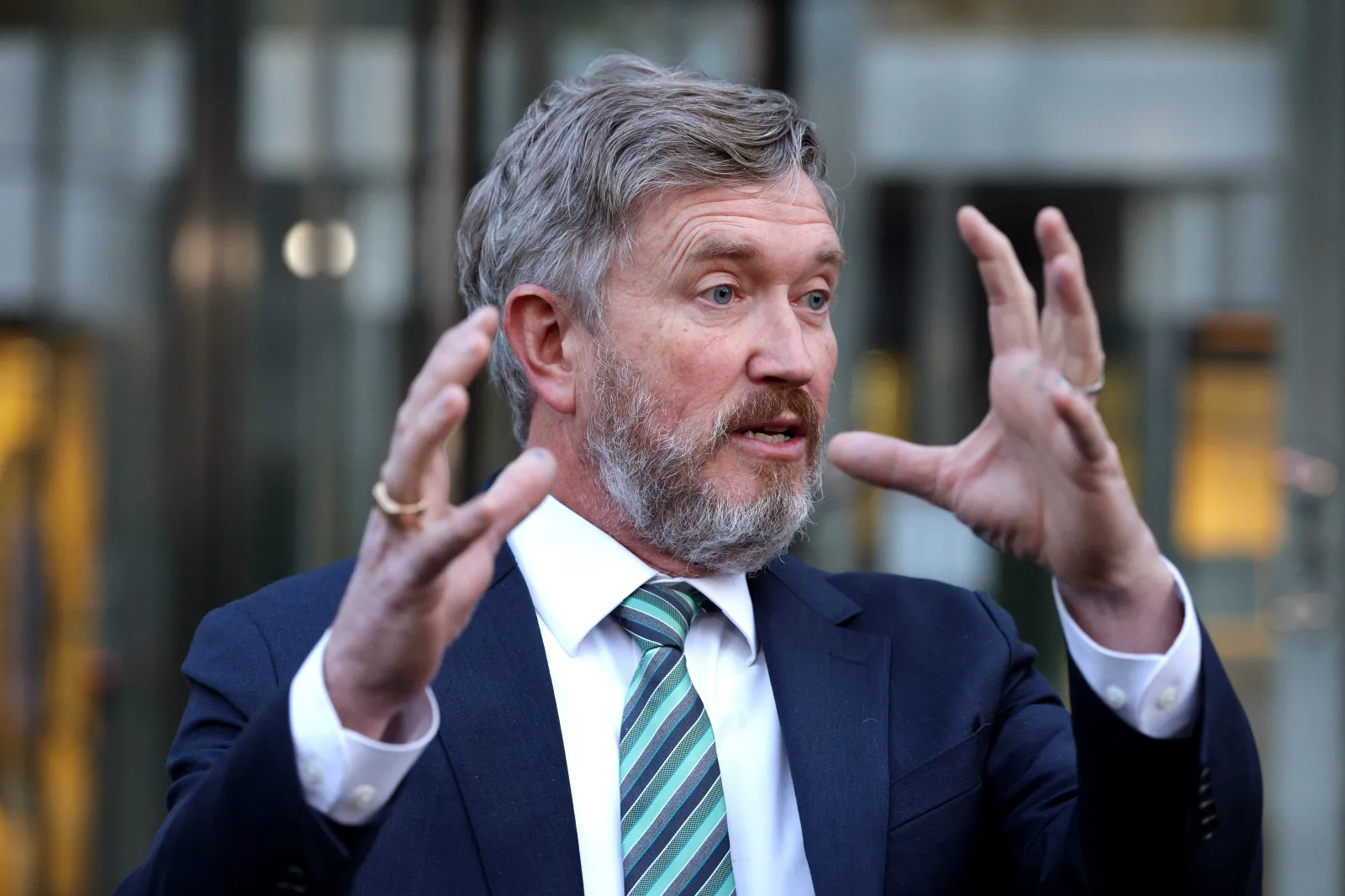
Although Massie endorsed Trump during the 2024 election cycle, the relationship has frequently been strained.
The Kentucky Republican has often broken with party leadership on spending and foreign policy issues, positions that he has argued are consistent with the America First principles that helped propel Trump back to the White House.
The feud escalated during Trump's second term as Massie opposed the administration's Iran policy, backed efforts to limit the president's war powers and criticized the White House on issues ranging from government spending to the Epstein files.
Trump ultimately backed former Navy SEAL Ed Gallrein in a Republican primary challenge against Massie. Gallrein defeated the longtime congressman in May, a loss that will end Massie's nearly 14-year tenure in the House when his current term expires in January 2027. Massie has indicated he intends to use his remaining months in office to continue challenging the administration's policies.
A Growing Anti-War Faction
Massie's criticism also fits into a broader pattern of opposition from several prominent conservatives who once backed Trump.
Former Representative Marjorie Taylor Greene, conservative commentator Tucker Carlson and former National Counterterrorism Center Director Joe Kent have all emerged as vocal critics of the administration's Iran policy.
Greene has argued that Trump abandoned a central promise to avoid new foreign wars, while Carlson has repeatedly criticized U.S. involvement in the conflict and accused the administration of drifting away from the non-interventionist message that energized many voters. Kent resigned from a senior national security role earlier this year amid disagreements over the war and later became one of its most outspoken opponents.
Earlier this month, Massie joined Carlson, Greene and Kent at a gathering in Maine that sparked renewed speculation about the future of the America First movement outside Trump's orbit.
Talk of a New Political Movement
The meeting drew attention because several attendees openly discussed dissatisfaction with both major political parties and floated the possibility of a future third-party effort centered on opposition to foreign intervention.
Greene declared that Trump had "betrayed" supporters who backed him because they believed he would keep the United States out of new overseas conflicts. According to reporting on the gathering, attendees discussed ways to organize opposition to the war and broader dissatisfaction with the Republican establishment.
Kent later suggested participants had discussed the challenges of creating an independent political movement, though no formal organization has been announced.
While the prospect of a viable third-party movement remains uncertain, the discussions highlighted how the Iran war has become the defining issue binding together some of Trump's most prominent former allies.
Growing Debate Inside MAGA
The Iran conflict has exposed one of the most consequential ideological divisions within the modern Republican coalition.
Supporters of the administration argue the war has degraded Iran's military capabilities, disrupted its nuclear ambitions, protected U.S. interests and allies in the region, and reduced threats from Tehran and its proxies. Critics contend the war violates America First principles, risks a prolonged Middle East conflict and imposes significant economic costs on American consumers.
Massie's comments highlight how central that debate has become.
By calling the Iran war the administration's future "biggest and most costly blunder," Massie is doing more than criticizing a military strategy. He is casting the conflict as a defining test of what America First should mean in practice, a dispute that increasingly pits Trump against some of the movement's most recognizable former allies.