 1 week ago
38
1 week ago
38
Socialist congressional candidate Kshama Sawant says a recent string of victories by Democratic Socialists of America-backed candidates shows voters are hungry for a more confrontational left.
In an interview on Saturday ahead of Washington state's top-two primary on Tuesday, Sawant said the lesson from recent socialist wins is not simply that left-wing candidates can win Democratic primaries. It is, she argued, that working-class voters want elected officials willing to break with the Democratic Party itself.
"The victories are crucial," Sawant told Newsweek. "They're a positive indication that working people are looking for working-class politics."
She said previous elected progressives such as New York Representative Alexandria Ocasio-Cortez have fallen short once in office.
"We saw AOC [a New York Democrat] when she first ran. She said that it would be better to be a one-term Congress member than to sell out. That's something I strongly agree with," Sawant said. "Unfortunately, what we have seen people like her do is they have ended up making their own peace with [former House Speaker] Nancy Pelosi and [Senate Minority Leader] Chuck Schumer and other powerful people in the Democratic Party."
Sawant, who served on the Seattle City Council for a decade as an independent socialist, is challenging longtime incumbent Democratic Representative Adam Smith in Washington's 9th Congressional District. Washington uses a top-two primary system, meaning all candidates compete on the same ballot regardless of party affiliation, with only the two highest vote-getters advancing to November.
The race pits one of Congress' longest-serving Democrats—Smith was elected to Congress in 1996—and the ranking member of the House Armed Services Committee against one of the country's best-known independent socialist politicians, whose campaign centers on opposition to U.S. military aid to Israel, higher wages, universal health care, rent control and taxing wealthy Americans.
Sawant argues the political environment has created an opening for an outsider campaign.
"Working people are angry at both parties," she said. "They are fed up with being sold out by both parties."
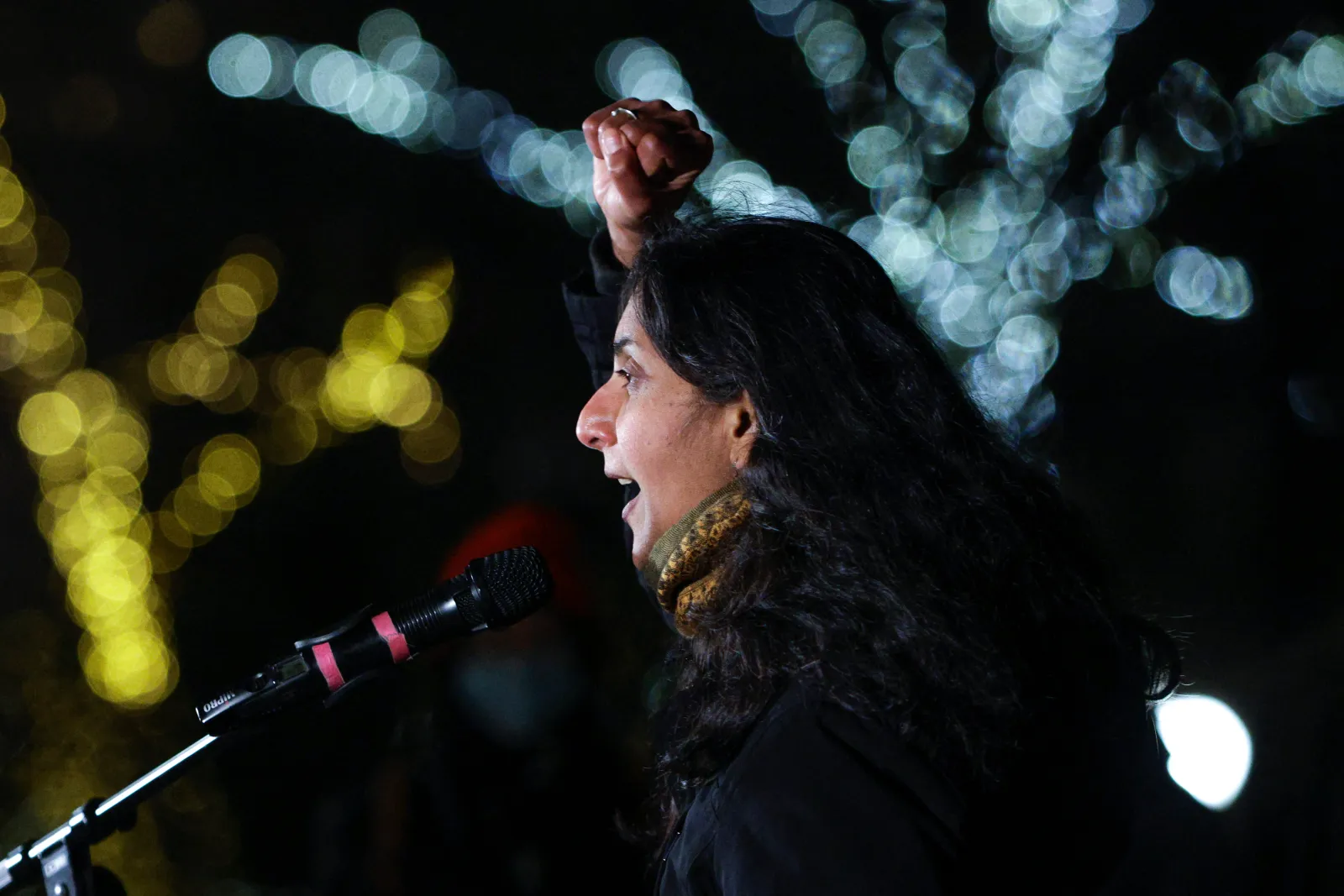
Kshama Sawant's Record in Seattle
Sawant boasts her track record in Seattle. Driven in large part by her 2013 campaign, when she defeated a Democratic incumbent to win a city council seat, Seattle became the first major city in the United States to implement a $15 minimum wage.
If the idea was seen as radical at the time, it did appear to have a domino effect as other major cities and states across the country followed suit. Even Republican-leaning states such as Missouri, and Florida beginning in September 2026, have adopted or are moving to a $15 minimum wage, a position that has become increasingly mainstream within the Democratic Party. Many progressives now float an increase to $25 or even $30 per hour.
"Because we won that battle, Seattle's minimum wage is automatically inflation-adjusted and that's why today it is $21.30 an hour, which is the highest in the nation," Sawant said.
During her 10 years on the city council, Sawant consistently won reelection despite substantial opposition, including from corporations. In 2019, Amazon, which is headquartered in Seattle, contributed $1.5 million through a political action committee to support her opponent. In 2021, her opponents tried to push her out with a recall campaign, but she survived with just over 50 percent of voters casting ballots in her support.
Her grassroots Tax Amazon movement resulted in the 2020 passage of a payroll tax on the top 3 percent of businesses with large payrolls in Seattle. Prior to that she helped push through 2016 legislation capping upfront move-in fees and security deposits for tenants and stronger renter protection legislation. Now she hopes to take the same tactics that helped secure those victories directly to the halls of Congress.
Sawant explained that her strategy has been to use her office "to build mass movements, not to make private deals with the Democrats." She believes progressives and democratic socialists have opted for the latter, saying workers "desperately" need fewer "team players" in Congress.
"I am not running to be a team player on team genocide or team billionaire or team corporate lobbyist. I am running to disrupt the politics as usual in Washington D.C.," she said.
Supporters have credited Sawant with helping push Seattle toward more progressive labor and housing policies as well as building successful grassroots campaigns. Critics, however, have argued that her confrontational style made compromise difficult while some of her proposals risked discouraging business investment and job growth.
Sharp Contrast With Adam Smith
Sawant drew a stark contrast between herself and Smith, who has represented the district since 1997.
Sawant noted that Smith was among the minority of House Democrats who voted in 2002 to authorize military force in Iraq. She also criticized his support for military spending and U.S. assistance to Israel, accusing him of representing corporate interests rather than working-class voters.
Smith has rejected such characterizations, describing himself as a progressive Democrat while defending U.S. support for Israel's security alongside humanitarian assistance for Palestinians. Throughout his congressional career, Smith has also argued that his senior position on the Armed Services Committee allows him to shape national security policy while also advancing Democratic priorities on health care, labor rights and other domestic issues.
The Democrat has also been sharply critical of Trump's war in Iran. "This war never should have been started, and once it was Trump refused every ceasefire offer on the table. These deaths were preventable and the responsibility sits with him," he wrote on X last week. He also recently voted against a major defense authorization bill.
Explaining his decision, he said the bill would give the Pentagon a 60 percent increase, pushing the budget up to $1.6 trillion. He noted on X that this came "at a time when our country is running a nearly $2 trillion deficit. We're doing that while cutting taxes, cutting Medicaid, cutting SNAP, and telling Americans struggling with housing costs that we can't afford to invest in them."
Smith hit out directly at Sawant in May after pro-Palestinian protesters planned demonstrations outside his Washington home. He accused his socialist opponent of joining the protests, calling it “unethical and a bastardization of the democratic process.” The incumbent Democrat said that Sawant decided "that intimidating elected officials in their homes is a legitimate way to campaign."
Last August, Smith posted with a warning about Sawant's insurgent campaign. "Kshama Sawant, who campaigned against Kamala Harris in 2024, is now targeting me for Congress. She won’t stop Trump’s fascist takeover or fight for our community, but I will," he wrote.
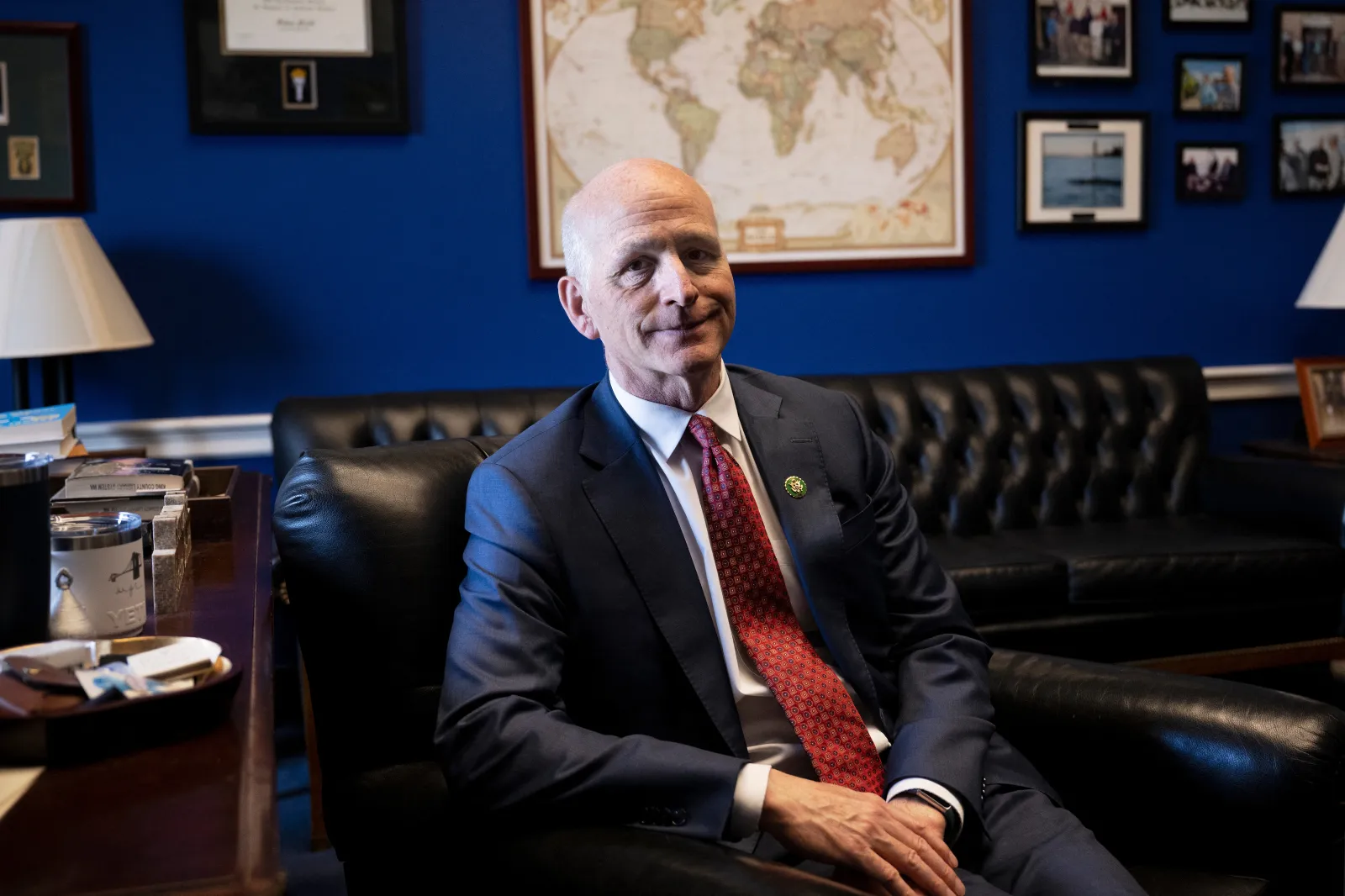
Can Kshama Sawant Win?
Sawant reiterated in her interview with Newsweek that she's managed to win all of her elections, including the 2021 recall. She attributes that success to the mass movement she was able to create in Seattle. At the same time, she recognizes the election ahead is difficult.
Washington has a top-two jungle primary system, meaning all the candidates from every party run against each other in one primary. The two who get the highest number of votes advance and face off head-to-head in the general election in November.
"I promise you that if we are in the November election, that will [be] the most electrifying race in the midterm election," she said. "But in order to do that, we need to be one of the top two vote-getters."
The district is considered safely Democratic, so a Republican is not expected to win. There is no public polling to provide a snapshot of where each individual candidate stands. But beyond Smith, Sawant is seen to have the best name recognition as well as a history of winning tough Seattle City Council races.
According to FEC filings, Sawant has pulled in roughly a third of the amount of money raised by the incumbent Democrat. As of July 15, she had raised just over $645,000 whereas Smith had raked in nearly $1.9 million. Sawant said that she has more than eight times as many individual donors as the incumbent and that her median donation is about $25. She noted that her fundraising is approximately "three times as much money as any of Adam Smith's challengers ever"—pointing out her campaign has managed this even before the general election race.
Sawant says while winning is the goal, her "metric of success is not how many elections" she wins. She said elected officials should measure success by victories achieved for workers, even if that creates conflict with established political leadership.
"The Democratic and Republican parties both have historically low approval ratings," she said. "Working people are looking for alternatives."
The following transcript has been edited for brevity and clarity.
Newsweek's Interview With Kshama Sawant
For readers who may not be familiar with your political career and what you've accomplished, how did you get into politics, and what did you achieve during your time on the Seattle City Council?
I've been a socialist and political activist for about 18 years. In the wake of the Occupy movement, my organization and I agreed that it would make sense to run an election campaign as an independent socialist on really powerful historic demands. It was fundamentally different from how Democratic and Republican politicians become elected officials. They do it for their own careers. We did it democratically through decisions by our membership.
Our 2013 campaign spoke to tens of thousands of people because we were running on a $15-an-hour minimum wage, taxing the rich and powerful renters' rights, including rent control. Those demands electrified working-class people, and we won despite having everything stacked against us.
Once elected, I used my office not to make backroom deals with the Democratic Party, which controls Seattle, but to build mass movements. By mobilizing tens of thousands of people, we made Seattle the first major city to win a $15 minimum wage. Because we won inflation increases, it's now $21.30 an hour, the highest in the nation. We also defeated Jeff Bezos to win the Amazon tax and defeated corporate landlords to win unprecedented renters' rights. That's the basis of my campaign today.
With the $15 minimum wage specifically, Seattle was the first major city to do it. Now even states like Florida have reached that level. Do you think that movement started here?
Absolutely. The 15 Now movement that I launched in Seattle went nationwide. Tens of millions of workers won substantial wage increases starting with the battle we won here. Even Missouri, which voted for Trump, approved a $15 minimum wage. That shows if you talk to working-class people about working-class demands, there's powerful unity whether you're talking about Florida or Washington state.
Why are you the best candidate for this moment, and how are you different from Adam Smith, who identifies as a progressive?
The fact that Adam Smith identifies as a progressive tells you how utterly devoid of meaning the word "progressive" is as far as the Democratic Party is concerned.
You have somebody who has voted for war after imperialist war over 30 years, who is voting to fund the genocide in Gaza to the tune of tens of billions of dollars. He voted to slash hundreds of billions from Medicare and Medicaid long before Trump came along. He supported the Wall Street bailout after the Great Recession, voted to create ICE and has voted to fund ICE to the tune of $115 billion.
He's not just a reliable vote for billionaires and the warmongering class. He's an instigator of war. As ranking member of the House Armed Services Committee, he co-authored bills with Republicans providing hundreds of billions more for war spending.
The contrast between me and Adam Smith could not be more stark. He has a 30-year record of attacking the interests of working people. I have a 10-year record of winning unheard-of victories like the nation's highest minimum wage, the Amazon tax and renters' rights. My campaign is an anti-war socialist campaign calling for an end to all military aid to Israel, a permanent arms embargo, free health care funded by taxing the rich, national rent control and at least a $25 national minimum wage.
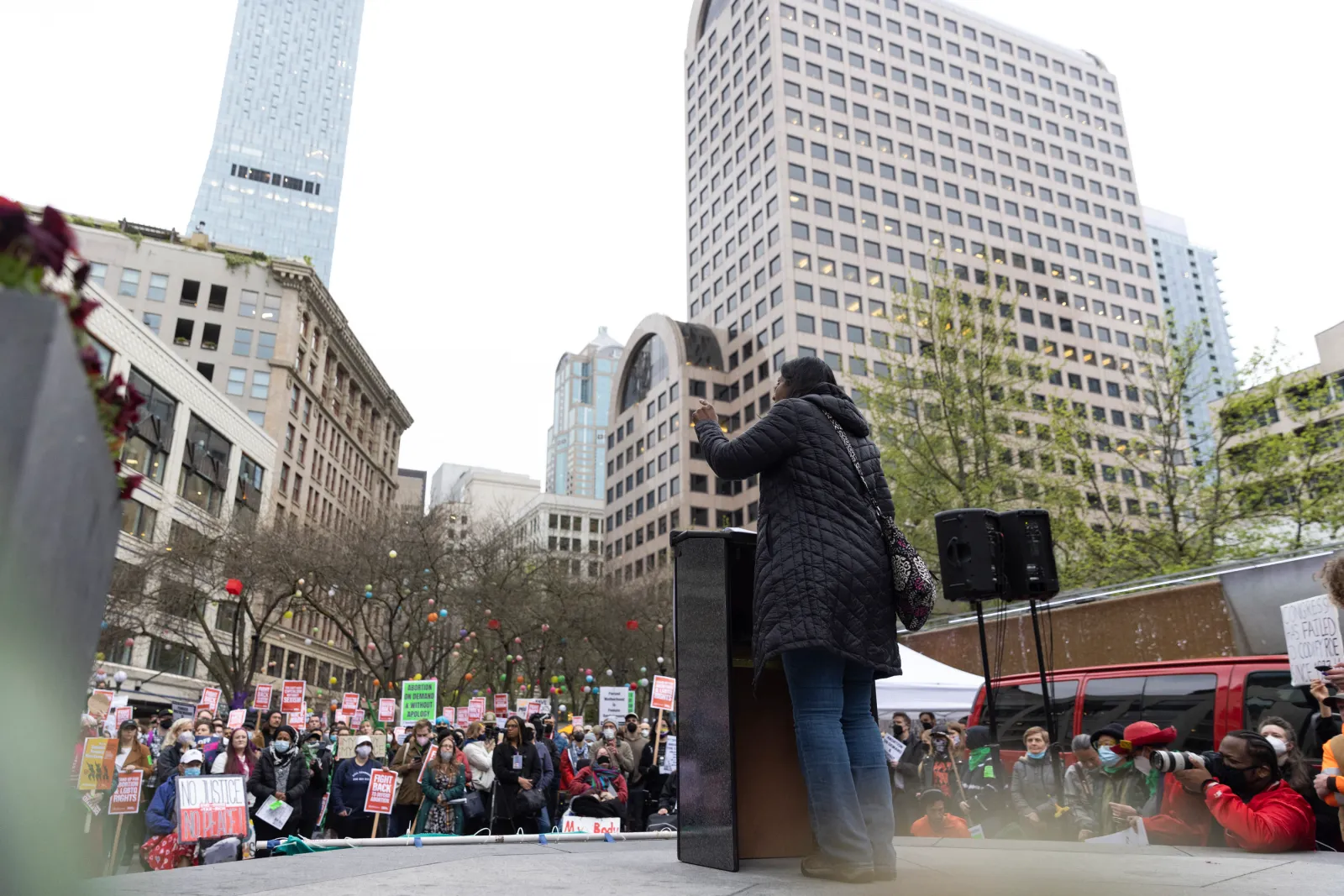
If you're elected, what are the core issues you hope to address in Congress?
I'm fighting to end all military aid to Israel because that's a crucial component of ending the genocide. I'm calling for a permanent arms embargo, free health care for all funded by taxing the rich, national rent control, shutting down ICE and detention centers, full citizenship rights for immigrant community members and a public-sector living-wage jobs guarantee.
But to achieve any of that, we're going to need fighting mass movements.
I'm not a careerist politician making election-year promises only to turn around and protect my own career. My entire track record is one of never having sold out the working class. In Seattle, with one elected office, our movement was able to command the city's political agenda because I used my office to build mass movements, not to make private deals with Democrats.
That's the approach we desperately need in Congress. There are enough team players. I'm not running to be a team player on Team Genocide, Team Billionaire or Team Corporate Lobbyist. I'm running to disrupt politics as usual in Washington, D.C. If elected, I will turn my congressional inauguration into a mass rally of 10,000 people and immediately start using my office to build the mass movements we need.
You've found success outside the Democratic Party, but you've criticized the Democratic Socialists of America's strategy of working within it. Why?
First of all, the recent victories by Democratic Socialists of America-backed candidates are crucial. They're a real voice of working-class anger against forever wars, the cost-of-living crisis and billionaire rule. They show working people are looking for working-class politics.
My criticism is about what strategy we use after winning office.
When AOC first ran, she said it would be better to be a one-term member of Congress than to sell out. I strongly agreed with that. Unfortunately, we've seen people like her make their own peace with Nancy Pelosi, Chuck Schumer and other powerful people in the Democratic Party.
Even as more progressives have been elected, we've seen the genocide unfold. We've seen every DSA-backed member except Rashida Tlaib vote to break the railroad workers' strike. We've seen many of them, including AOC, make excuses for Israeli military funding like Iron Dome by calling it defensive weaponry.
These aren't personal disagreements. They're political questions.
Our experience in Seattle—and the history of the American labor movement—shows you cannot actually win victories for the working class unless you're willing to fight both the Democratic and Republican establishments.
My metric of success is not how many elections I win. I won every election I contested in Seattle, including defeating a recall backed by billionaire landlords. But that's not the point. The point is we won because we never sold out. Some of the biggest victories for working people in American history didn't come from elections. They came from principled working-class organizing. That's the lesson we need to bring to Congress.
If elected, are there members of the Progressive Caucus or Democratic Party you think you could work with on issues like health care or Gaza?
If you look at their campaign programs, there's enormous support among many Democrats for issues like universal public health care. Even Adam Smith will tell you he supports many of these things on paper. But that's the whole question: what does it take to actually win something?
The working class can't improve its living standards on the basis of promises on paper. Medicare for All has been introduced over and over again without ever getting a vote. In California, the state version has been crushed four times by the Democratic Party, even though Democrats control the governor's office and the legislature.
That's where the rubber hits the road. To win something like a $25 national minimum wage, politicians have to be willing to go to battle against the Democratic Party apparatus that opposes it. If you're not willing to go to war against the billionaire class and their political representatives in your own party, you're not going to win anything for the working class.
In Seattle, I always said I was willing to work with any politician willing to fight for working people. But those instances were the exception. The norm was Democratic politicians vehemently opposing the demands we were fighting for. Winning meant exposing politicians who were selling out the working class. That doesn't make for cordial personal relationships, and I wear that with a badge of honor.
The narrative in recent years has been that the working class has shifted toward Donald Trump and Republicans. Why do you think that happened? And how do you view policies like "no tax on tips"?
Trump was a con man. He didn't really support working people's agenda. What he did do was co-opt the justifiable anger people felt toward both the Democratic and Republican parties—the hatred of the political establishment.
Now we're seeing that not only is Trump massively unpopular, but so are both major parties. Working people are angry at both parties because they feel sold out by both.
The reason Trump got elected in the first place was because of the betrayals by the Democratic Party. In 2016, the Democratic establishment refused to allow Bernie Sanders to become the nominee and instead anointed Hillary Clinton, despite poll after poll showing Sanders could defeat Trump. Then under Biden we saw the genocide begin, a massive cost-of-living crisis, and continued funding for ICE. Trump exploited all of that.
Nearly 19 million people who voted for Biden in 2020 didn't vote in 2024. The two biggest reasons they gave were the genocide and the cost-of-living crisis. People are looking for an alternative. That's why a campaign like ours—calling for free health care funded by taxing the rich and based on a track record of fighting the establishment—is what working people are excited about.
How are you feeling heading into Washington's August 4 top-two primary?
As you said, only the top two vote-getters advance to November. If we do, voters will have a head-to-head choice between warmongering Zionist Democrat Adam Smith, the ranking member of the House Armed Services Committee, and an anti-war independent socialist with a track record of winning working-class victories. I promise you that would be the most electrifying race of the midterm elections.
But first we have to make the top two.
The Democratic and Republican parties are pulling maneuvers to keep us out of the general election. There's only one Republican running against Adam Smith this year, and he has openly admitted he was recruited to keep me, the socialist, out of November. There's also another Democrat running a very weak campaign who will effectively divide votes in the same way. It reminds me of the role Elizabeth Warren played in 2020, when she stayed in the race while the other corporate candidates dropped out, helping Joe Biden become the nominee.
Despite all of that—and despite what I believe has been a near-complete corporate media blackout—we've raised $725,000 with a median donation of $25. We've raised more than three times as much as any previous Adam Smith challenger and have eight-and-a-half times as many donors as Adam Smith. He has far more money because he's bankrolled by Palantir, Lockheed Martin, AIPAC and other pro-genocide PACs, but we have far more support among working people.
Our challenge is translating that support into votes because many working-class people don't vote in primaries or haven't heard about our campaign. That's why we're out talking to voters every day. Nobody can guarantee what will happen, but we've come this far despite every obstacle because people recognize this campaign is different. It comes from a track record of never selling out working people and winning historic victories.
Is there anything else you'd like readers to know?
Between now and August 4, it's very important that everyone in Washington's 9th Congressional District casts their ballot. If we can defeat Adam Smith, it will be a stinging defeat for the politics of war. It will be a huge step toward ending the genocide, fighting the cost-of-living crisis and winning victories like free health care. There is too much at stake. This is a historic campaign. Help us get into the November election.