
 1 week ago
42
1 week ago
42
The Trump administration is reportedly laying the groundwork to ban a Chinese-made component from data centers amid growing concerns that dependence on China could pose risks to the security of America's AI (artificial intelligence) infrastructure.
Administration officials are drawing up plans to bar Chinese imports of optical transceivers—devices that transmit data over fiber-optic cables inside sprawling data centers—by the end of 2026, Reuters cited four people familiar with the matter as saying. The Federal Communications Commission could still modify or abandon the reported restrictions, the sources said.
The report comes as the U.S.-China AI competition expands beyond chips and algorithms to the infrastructure needed to run them.
The U.S. has already tightened export controls on advanced AI chips to China in an effort to slow the development of technologies that could give the People’s Liberation Army a battlefield edge and erode America’s technological lead. At the same time, U.S. intelligence agencies say Chinese state-backed hackers burrowed into critical American infrastructure and consumer devices, demonstrating the potential to collect intelligence or disrupt key systems during a future crisis.
"As with the risk from the other products the Trump Administration is looking to ban, there are real concerns with the transceivers around data collection, disruption, and long term dependence on Chinese suppliers," Adam Segal, director of the Council on Foreign Relations' Digital and Cyberspace Policy Program, told Newsweek.
The White House did not immediately respond to a request for comment.
What Are Optical Transceivers?
Optical transceivers are a core part of modern communications networks, from Ethernet systems to long-distance telecommunications. They convert electrical signals into pulses of light—and back again—to transmit vast amounts of data through fiber-optic cables.
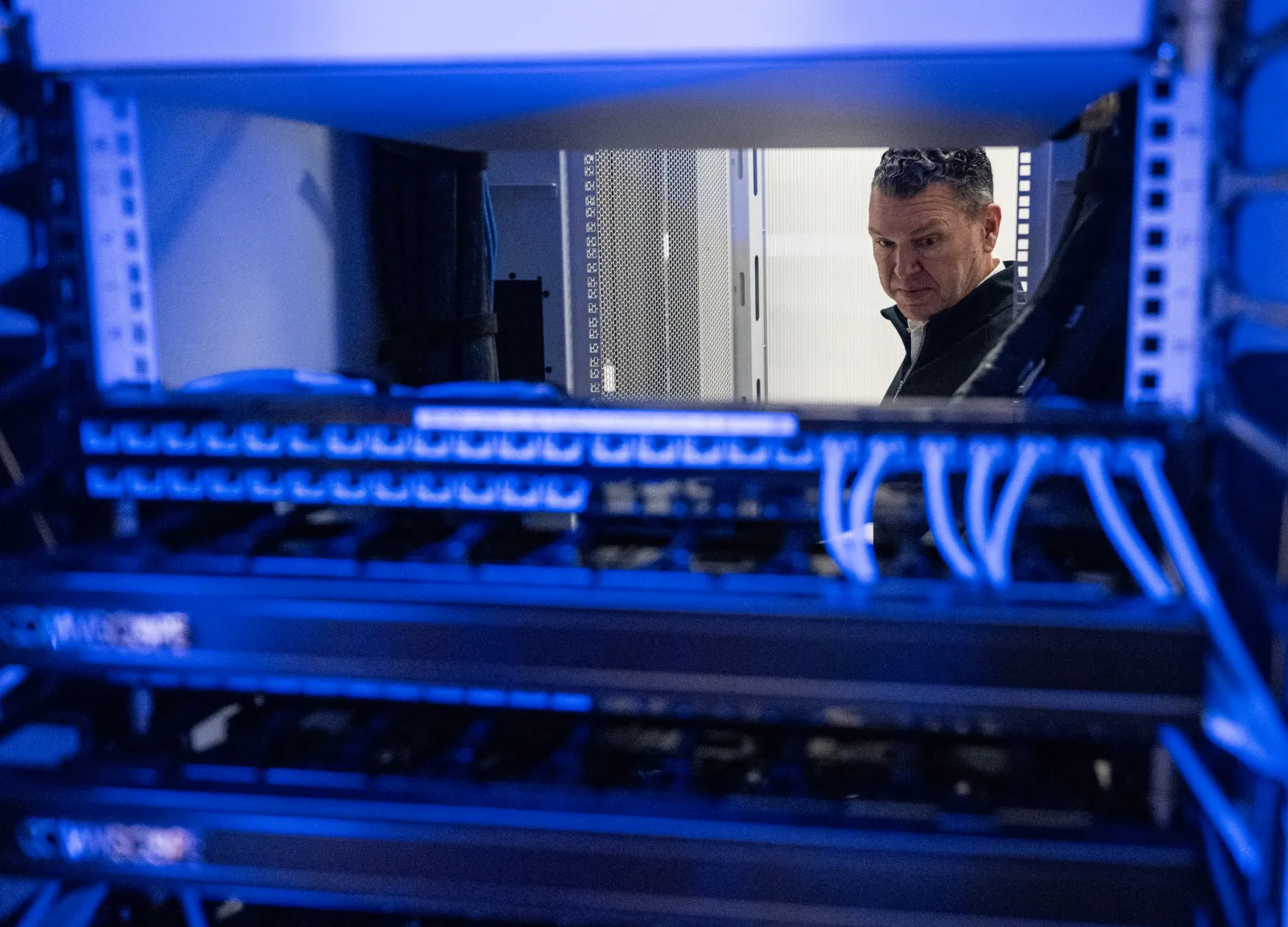
The transceivers have become increasingly important inside AI data centers, where they provide the high-speed optical links connecting the thousands of AI chips necessary to process enormous data sets and train large language models such as ChatGPT and Claude.
Why Trump Wants to Ban Them
Beyond concerns over potential cyber vulnerabilities, U.S. officials increasingly worry that relying on Chinese suppliers for components such as optical transceivers leaves the country exposed if its Chinese rival were to cut off supplies.
"Banning imports of Chinese-made optical transceivers would further help secure the AI supply chain and reduce dependencies on China that they are capable of weaponizing against us, as they have repeatedly done with rare earths," Dmitri Alperovitch, chairman of Silverado Policy Accelerator, a Washington think tank, told Newsweek.
China demonstrated its willingness to leverage its dominance over rare earth minerals—critical for everything from smartphones and electric vehicles to fighter aircraft and missile systems—during last year's trade tensions with Washington and in recent months has tightened export curbs on Japan in retaliation for Prime Minister Sanae Takaichi's defense build-up and comments about Taiwan.
Even so, analysts warn the U.S. ban could come at a cost.
"There is the risk that it raises costs and uncertainty for hyperscalers if it happens, with negative impacts on AI development, at least in the short term," Segal said, referring to companies like Amazon that operate massive cloud computing infrastructure.
China has repeatedly criticized U.S. restrictions on advanced technology exports, saying they undermine global supply chains and damage bilateral relations.
"Such practices do no good to anyone. They are market-distorting acts of bullying. China urges the U.S. side to immediately revoke the relevant measures and its wrongful practices," Liu Chang, spokesperson for the Chinese embassy in Washington, told Newsweek.