 1 week ago
35
1 week ago
35
A leaked United Nations poll last week revealed the front-runners to replace the outgoing António Guterres as the international organization’s secretary-general in 2027.
It's an impressive field, ranging from former ministers to the head of the U.N.’s nuclear watchdog. Yet, not one candidate is qualified for the job.
That's not because their credentials in governance, diplomacy and navigating the red tape of global bureaucracy aren’t among the world’s best. It’s because the job description itself is simply impossible for one person to fulfill.
The U.N. functions as a forum to guide humanity away from conflict and toward a more constructive, mutually beneficial future. The secretary-general is supposed to help the world’s most powerful countries work together to achieve this.
Whoever enters the office as the new secretary-general on January 1, 2027, will quickly learn the U.N. no longer works as planned, and they are there to ensure the organization does not collapse.
The World Is No Longer UNited
In the mid-20th century, an international community traumatized by the misery and destruction of the Second World War briefly overcame their bitter differences to agree on one thing: This could not happen again.
The U.N. was the product of that judgment: a global body, controlled at its highest level by competing powers and eventually opened to almost every recognized state, that could move humanity from the rubble of war toward a future in which diplomacy could settle disputes before armies did.
It was far from perfect; wars still raged and ruthless dictators committed heinous crimes against humanity. But a third global crisis has, thus far, been averted and humanity, on balance, has prospered more than ever before as the U.N. worked to tackle poverty and disease.
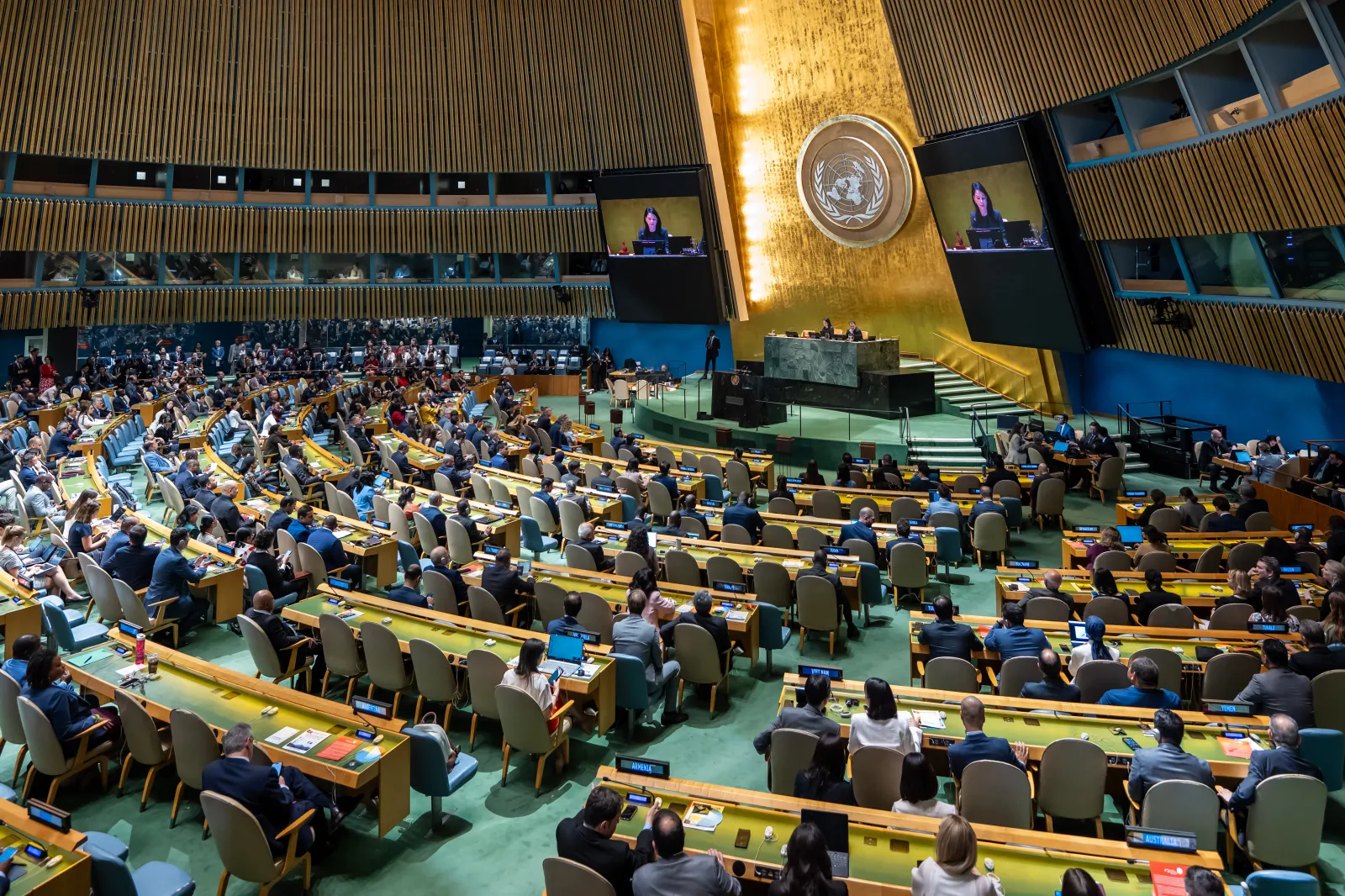
Through all of this, the secretary-general was on hand to wield their influence as the ultimate diplomat and calm tensions when member states were heading for disaster.
The relative success of this system in comparison to all that came before rested on two load-bearing pillars: the painful and recent shared memory of World War II’s industrialized slaughter, and the political and economic pre-eminence of Western powers that emerged from it.
Though the victorious powers of WWII—China, France, the Soviet Union, Britain and the United States—were each given equal veto powers as the five permanent members of the U.N. Security Council (the P5), it was Western, and primarily American, dominance that supplied much of the money and political force that allowed the organization to function.
This unspoken truth was illuminated for all to see in 1991 when the Soviet Union eventually collapsed and the U.S. emerged as the only global superpower.
Now the world has changed, and the order that enabled the U.N. to function as it did no longer exists.
A Vintage Model
Let us look at the P5 as they exist today.
China is no longer merely "the factory of the world," churning out goods for export to fuel American consumerism; it is an economic, technological and military giant with vast human and natural resources and enormous leverage throughout the Asia-Pacific and beyond.
Russia, despite the economic and structural weaknesses exposed by war in Ukraine, remains a resource-rich geographic titan with the world’s largest nuclear arsenal, controlled by a man hell-bent on dismantling Western dominance.
Their desire to rebalance the distribution of global power is shared by a slew of other developing and emerging economies like India, the Gulf States, Turkey and Brazil.
By contrast, the Western elements of the P5 are trending in the opposite direction.
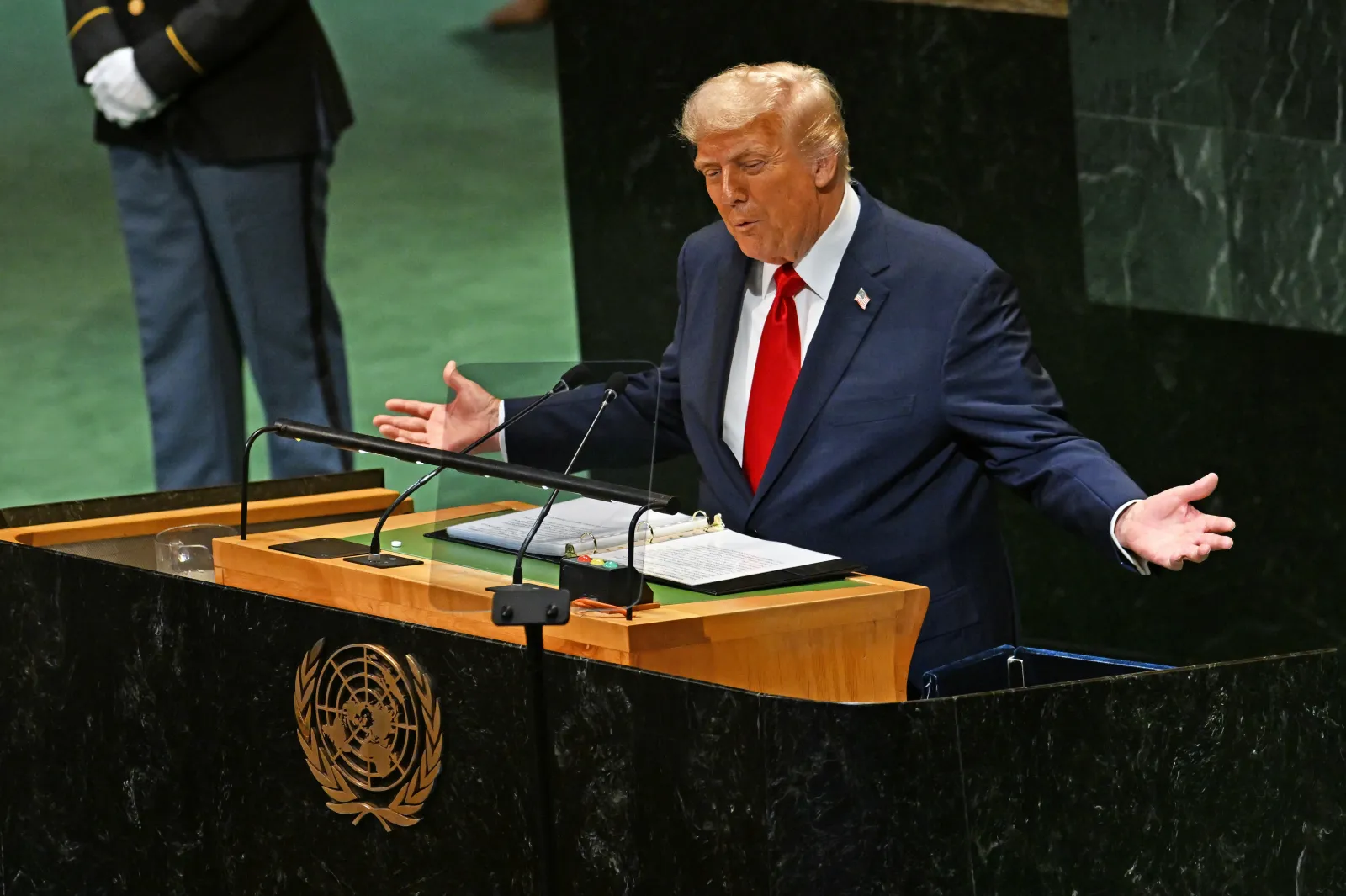
The United Kingdom and France are shadows of their colonial-era selves, beset by political turmoil, economic woes and rising discontent. Meanwhile, Donald Trump’s handling of historic alliances and global institutions appears similar to how a hostile corporate CEO might treat underperforming departments of his company: demonstrate an immediate return, or else. But the president’s populist and faux-patriotic brand of politics accelerates the West’s loss of control, and the scramble to seize it.
A United States that withdraws from common institutions does not guarantee its prosperity or strengthen its sovereignty. It simply cedes control of those institutions to competitors, while weakening the system through which American power once traveled.
As competition between great powers intensifies and international fault lines deepen, the ability of the secretary-general to set a common agenda and use diplomacy to solve differences is draining away.
So, Who Wants The Impossible Job?
There are currently seven candidates who’ve proven themselves committed, or perhaps silly, enough to run for the role of the U.N.’s chief executive, but the results of last week’s leaked straw poll suggest three clear front-runners.
Representatives of the 15 current U.N. Security Council members anonymously put forward votes that "encourage" or "discourage" the candidacy of each person on the ballot, offering an insightful glance at how they are likely to vote for real later this year.
Right now, Costa Rica’s Rebeca Grynspan is in first place with 10 "encourage" votes, followed by Guyana’s Carolyn Rodrigues-Birkett with nine and Argentina’s Rafael Grossi with seven.
They are the top three candidates for good reason: Grynspan heads the U.N.’s Trade and Development organization and helped negotiate the Black Sea grain arrangement that allowed Ukrainian food exports to reach their destinations despite Russia’s invasion, and Rodrigues-Birkett is Guyana’s U.N. ambassador and former foreign minister.
Grossi has the most dramatic portfolio. As director general of the International Atomic Energy Agency, he was celebrated for safeguarding the Chernobyl and Zaporizhzhia nuclear power plants as Russian bombs devastated Ukrainian cities. It was also his report on Iran’s noncompliance with nuclear safeguards that triggered the U.S.-Israeli bombing campaigns last summer and the ongoing conflict in the Middle East.
All are extremely experienced, capable candidates. None can restore direction to an organization whose strongest members are now in direct competition and no longer agree on what it is for.
Previous secretaries-general were able to translate their personal authority into major diplomatic wins. In 1962, negotiations between Kennedy and Khrushchev that brought an end to the Cuban missile crisis were made possible by the intervention of then U.N. head U Thant, whose neutral appeal to both leaders allowed them to pause escalation while saving face. More than two decades later, Javier Pérez de Cuéllar spent years shuttling between Iran and Iraq, helping to negotiate the 1988 ceasefire that ended eight years of brutal war.
Neither man solved those crises alone, but both showed what a secretary-general could achieve when rival powers still considered the U.N. a proper forum through which to resolve differences.
The next secretary-general’s immediate task will be considerably less glamorous: keep humanitarian agencies operating, preserve channels between enemies and prevent the structure from breaking apart in the hope that the current, or perhaps next generation, of world leaders can agree on how to fix it.
The U.N. remains our best attempt to limit destruction and foster international cooperation for the betterment of humankind. Even the best tools eventually need repairing—or replacing.