 1 week ago
48
1 week ago
48
President Donald Trump has spent years criticizing wind turbines, calling them unsightly, expensive and harmful to wildlife while arguing they should be replaced by fossil fuels and other energy sources.
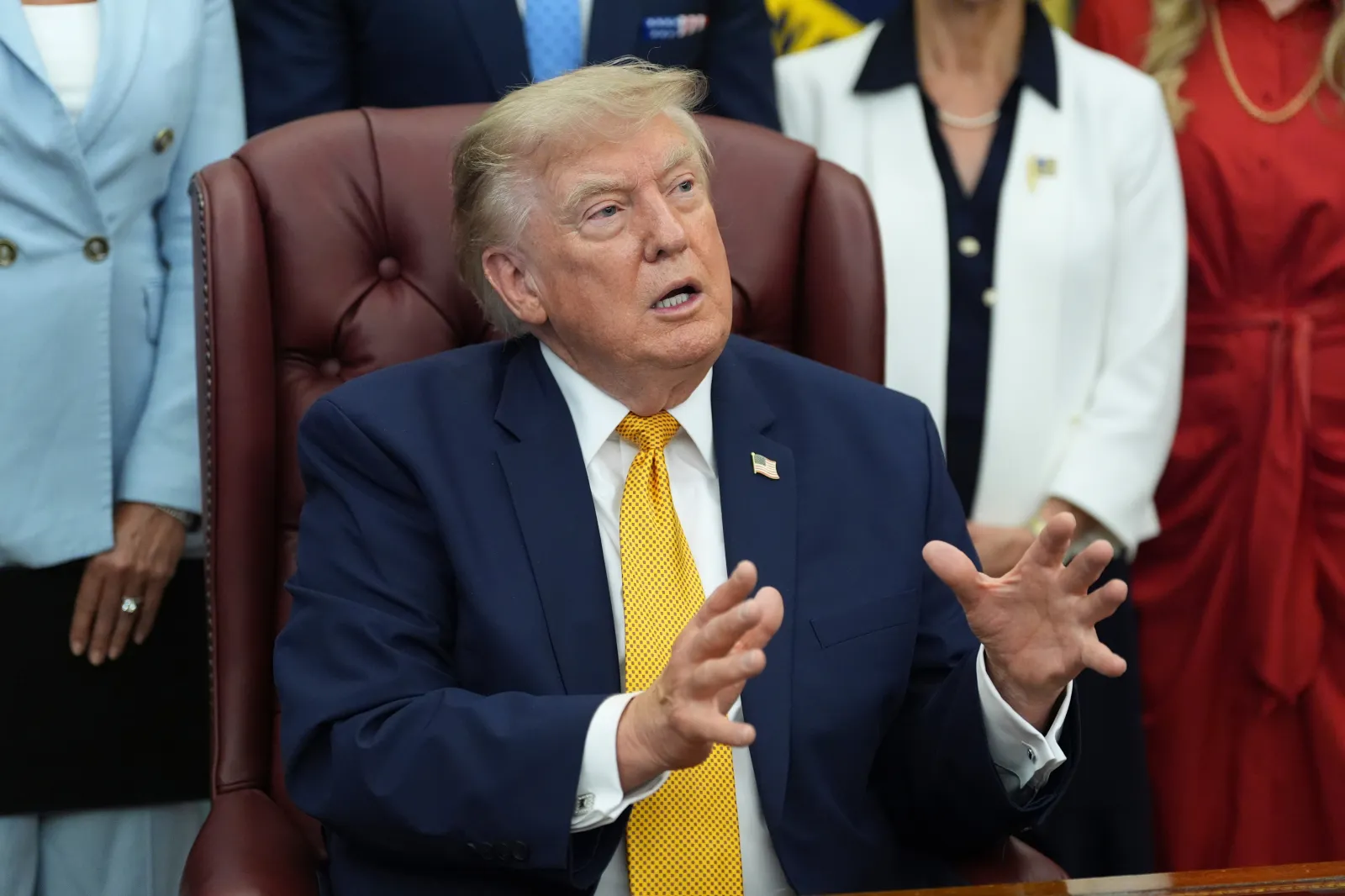
His opposition resurfaced Monday during remarks in the Oval Office, where he again criticized "windmills" while discussing Europe's economic challenges, continuing a theme that has become one of the most consistent features of his public rhetoric.
Trump's stance has evolved from a fight over an offshore wind farm near one of his Scottish golf courses into a broader campaign against wind energy, culminating in executive actions during his second term aimed at slowing new wind projects across the United States.
Newsweek has reached out to the White House via email for comment.
When Did Trump Start Criticizing Windmills?
Trump's opposition to wind energy dates to the mid-2000s, when plans emerged for an offshore wind farm near Trump International Golf Links in Aberdeenshire, Scotland. He argued the turbines would spoil the coastal landscape, damage tourism and reduce the value of his golf resort.
Trump fought the project for years through public campaigns and legal challenges but ultimately lost, with Scottish courts allowing the development to proceed. Many observers have pointed to that dispute as the beginning of Trump's long-running criticism of wind power.
His criticism intensified during his 2016 presidential campaign, when he increasingly linked wind energy to broader attacks on climate policies and government support for renewable energy.
The president has argued they are "ugly," damage scenic landscapes and hurt tourism, while he also claimed they are inefficient, expensive to maintain and harmful to wildlife, particularly birds. More recently, he has increasingly framed wind power as part of what he sees as misguided climate and energy policies that disadvantage fossil fuels and raise energy costs.
Although Trump signed a 2009 open letter supporting action on climate change, his rhetoric shifted dramatically over the following decade as renewable energy became a more prominent political issue.
Trump's Wind Turbine Timeline
2006
Trump purchased land in Aberdeenshire, Scotland, where he developed Trump International Golf Links. Shortly afterward, he opposed plans for a nearby offshore wind farm, arguing the turbines would ruin the view and hurt tourism.
2011-2015
Trump spent years challenging the Scottish wind project through lawsuits and public campaigns. Despite those efforts, the wind farm was eventually approved and constructed.
2012
Trump began making increasingly frequent public attacks on wind power, criticizing the appearance, economics and environmental impact of turbines.
2015-2016
During his presidential campaign, Trump incorporated criticism of wind energy into his broader message supporting expanded oil, gas and coal production.
2017-2021
Throughout his first term, Trump repeatedly criticized wind turbines while his administration rolled back a number of climate and clean-energy initiatives.
2019
Trump drew widespread attention after claiming that noise from wind turbines could cause cancer—a statement rejected by medical experts and public health authorities.
2021-2024
Out of office, Trump continued attacking wind energy at rallies and campaign events, frequently calling turbines unreliable and expensive while pledging to reverse Biden administration renewable-energy policies if elected.
2025
Within days of returning to office, Trump signed executive actions aimed at pausing or slowing approvals for new offshore wind projects. His administration later expanded those efforts, drawing criticism from the renewable-energy industry and praise from fossil fuel advocates.
2026
Trump has continued to raise the issue during speeches, campaign-style appearances and Oval Office remarks, frequently citing wind turbines while discussing energy policy, inflation and Europe's economy.
How Has Trump Acted Against Wind Energy?
Trump's criticism has extended beyond rhetoric. Trump's views on wind energy now influence federal energy policy as well as political debate over climate change and renewable power.
During his first term, his administration prioritized expanding oil, gas and coal production while rolling back a number of environmental regulations and clean-energy initiatives. Although wind development continued during those years, Trump frequently questioned the value of federal support for renewable energy.
After returning to office in January 2025, Trump took more direct action against the wind industry. His administration moved to pause or slow approvals for new offshore wind projects, ordered reviews of existing permits and signaled that future wind-energy development would face greater federal scrutiny.
Supporters say the measures are intended to strengthen American energy independence by emphasizing reliable domestic fossil fuel production and reducing regulatory burdens. Critics, including renewable-energy companies and environmental groups, argue the policies threaten investment, delay major infrastructure projects and could slow the transition to lower-carbon sources of electricity.
How Many Wind Turbines Does the US Have?
One of Trump's harsher criticisms of wind power came earlier this year at the World Economic Forum in Davos, Switzerland, when he said countries investing heavily in wind power were "losers."
“There are windmills all over Europe. There are windmills all over the place, and they are losers,” Trump said. “One thing I’ve noticed is that the more windmills a country has, the more money that country loses, and the worse that country is doing.”
The U.S. ranks second in the world in wind power capacity, trailing only China.
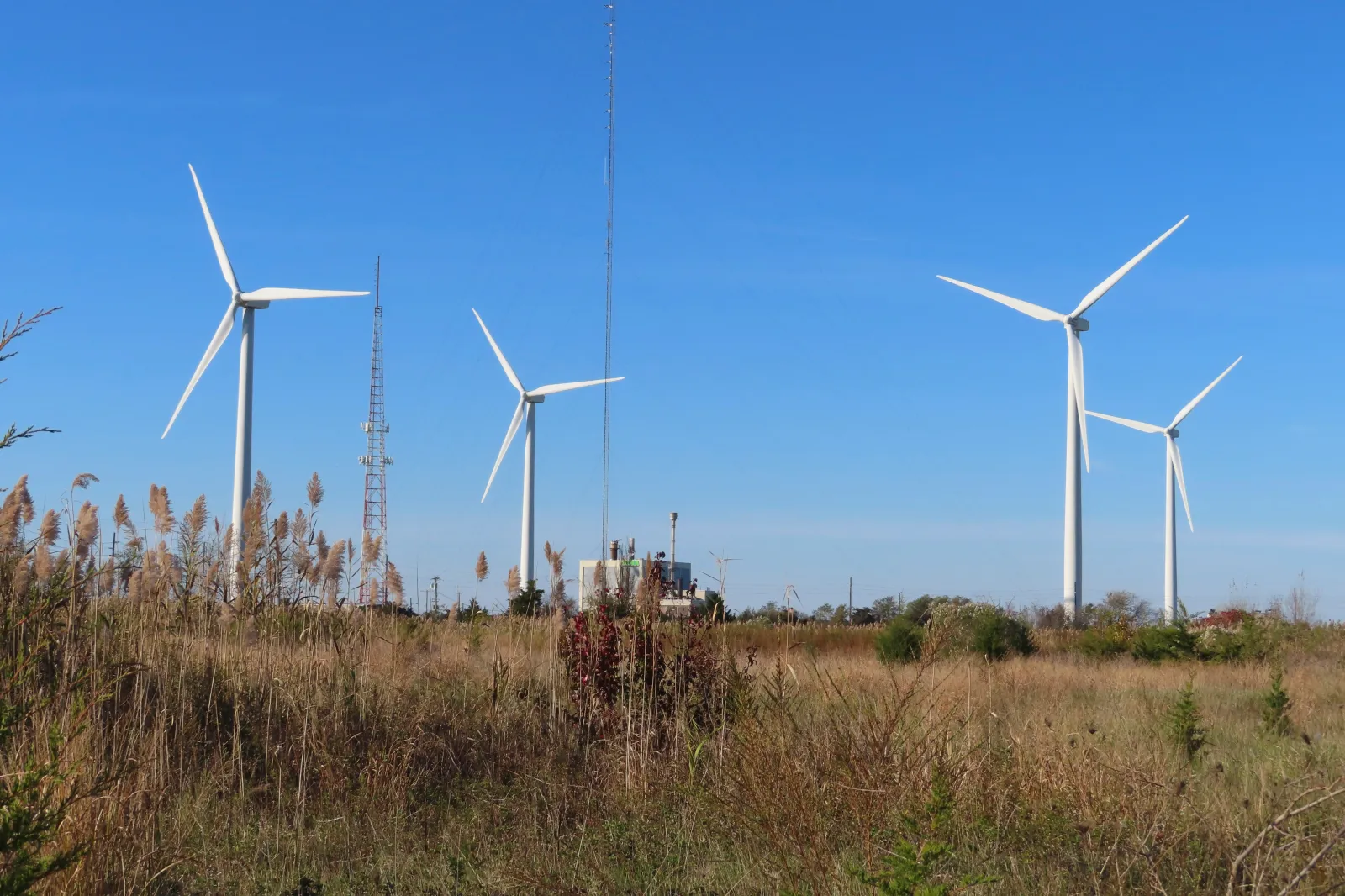
America has roughly 77,000 wind turbines, making wind power one of the largest sources of renewable electricity in the nation. The latest U.S. Wind Turbine Database, maintained by the U.S. Geological Survey, Lawrence Berkeley National Laboratory and the American Clean Power Association, lists 77,379 turbines across 45 states, Guam and Puerto Rico.
Those turbines are spread across approximately 1,700 wind power projects and represent nearly 160 gigawatts of installed capacity. Texas has the largest number of wind turbines of any state, followed by other major wind-producing states across the Great Plains and Midwest.
Wind energy now supplies a significant share of U.S. electricity, with turbines contributing power to the grid in states ranging from Texas and Iowa to Oklahoma, Kansas and California.
Despite Trump's repeated criticism of wind turbines, the technology has become a major part of America's electricity infrastructure.
Trump's Wind Turbine Claims: Fact Check
Trump has repeatedly criticized wind turbines, arguing that they are harmful to wildlife, unreliable as an energy source and damaging to communities. Some of his most repeated claims have been challenged by scientists, public health experts and energy researchers.
Here are some of Trump’s claims and what the evidence shows.
Claim: 'They say the noise causes cancer'
Trump has repeatedly claimed that wind turbine noise can cause serious health problems. Speaking in 2019, he said, “They say the noise causes cancer.”
Fact check: No credible scientific evidence links wind turbines to cancer.
Public health experts have found no evidence that exposure to wind turbine noise causes cancer. While turbines can produce audible sound and low-frequency noise, research has focused primarily on possible issues such as annoyance, sleep disruption or stress for some people living very close to turbines—not cancer.
The American Cancer Society and other medical organizations have not identified wind turbine noise as a cancer risk factor.
Claim: They kill 'all the birds'
Trump has repeatedly criticized wind turbines by arguing they are especially harmful to birds. During the final presidential debate with Joe Biden in 2020, he said to the former president: "I know more about wind than you do. It's extremely expensive. Kills all the birds. It's very intermittent. Got a lot of problems."
Fact check: Wind turbines do kill birds, but experts say they are not the largest human-caused source of bird deaths.
Scientists acknowledge that wind turbines can cause bird deaths, particularly among certain species such as raptors and migratory birds. However, studies have found that other human-related causes—including collisions with buildings, vehicles, power lines and predation by domestic cats—kill far more birds annually.
Conservation groups say the impact of wind turbines depends heavily on location and design. Proper siting, monitoring and technology such as improved turbine designs can reduce risks to wildlife.
Claim: Wind turbines are 'ugly' and damage the environment
Trump has frequently criticized turbines for their appearance, often calling them "ugly," particularly offshore wind projects.
In June 2025, he told Fox News that wind turbines "Cover up a half a mountain" and "are ugly as hell." A day earlier, during a meeting with European Commission President Ursula von der Leyen, he said he would not allow them to be built in the U.S. because "They're killing the beauty of our scenery, our valleys, our beautiful plains—I'm not talking about airplanes, I'm talking about beautiful plains. Beautiful areas in the United States, and you look up and you see windmills all over the place. It's a horrible thing."
Fact check: The visual impact is subjective, but environmental effects are more complex.
Wind turbines do change landscapes, and some communities have opposed projects because of concerns about views, tourism or local character. However, environmental researchers generally distinguish between visual impacts and broader environmental effects.
Unlike fossil fuel power plants, wind turbines do not burn fuel during operation and do not directly produce greenhouse gas emissions or air pollution while generating electricity.
Wind projects can have environmental impacts, including land use, effects on wildlife and the materials required for manufacturing, but experts say those impacts must be weighed against the environmental costs of fossil fuel energy production.
Claim: Wind energy is inefficient and unreliable
Trump has repeatedly argued that wind power does not work because turbines only generate electricity when the wind is blowing.
Speaking at the Shell Pennsylvania Petrochemical Complex in Monaca, Pennsylvania, in 2019, during his first term, Trump said, “When the wind stops blowing, it doesn’t make any difference, does it? Unlike those big windmills that destroy everybody’s property values, kill all the birds ... And then all of a sudden, it stops. The wind and the televisions go off."
Fact check: Wind power is variable, but energy experts say it is a reliable part of a modern electricity grid.
Wind generation does depend on weather conditions, meaning turbines do not produce electricity at maximum capacity at all times. However, energy experts say that does not make wind unusable or unreliable.
Grid operators manage changes in wind output through forecasting, geographic diversity, transmission networks, energy storage and combining wind with other sources of electricity.
The U.S. Department of Energy and National Renewable Energy Laboratory have found that wind energy can provide significant amounts of electricity while being integrated into a reliable grid.
Claim: Wind energy is too expensive
Trump has often argued that wind power is economically inefficient and depends on government support.
During a July 24 Oval Office news conference this year, Trump said about wind energy, "It's very expensive. It's probably the most expensive form of energy."
Fact check: Wind economics vary, but utility-scale wind has become one of the lowest-cost sources of new electricity generation in many regions.
The cost of wind projects depends on location, financing, transmission needs and policy incentives. While some projects require government support or face higher costs due to infrastructure challenges, energy analysts say technological improvements have significantly reduced the cost of wind power over time.
Critics of wind energy argue that subsidies distort the market and that intermittency creates additional costs. Supporters argue those costs are offset by fuel savings and reduced pollution.
Benefits of Wind Energy
Wind energy became one of the fastest-growing sources of electricity in the United States over the past two decades. Unlike coal and natural gas, wind turbines generate electricity without burning fuel, meaning they produce no direct greenhouse gas emissions or air pollution during operation.
According to the Energy Department and other federal agencies, wind power can diversify the nation's energy mix, reduce dependence on imported fuels and create jobs in manufacturing, construction and maintenance. Offshore wind projects can also generate large amounts of electricity near densely populated coastal regions where demand is high.
Supporters argue that expanding wind generation helps reduce carbon emissions, improves long-term energy security and lowers electricity costs in some markets. However, they acknowledge that wind energy also presents challenges, including the need for transmission infrastructure, energy storage and backup generation when wind speeds are low.
Contact Newsweek editors on this story: Samantha Beech and Edward T. Cummins.