 4 days ago
39
4 days ago
39
Surveillance drones used by the United Kingdom Special Forces transmitted data to China, according to a new report, renewing security concerns at a time when London seeks to walk back years of tensions with Beijing.
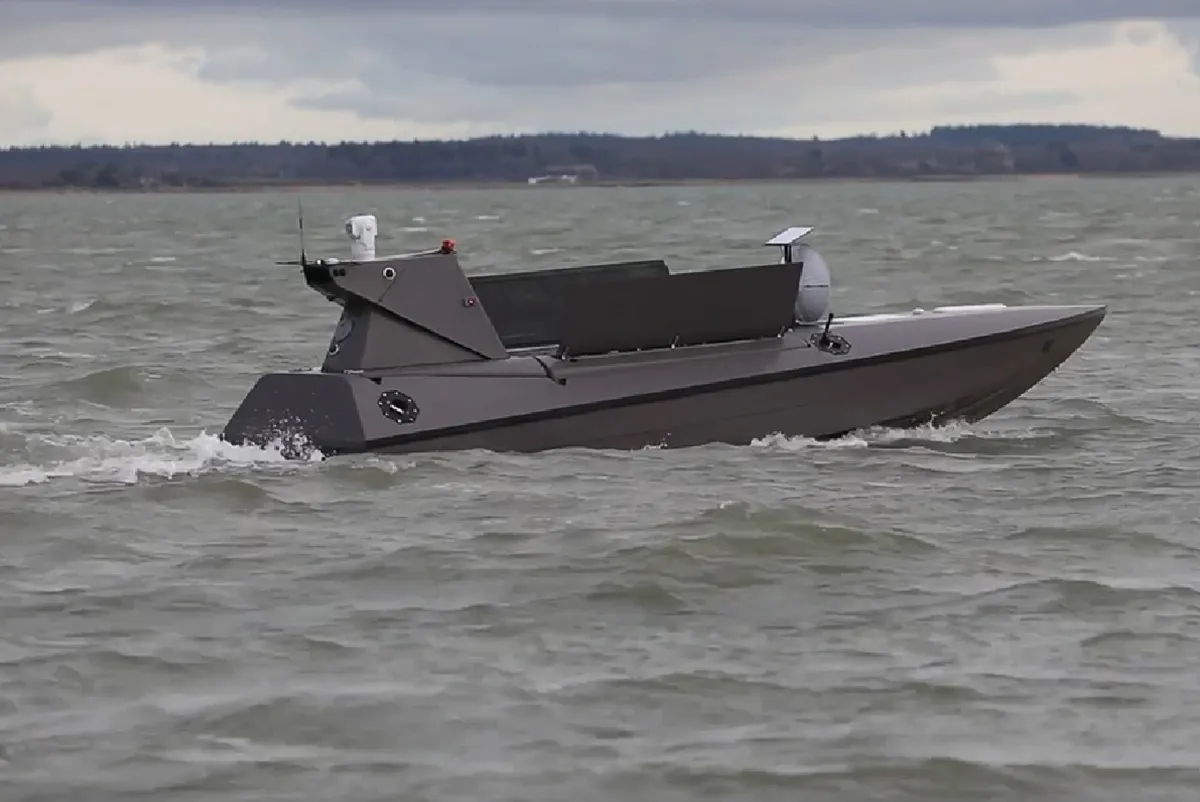
An investigation by the U.K. Ministry of Defence found that a fleet of Kraken K3 Scout drones had been sending online "heartbeat communications," or data to confirm the devices were functioning, to an IP address in China, the Telegraph reported.
The drones were supplied by Kraken Technology Group, a British defense contractor that specializes in unmanned maritime systems. The cameras had been sourced from a third-party supplier that told Kraken the devices had passed security checks.
Security Concerns
The revelation comes after Britain and its Five Eyes intelligence-sharing partners, the United States, Canada, Australia and New Zealand, warned of ongoing and potential Chinese efforts to collect intelligence through technology, with Britain already taking steps such as ordering telecommunications operators to cut Chinese telecoms giant Huawei out of it 5G network build-out.
The drones are part of a planned British naval deployment to safeguard commercial passage in the Strait of Hormuz, the Telegraph cited a defense source as saying.
The discovery also raises concerns that personnel from the Special Boat Service, the Royal Marines unit responsible for special operations, who hold security clearances could have been exposed.
Kraken said "a small number of components" originated outside the country. "After a full audit by both Kraken and the Royal Navy we are confident no sensitive information has ever been shared outside of intended channels and any potential vulnerabilities have been identified and closed," the company said.
The U.K.'s Ministry of Defence said it had found no evidence that sensitive data or systems had been transmitted outside the country.
Newsweek reached out to the U.K. Defence Ministry, Kraken and the Chinese Embassy in London via email with requests for comment.
K3 Scout Drones
The high-speed K3 Scout, which can operate continuously for up to 30 days, is 28 feet in length and can carry up to 1,322 pounds of payloads including radar, electro-optical sensors and other equipment used for surveillance and electronic warfare.
The Royal Navy procured 20 in March for £11 million (about $14.8 million) as part of the service's Project Beehive, which aims to field a mixed fleet of crewed warships and unmanned vessels.
The K3s had been part of a defense package the U.K. offered to help safeguard navigation in the Strait of Hormuz, the Telegraph cited a "defense source" familiar with the matter as saying, on condition of anonymity.
The K3 has participated in NATO trials in the Baltic Sea, including the alliance's Task Force X-Baltic program in 2025, which tested the use of autonomous air, surface and underwater systems.
The U.S. Special Operations Command last year awarded Kraken a $49 million contract to develop underwater and surface prototype drones.
Britain's China Balancing Act
The report comes as Britain faces a difficult balancing act with China, seeking closer economic ties with security. Former Prime Minister Keir Starmer in January became the first British leader to visit Beijing in eight years amid trade tensions with Washington.
Yet the government remains wary of potential Chinese espionage, surveillance and cyber operations.
In March, the Labor government blocked Chinese wind turbine manufacturer Ming Yang Smart Energy from developing a planned offshore wind turbine factory in Scotland, citing "national security risks." The company is calling on the government to review the decision.
Zhang Junshe, a Chinese military affairs expert, told the state-controlled Global Times that the Telegraph report had "Cold War overtones." British and other Western governments and media are projecting their own historical practices as part of the "China threat" narrative, he said.
Late last year, MI5 warned lawmakers and their staff about Chinese-tied LinkedIn accounts offering paid consulting work to government officials and aides in a suspected effort to cultivate relationships. The warnings followed high-profile charges, later dropped, against two British citizens accused of gathering insider information on government policy on behalf of a Chinese intelligence agent.