 1 hour ago
10
1 hour ago
10
U.S. homebuilders are pulling back just when America remains in desperate need of new, affordable homes to lower the rising cost of housing, as the latest data shows that new construction projects fell for the fourth straight month in July.
Single-family housing starts, which account for the biggest share of homebuilding in the nation, plunged 9.9 percent last month to a seasonally adjusted annual rate of 808,000 units, according to the Census Bureau’s latest report. That was the lowest rate in more than three and a half years, since November 2022.
Total new home starts, which includes multifamily homes such as apartments, fell 12.4 percent to 1.239 million in the same month.
These declines reflect the struggles faced by both homebuyers and homebuilders as they navigate stubbornly high borrowing costs, rising home prices, and growing economic anxiety over the impact of the ongoing Iran war.
This year was supposed to bring improvement in affordability for homebuyers, with experts predicting that mortgage rates would have dropped below 6 percent by the end of the year.
The average 30-year fixed-rate mortgage had slipped to 5.98 percent on February 25, giving some relief to buyers, but started climbing again after the U.S. and Israel launched joint strikes on Iran on February 28.
As of the week ending August 13, the average 30-year fixed-rate mortgage had reached 6.67 percent, after starting July at an average of 6.43 percent, according to Freddie Mac.
While not immediately relevant for homebuilders, rising mortgage rates have kept buyers on the sidelines and discouraged demand, leaving developers to face mounting unsold inventory - especially as home prices are still rising at the national level.
The median sale price for all housing types in the U.S. last month was $434,100, according to the National Association of Realtors (NAR), up 2 percent from a year earlier.
Contract signings for existing homes, which marks the final purchase agreement between a buyer and a seller, fell in July, NAR reported, down 2.3 percent from June to the lowest level since January. And existing-home sales fell by 1.7 percent month-over-month in July, while increasing by a modest 0.7 percent year-over-year.
“The highest mortgage rates of the year hit right in the middle of summer, and that’s pulling back contract signings,” Lawrence Yun, NAR’s chief economist, said in a statement.
“Home prices are at record highs so houses for sale are sitting on the market longer, and fewer buyers are bidding above the asking price than a year ago, though there are large local market variations.”
Newsweek contacted Realtor.com, Redfin, Zillow, and the National Association of Home Builders for comment by email on Wednesday morning.
The State of the Nation’s Housing Shortage
Homebuilders are facing something of a paradox in the current market: the nation has a severe housing shortage, especially when it comes to starter homes, but at the same time there is a huge stock of unsold properties on the market.
It all started in 2008, when the financial crisis and the Great Recession devastated the homebuilding sector, putting many builders out of business, forcing many workers to leave the industry, and triggering a tightening of lending for new projects. As a result, housing production collapsed, and the country severely underbuilt compared to demand.
That was the situation when historically low borrowing costs sparked a homebuying frenzy during the pandemic. Faced with limited inventory, eager buyers fought in bidding wars that brought home prices through the roof.
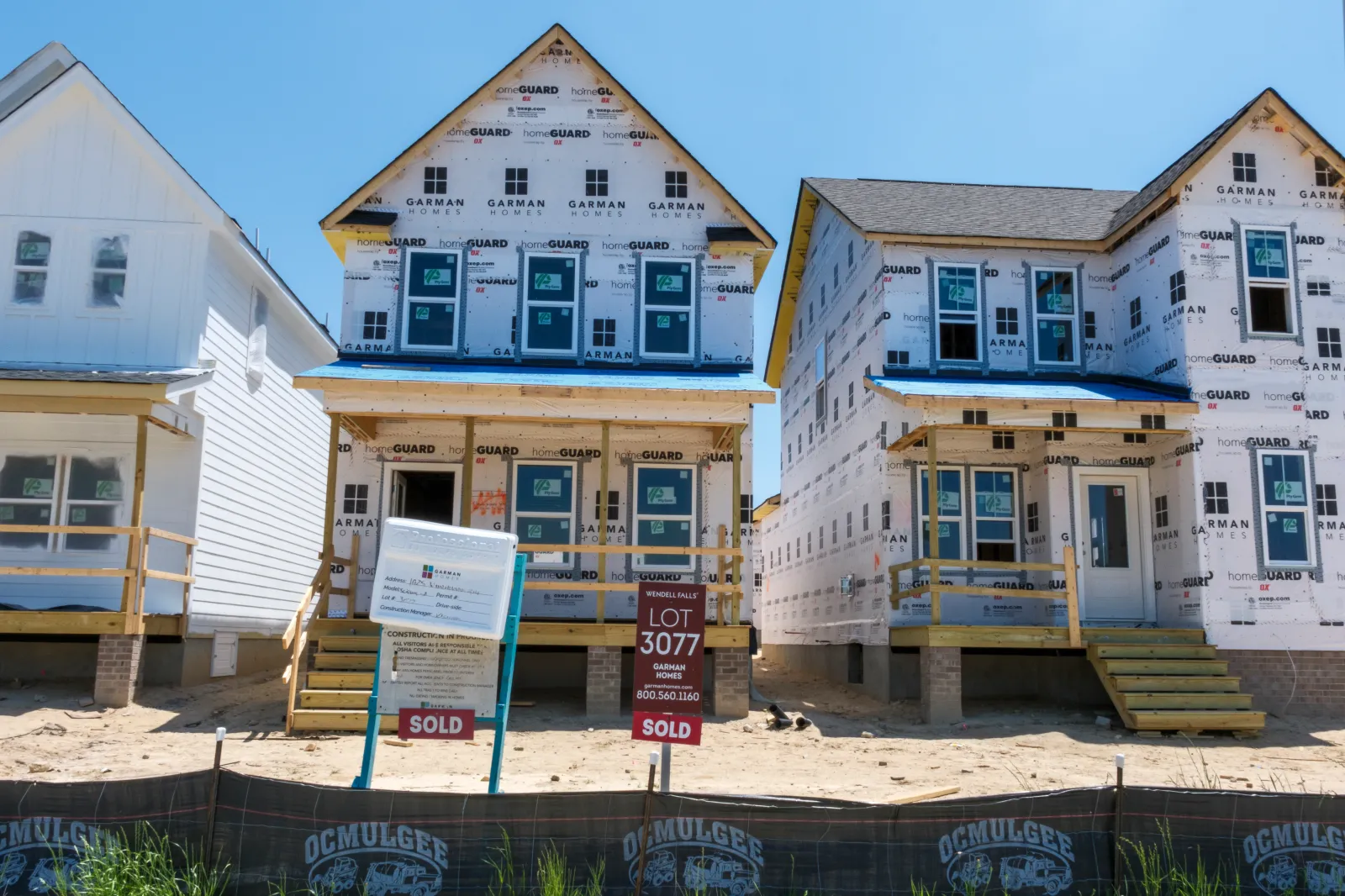
Even as housing production has picked up since the end of the pandemic, the housing shortage in the country is still estimated to be in the millions. According to Freddie Mac, the nation is short by about 3.7 million homes; White House economists believe the gap is around ten million homes.
But while Congress passed a historic piece of legislation this year trying, the 21st Century ROAD to Housing Act, to boost housing construction around the country, their good intentions are clashing against the harsh reality of supply and demand: Americans are not buying as many homes as one would expect, as they cannot find them at the price they would find affordable.
And builders do not want to be stuck with inventory they cannot sell, or forced to slash prices to offload to reluctant buyers.
The latest National Association of Home Builders (NAHB)/Wells Fargo Housing Market Index (HMI), released on Monday, found that builder confidence in the market for newly built single-family homes has inched up one point to 35 in August, though it remained “muted” due to economic and geopolitical uncertainty and high mortgage rates.
“Our latest builder survey continues to show signs of weakness in the home building market,” NAHB Chief Economist Robert Dietz said in a statement. August marked the 16th straight month that at least 30 percent of builders reported cutting prices to support demand, as well as the 16th consecutive month with the HMI below 40."
“While builder sentiment edged higher in August, builders continue to contend with high construction costs and broader economic uncertainty,” NAHB Chairman Bill Owens, a home builder and remodeler from Worthington, Ohio, said in a statement.
“Builders continue to face significant challenges from elevated construction costs and affordability pressures,” he said in a statement addressing falling housing starts numbers.
“Higher mortgage rates are keeping many prospective buyers on the sidelines, while rising material, gas and diesel costs are adding to the cost of construction,” Owens added. “These challenges are making it increasingly difficult for builders to deliver homes at prices that buyers can afford.”
There is, however, a kernel of hope to be found in the data for the future. Overall permits increased 5 percent to a 1.44-million-unit annualized rate in July, according to Census Bureau data, showing that builders are not necessarily losing all hopes in the market.
Single-family permits increased 2.5 percent to an 894,000-unit rate and were up 1.1 percent from a year earlier. Multifamily permits increased 9.4 percent to an annualized 549,000 pace and were up 6.4 percent compared to July 2025.
Contact Newsweek editors on this story: Ben Kelly and Cristina Diciu.