 7 hours ago
13
7 hours ago
13
America's Catholic bishops are urging the Supreme Court to force Florida to change how its criminal juries are formed, arguing that the state's current method of filling one is a violation of the U.S. Constitution.
Under Florida law, only capital cases require a jury of 12 people, whereas the rest of criminal cases only have juries of six people. The Supreme Court agreed to hear a case from Hamed Kian, who was convicted by a six-member jury, challenging the practice on the basis that it violates his Sixth Amendment right. A flurry of briefs have been filed in support of Kian, including from current and former prosecutors, the American Civil Liberties Union and the Catholic bishops.
The United States Conference of Catholic Bishops filed an amicus brief that directly challenges a legal framework defended by Florida and other Republican-led states. The bishops argue that the original meaning of the Constitution's jury-trial right requires 12 jurors and that the Supreme Court should overturn its 1970 decision in Williams v. Florida, which upheld six-person criminal juries.
What Is the Kian v. Florida Case About?
The dispute centers on the question of how many people must be on a jury for a serious criminal trial.
Kian, a Florida chiropractor, appealed his convictions after being tried by a six-member jury under Florida law, arguing that the Sixth and 14th Amendments guarantee defendants charged with serious crimes the right to a 12-person jury. The Supreme Court agreed to hear the case in June, setting up a potential reconsideration of its 1970 decision in Williams v. Florida, which upheld the use of six-person juries in noncapital criminal cases.
Kian was charged with five counts of practicing chiropractic medicine with a suspended license, a third-degree felony under Florida law. Prosecutors alleged that he treated patients after his chiropractic license had been suspended. At trial, three patients testified that Kian performed chiropractic treatments on them after the suspension took effect, and prosecutors presented patient records and office scheduling documents that they said corroborated the allegations. A six-person jury convicted Kian on all five counts, and he was sentenced to one year and one day in prison time and five years of probation.
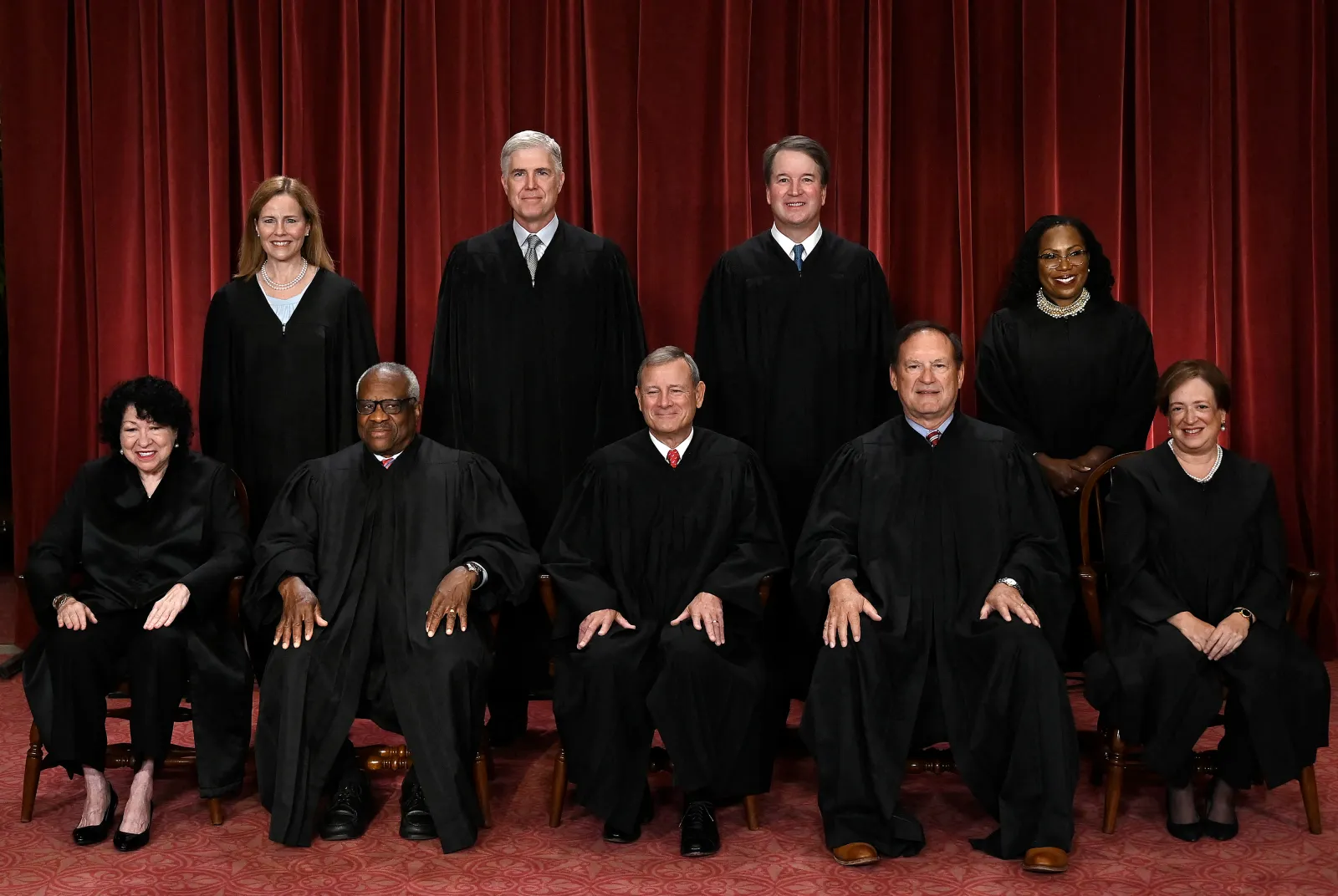
For centuries, criminal juries in England and the United States typically consisted of 12 members. In 1970, however, the Supreme Court ruled in Williams v. Florida that the Constitution does not require juries to contain exactly 12 people. That decision allowed Florida and several other states to use smaller juries in at least some criminal cases.
Florida currently uses six-person juries in noncapital criminal cases, a system that dates back to the 19th century. Under state law, only capital cases are tried by 12-member juries.
Attorneys for Kian argue that the Supreme Court's 2020 ruling in Ramos v. Louisiana, which required unanimous jury verdicts in state criminal cases, undermined the reasoning of Williams. They contend that the Court's modern emphasis on the Constitution's original public meaning supports restoring the 12-person requirement.
Citing Supreme Court Justice Neil Gorsuch, Kian's attorney's wrote that the "right to trial by jury should mean no less today, and afford no fewer protections for individual liberty, than it did at the Nation's founding."
Catholic Bishops' Argument
In their brief, the Catholic bishops argue that the church played a significant role in the historical development of criminal justice protections and jury trials. They contend that the Constitution incorporated a legal tradition in which criminal juries consisted of 12 members and that the Supreme Court should return to that understanding.
The bishops trace jury trials back to medieval England and argue that, by the time the Sixth Amendment was ratified, the word "jury" carried a widely understood meaning that included 12 people. According to the brief, founding-era dictionaries, common law authorities, ratification debates, and early American court decisions all pointed to the same conclusion.
The brief was filed on behalf of the United States Conference of Catholic Bishops by attorneys including former U.S. Solicitor General Noel Francisco, who served during President Donald Trump's first administration.
The bishops frame it as a matter of constitutional fidelity and historical meaning. They argue that Williams improperly departed from history by focusing on whether smaller juries could perform the same functions as larger ones.
Republican States Defend Existing Law
Florida, meanwhile, is defending its jury system and urging the Court not to revisit its half-century-old precedent.
The state argues that Williams was correctly decided, remains binding law, and has been relied upon by courts and legislatures for more than 50 years. Florida notes that six states currently use juries with fewer than 12 members in at least some criminal prosecutions.
According to the state's brief, overturning Williams could have sweeping practical consequences. Florida estimates that approximately 5,000 criminal convictions are currently pending on direct appeal in the state, and argues that thousands of cases could become vulnerable to challenge if the court reverses course.
The state also disputes claims that smaller juries are fundamentally less fair or less representative, citing studies and conviction statistics that it says show six-person juries function similarly to 12-person juries.
Florida further argues that the Constitution's text does not explicitly require juries to contain 12 members, even if many historical juries did. State attorneys point to the Supreme Court's earlier conclusion that jury size was not an essential constitutional feature in the same way unanimity was eventually determined to be.
A Growing Conservative Debate
The case is unfolding against a backdrop of growing interest among conservative legal scholars and some Supreme Court justices in originalism, the idea that constitutional provisions should be interpreted according to their original public meaning.
Several conservative justices have previously expressed skepticism about Williams. In past statements, Gorsuch has suggested the Court should reconsider whether six-person juries are consistent with the Constitution's historical understanding. Petitioner briefs in the case repeatedly cite his prior opinions criticizing the precedent.
That dynamic has created an unusual split within the broader conservative movement. On one side are Republican-led states seeking to preserve existing criminal justice systems and avoid disruptive changes to thousands of cases. On the other are religious conservatives, originalist scholars and advocates who believe constitutional interpretation should follow historical understandings even when doing so creates practical challenges.
Why the Case Matters
If the Supreme Court sides with Kian, the ruling could reshape criminal procedure in several states and potentially affect thousands of convictions that were obtained before six- or eight-person juries. It would also represent another major originalist decision revisiting a precedent from the 1970s.
If the High Court upholds Florida's system, it would preserve the status quo and reaffirm that states retain flexibility to structure juries differently from the traditional common-law model.
Either way, the dispute has produced a rare sight in modern legal politics: Catholic bishops and Republican-run states taking opposite sides of a constitutional battle before a conservative Supreme Court.
As the justices prepare to decide whether the Constitution demands juries of 12, the case may reveal how far the court is willing to follow originalist reasoning when it collides with decades of settled practice and the practical realities of modern criminal justice.