 1 week ago
37
1 week ago
37
A growing number of American families could soon gain access to scholarships for private-school tuition, tutoring and other education expenses after four more states joined President Donald Trump's Education Freedom Tax Credit program, bringing total participation to 30 states.
The expansion comes as the Department of Education highlighted the latest opt-in map, showing the school-choice initiative spreading across much of the South, Midwest and Mountain West.
Created through the Working Families Tax Cuts Act, the program establishes a new federal tax credit of up to $1,700 for taxpayers who donate to approved Scholarship Granting Organizations (SGOs). Those organizations then use the money to fund scholarships for eligible K-12 students.
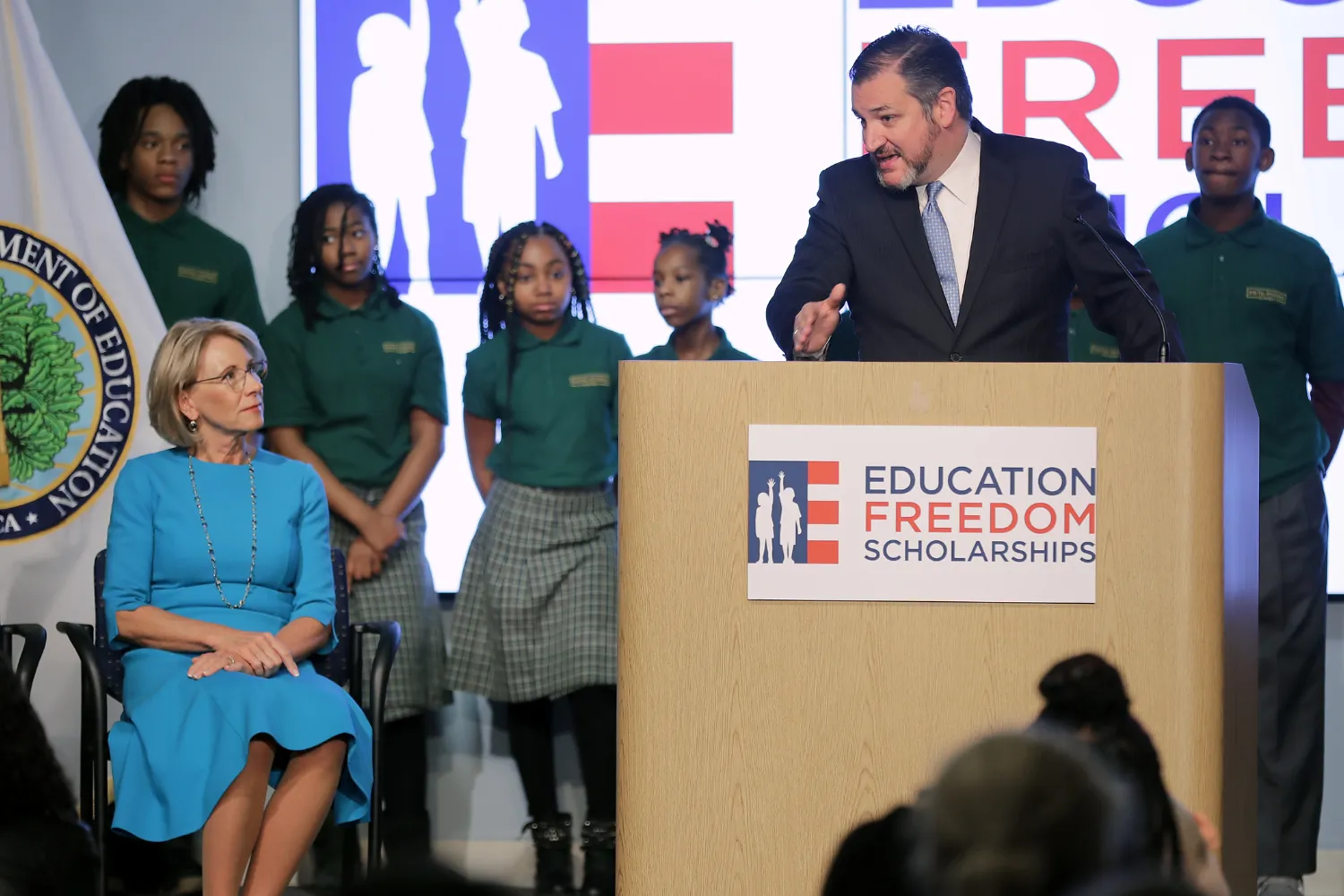
What the Education Freedom Tax Credit Actually Does
One common misconception is that every participating family will receive a $1,700 scholarship.
In reality, the $1,700 amount is the maximum federal tax credit available to eligible taxpayers who contribute to approved scholarship organizations. Students do not receive money directly from the federal government.
Instead, scholarship organizations collect donations and distribute aid to qualifying families. Scholarship values will vary depending on the amount raised and the policies adopted by participating organizations.
According to the Departments of Education and Treasury, scholarships may be used for a broad range of K-12 education expenses, including:
- Private-school tuition
- Tutoring services
- Educational support for students with disabilities
- Other qualifying costs tied to public, private, or charter-school education
Which States Have Opted In?
The latest participation map shared by the Department of Education shows 30 states have joined the program ahead of its planned 2027 rollout. The states that have so far opted in are laid out here:
Who Qualifies for Education Freedom Tax Credit?
Eligibility depends on whether your state has opted into the program and whether a student meets federal income requirements. According to a joint Education and Treasury Department fact sheet, students must be eligible to enroll in a public elementary or secondary school and come from a household earning no more than 300 percent of the area's median gross income to qualify for scholarships funded through the program.
The scholarships are not distributed directly by the federal government. Instead, approved Scholarship Granting Organizations (SGOs) award funds to eligible students in participating states. Federal officials say most students in states that have opted in are expected to qualify for assistance. Scholarships can be used for expenses including private-school tuition, tutoring and certain educational support services.
Based on the eligibility estimates in the data, more than 28.1 million children live in states that have opted into the Education Freedom Tax Credit and could qualify for scholarships once the program launches.
But another 23.5 million eligible children live in states that have not opted in, meaning they could miss out unless their state joins the program. In total, the data suggests about 51.7 million children nationwide meet the eligibility criteria, with roughly 46 percent of them currently in non-participating states.
Why Some States Have Declined to Join
Within the states that have so far declined to join the scheme, critics argue the initiative could divert resources away from public schools and raises questions about federal oversight of education funding.
Oregon Governor Tina Kotek said her state would not participate because guidance issued by the Trump administration suggested states would lack "the flexibility they need to participate in alignment with our values."
"At this point, I simply cannot trust that any education policy coming from Trump's White House is in the best interest of Oregon's kids and our public education system," Kotek said.
Wisconsin Governor Tony Evers also rejected participation, vetoing legislation that would have required the state to opt into the program. In his veto message, Evers argued that public funds "should go to public schools" and said he opposes expanding private-school voucher programs. He also cited concerns about the program's potentially high cost to taxpayers.
When Does Education Freedom Tax Credit Launch?
The Treasury has said the Education Freedom Tax Credit is expected to launch in January 2027. Participating states must submit lists of eligible Scholarship Granting Organizations, while the Treasury and the IRS are continuing work on regulations governing the program.
Education Secretary Linda McMahon said the initiative would help families access tutoring, scholarships and other educational services. “Every student learns differently, and this investment ensures more families—regardless of income—have real options to pursue education opportunities that help their children thrive,” she said.
Treasury Secretary Scott Bessent said the program is intended to give parents greater control over children's education options.
“President Trump has built the most pro-school choice Administration in history because he understands this is the best path for students to grow and flourish. The Working Families Tax Cuts created the first-ever federal tax credit for K-12 scholarships at his direction and I congratulate the Governors who have worked to provide greater access to education and educational programs for millions of Americans,” he said.
The Treasury has also acknowledged implementation challenges ahead of its 2027 launch. In a June briefing, Deputy Assistant Secretary for Tax Policy Kevin Salinger said federal officials were developing rules aimed at preventing fraud, duplicate scholarship awards and misuse of funds, while also working on income-verification standards for students and reporting requirements for scholarship organizations. The Treasury Department expects additional guidance on eligible expenses and program administration in the coming months.
Contact Newsweek editors on this story: Rebecca Flood and Emma Lee-Sang