 1 week ago
38
1 week ago
38
Another major escalation is brewing in Sudan, as fighting escalates along the main front line in the central part of the country. Aside from straining already-stuttering international peace efforts, the fighting stands to exacerbate the world’s largest humanitarian catastrophe. Ending the war is a moral, humanitarian, and strategic matter that could also reverse the deteriorating narrative surrounding Trump’s peacemaking legacy, but the United States must take stronger action.
The United States has worked to hold the Sudanese Armed Forces (SAF) accountable and push them to the negotiating table through recent sanctions targeting SAF supply and finance networks, and it is time to do the same with the Rapid Support Forces (RSF). The Trump administration should designate the group as a Foreign Terrorist Organization (FTO), which would both target the Emirati-linked weapons trafficking networks that are key to the RSF’s ability to wage war and show the U.S.’s commitment to peace.
Recent battlefield developments present an opportunity to push the RSF from its maximalist negotiating position. The stalemate across much of Sudan has strained the RSF’s plunder-driven patronage system, forcing the RSF to choose between escalating militarily or coming to the negotiating table. The RSF chose the military option, opening a new front in southeastern Sudan in early 2026 and spending June setting conditions for an offensive on El Obeid—the SAF’s headquarters in central Sudan—with reinforcements and a drone strike campaign that enforced a partial siege of the city.
The diplomatic path may now be more on the table, as the SAF has recently stymied the southeastern offensive and alleviated pressure around El Obeid by taking control of the northern Khartoum-El Obeid supply line. The SAF gains could eventually support future SAF offensives toward RSF-controlled Western Sudan.
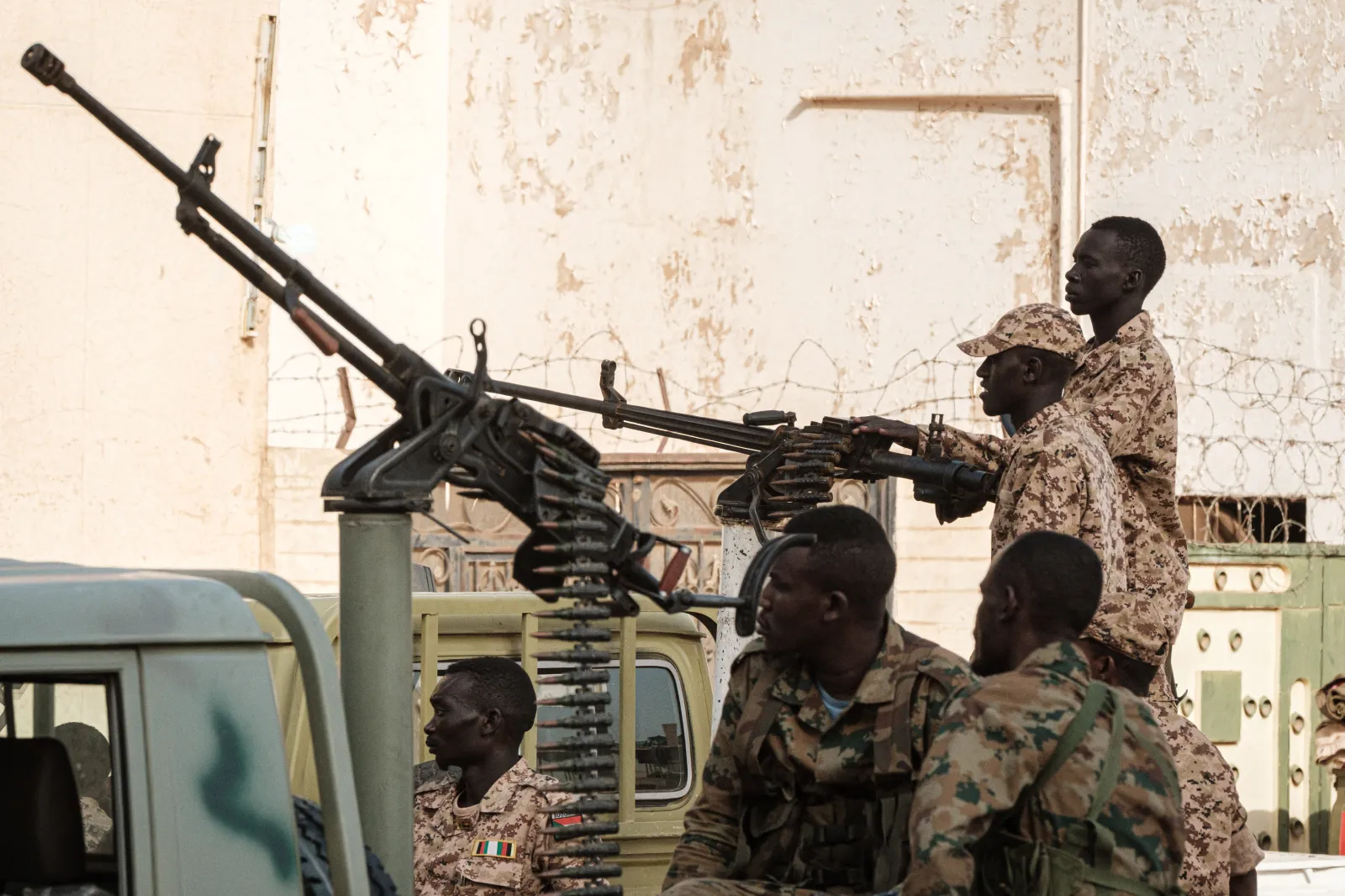
Ending the attritional fighting in central Sudan is a humanitarian imperative. Numerous international institutions and countries, including the United States, warned of widespread violence and mass atrocities around El Obeid in particular in June. The RSF has repeatedly employed siege tactics that include war crimes, such as indiscriminate strikes and systematically targeting civilian, health, and humanitarian infrastructure.
Despite recent SAF gains, the RSF remains entrenched around El Obeid, and Armed Conflict Location and Event Data researcher Ali Mahmoud Ali warned that the ongoing war of attrition opens civilians to violence from advancing and retreating troops and their drones. Now that the RSF war chest is now unlikely to be imminently replenished, RSF leader Mohamed Hamdan Dagalo (Hemedti) gave field commanders permission to launch their own offensives, unleashing poorly disciplined RSF fighters who have systematically committed sexual violence and mass killings against civilians to punish communities and acquire loot.
Peace in Sudan is also a major U.S. interest. A range of malign actors have exploited the civil war to pursue greater influence in the Horn of Africa and Red Sea. Islamist factions have gained influence within the SAF due to their importance in fighting back against the RSF. The war has also alleviated pressure on Red Sea smuggling networks between Houthi-controlled Yemen and Sudan. Iran and Russia have separately attempted to partner with the vulnerable SAF to access Sudan’s 500-mile Red Sea coastline. The Iran war, furthermore, has only made the Red Sea vastly more important for U.S. allies and adversaries alike.
To advance peace efforts, the United States and its partners must move beyond words and designate the RSF as an FTO. Bipartisan action across Congress has called for such action, and former U.S. officials have already assuaged any humanitarian and legal concerns. More practically, the designation would disrupt the Emirati-linked networks arming the RSF despite the persistent warnings from the international community. A designation would give Abu Dhabi a chance to halt support before taking the material and reputational damage of any resulting third-party sanctions, thereby avoiding direct confrontation with a key U.S. partner in the UAE and leaving room for further action.
Greater pressure on the RSF, rather than primarily focusing on the SAF, is also necessary for a more sustainable long-term peace. An FTO designation would be a gesture of goodwill to repair the strained SAF-U.S. relationship and increase SAF buy-in to U.S. mediation. In the long term, key negotiators including the United States agree that the SAF must be preserved post-civil war despite its flaws to avoid state collapse.
The RSF, on the other hand, is a coalition of unruly, plunder-driven, and genocidal militias that is unanimously viewed as unfit to play any role in a unitary postwar Sudan. The SAF has already realized that chaos agents like Islamists, Iran, and Russia offer little to postwar reconstruction efforts and have taken measures to avoid alienating the West by pledging to contain Islamist influence, refusing major Iranian overtures, and avoiding implementing inflammatory agreements with Moscow.
It is time the United States and other partners learn from past mistakes. Failure to act would show that they would prefer to sacrifice thousands of Sudanese lives and their own interests to avoid a shred of adversity in their relationship with Abu Dhabi. This path would not only be a moral travesty, but an act of strategic self-sabotage in a battleground with Islamists, Iran, and Russia.
Liam Karr is the Africa team lead and Michael DeAngelo is an Africa analyst, both for the Critical Threats Project at the American Enterprise Institute.
The views expressed in this article are the writers' own.