 8 hours ago
23
8 hours ago
23
President Donald Trump is asking Americans to accept paying higher gas prices as a patriotic trade-off as the country continues its war against Iran, even as a majority of U.S. adults want the conflict to end—and think the nation should have not gotten into it in the first place, according to polling.
National gas prices in the U.S. have shot up since the start of the war, as disruptions in production and supply due to the effective closure of the Strait of Hormuz have caused oil prices to skyrocket.
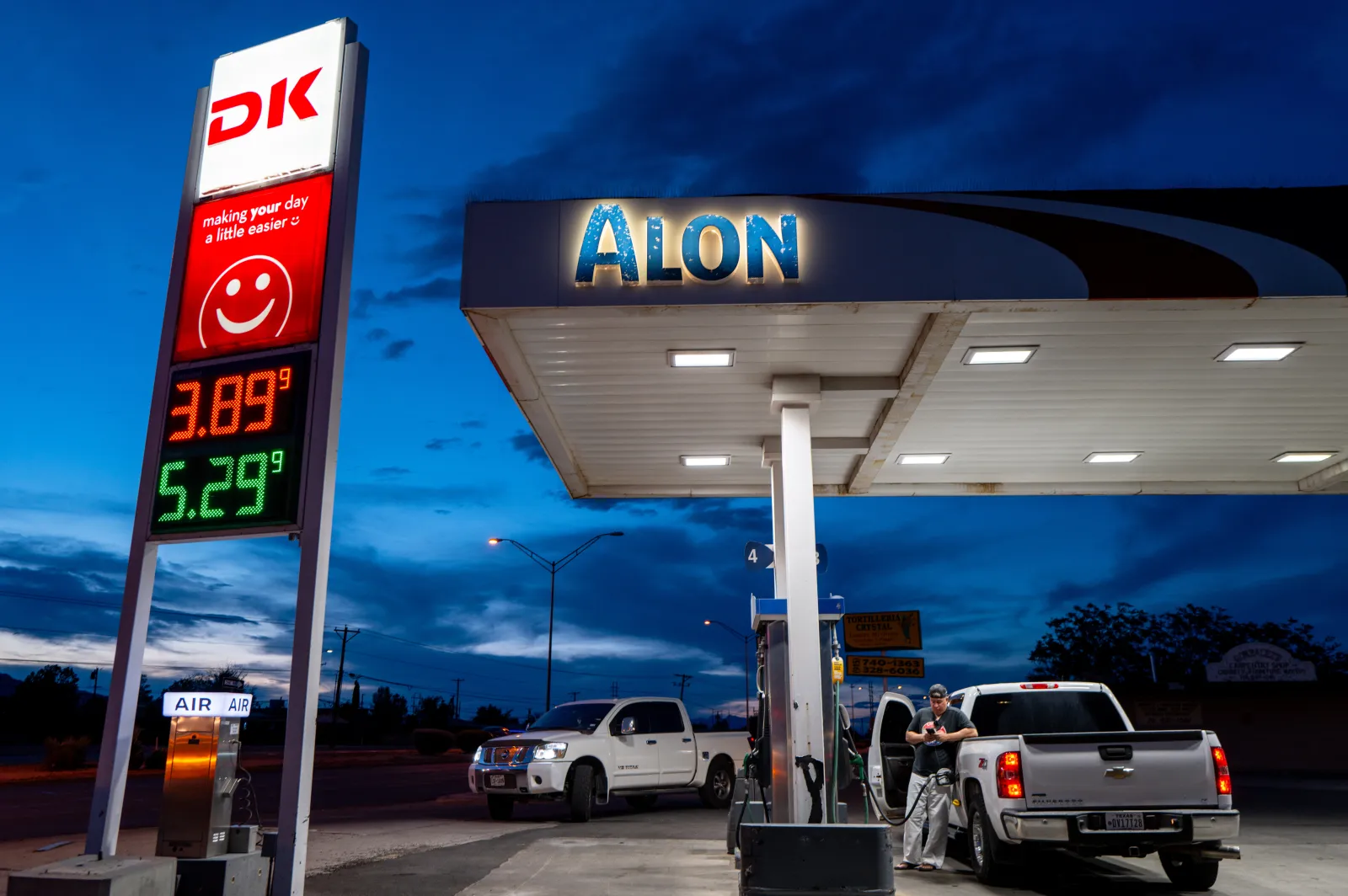
After briefly falling for a week, national gas prices are now climbing again, reaching an average of $4.06 on Sunday, up from $3.94 a month ago and $3.14 a year ago, according to the American Automobile Association (AAA). That means gas prices are nearly 30 percent higher than they were a year ago.
That is more than a dollar higher than it was before the U.S. and Israel launched joint strikes on Iran on February 28, when the national average dipped just below $3, at $2.98. According to GasBuddy's Patrick De Haan, it is also an unprecedented high for this time of the year.
“Americans today will spend $338 million more on gasoline than they did one year ago, or $2.35 billion more every week,” De Haan, head of petroleum analysis at GasBuddy, wrote on X this weekend.
For U.S. voters, the rise in gas prices—which has driven up overall inflation in the past few months—is a sign that the president is not keeping his promise to lower the cost of living for everyday Americans.
But since prices at the pump started rising all across the country, with no state spared, Trump has been refusing to apologize to Americans—portraying the increases as something of a temporary, necessary evil.
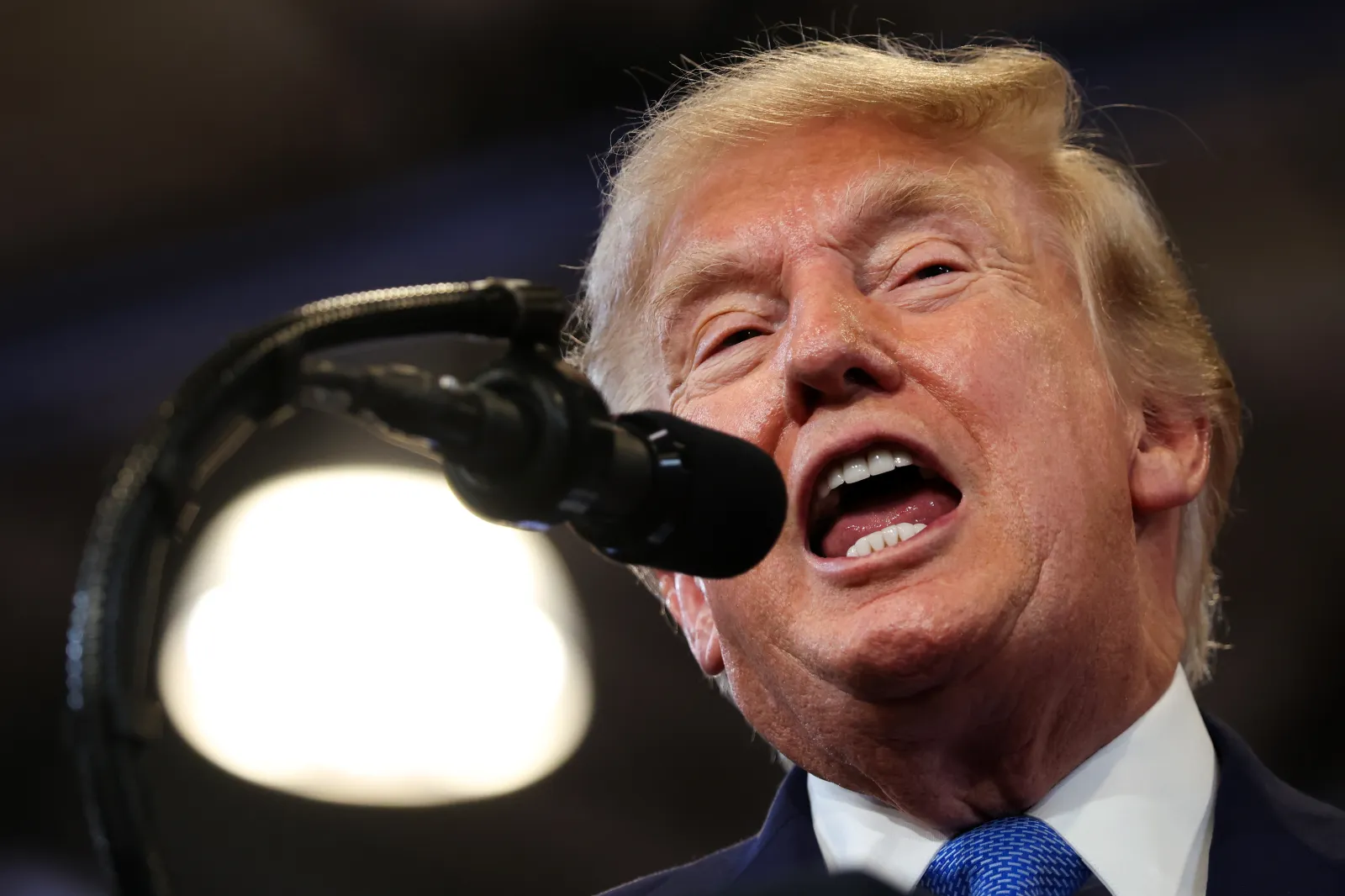
Addressing voters at a political rally in Garden City, New York, on Friday, the president argued that paying “a tiny little bit more for your gasoline” is worth the cost of ensuring “a very evil country” could not have a nuclear weapon. Destroying Iran’s nuclear potential was one of the reasons the administration initially stated for bombing the Middle Eastern country.
“Remember that when you have to pay a little bit more, $4—it’s okay. I mean, it’s… I’ll never apologize, I did the right thing,” Trump said. “After we finish defeating Iran [...] pretty soon I’ll be declaring the Hormuz Strait a territory of the United States,” he added.
But recent polls show that this might be quite a big ask for inflation-weary Americans who do not support the Trump administration’s war in Iran.
Newsweek contacted the White House and De Haan for comment by email on Sunday morning.
Americans Are Not With Trump On the Iran War
Trump has been adamant about Americans supporting his administration’s war in Iran, which has still no clear end in sight after months since the start of the conflict and a now-defunct ceasefire.
As he attended the dignified return of the bodies of four fallen U.S. service members killed overseas to Dover Air Base late last month, Trump said: “All of them said very strongly, ‘We cannot let Iran have a nuclear weapon.’ They won’t have a nuclear weapon.”
However, polls show that Americans have grown increasingly impatient with the conflict and are eager to see it end.
A poll by the Pew Research Center conducted between April 20-26 found that 62 percent of Americans “somewhat disapproved” (17 percent) or “strongly disapproved” (45 percent) of Trump’s handling of the Iran war, while nearly half (48 percent) said the administration had not been clear on its goals for the conflict.
An Ipsos poll conducted between July 10-12 among 1,019 U.S. adults found that 58 percent of Americans disapprove of the U.S. strikes in Iran, while only 37 percent approved of them—figures that have largely remained stable over the past four months.
Crucially, 51 percent said that it has not been worth the U.S. taking military action in Iran, against only 24 percent who think it has been, while 23 percent were not sure.
A new six-day Reuters/Ipsos poll concluded on August 3 found that Americans had grown even more pessimistic about the conflict and its impact, with only 35 percent approving of the war.
Not Just Gas Prices—Americans’ Economic Pain Is Backfiring On Trump
Not only do more Americans think that the war in Iran was not worth it compared to those that do, but a majority is also convinced that they will be worse off, financially, because of the conflict.
The July poll from Ipsos found that 60 percent of Americans expect gas prices to get worse in the U.S. over the next year as a result of the country’s military action in Iran. The new Reuters/Ipsos poll similarly found that some 58 percent said they expected gas prices to get worse, while just 15 percent expected them to improve.
Considering that Trump repeatedly campaigned on lowering the cost of living during the 2024 presidential election, his new narrative about accepting a patriotic sacrifice for the war in Iran to continue appears unlikely to succeed. Recent polling shows that Americans are increasingly dissatisfied with Trump and concerned about inflation and affordability.
The latest The Economist/YouGov poll found that 59.9 percent of Americans disapproved of Trump’s handling of the presidency, while only 38.5 percent approved of it.
The Pew Research poll conducted in April found that 69 percent of Americans were worried about higher gas prices due to the Iran war, including 45 percent who were “extremely” concerned. That fear has since materialized.
Democrats are likely to seek to capitalize on voters’ frustration with the Trump administration’s war in Iran and higher gas prices in the November midterms.
“What we’re watching right now is the complete unraveling of everything that Donald Trump, Maga and Republicans said they were about,” Kurt Bardella, a political commentator and former congressional aide, said in a statement reported by The Guardian.
“They were against endless conflicts in the Middle East and they started a conflict in the Middle East without an exit strategy. They were supposed to be about no more spending American dollars abroad; we’re spending a billion dollars a day on this war without an end,” Bardella added.
Contact Newsweek editors on this story: Ben Kelly and Cristina Diciu.